How to grow Nepenthes? Sharing cultivation methods and tips
Many times we say that if there is a good idea, everyone listens to its story, but few people see the real forget-me-not. In fact, the "forget-me-not" is the pitcher plant sold in the flower market, because the digestive fluid in the pitcher's pouch has a refreshing and invigorating effect after drinking, which makes people forget their pain. Therefore, in ancient Greece, the pitcher plant was also called the forget-me-not.
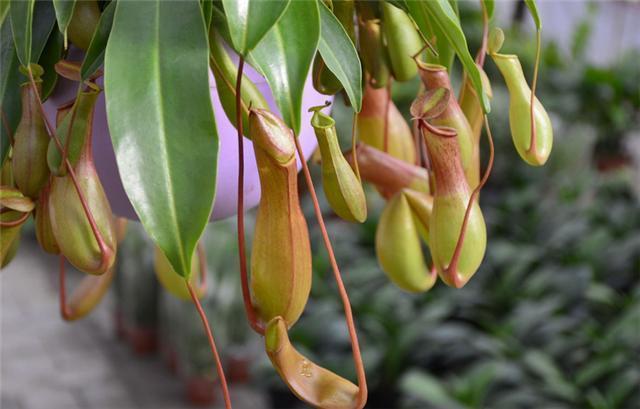
How to grow Nepenthes
1. Suitable temperature
The suitable growing temperature for Nepenthes is about 20-30 degrees. In winter, Nepenthes almost stops growing, so when caring for Nepenthes, the temperature must not be lower than 10°C, to prevent the Nepenthes from freezing to death.
2. Reasonable humidity
Air humidity is the key factor affecting whether Nepenthes can form pitchers. To increase air humidity, you can cover the pot with a plastic bag to create a high-humidity environment. Place the pitcher plant in an aquarium, put them in a corner to reduce ventilation and increase humidity, so the pitcher plant grows better!
3. Sufficient light
Nepenthes prefers sunlight, but when caring for Nepenthes, you must be careful to avoid direct sunlight. In summer, pay attention to sun protection and use sunscreen. At the same time, the pitcher plant should not be exposed to sunlight, otherwise the pitcher plant grows slowly, the plant is weak, and the pitchers are small, or there are no pitchers at all.
4. Watering
Nepenthes needs more water to grow. When the temperature is above 30 degrees, it can be watered 2-3 times a day. Usually, the leaves of the pitcher plant can be sprayed with water every day. When the temperature is low, a small amount of water can be poured to keep the soil moist.
5. Use organic fertilizer
Nepenthes needs timely supplementary feeding during maintenance. After adding fertilizer, it needs to be watered promptly. The fertilizer must be organic fertilizer to avoid fertilizer burn, so as not to cause the plant to wither, and at the same time add foliar fertilizer so that the pitcher plant grows better.
The above are some introductions on how to raise Nepenthes. Most flower lovers must master the correct care methods. Nepenthes itself has high ornamental value, with unique flower patterns and very beautiful and eye-catching colors. It is suitable for hanging potted plants and has a very unique style that makes you forget your worries.
The shape of the pitcher plant is very beautiful. How do you care for a pitcher plant?The pitcher plant has a strange and beautiful shape. With its insect-eating talent, more and more flower lovers want to try growing it. Nepenthes is relatively difficult to raise and requires a relatively high level of skill.
Soil
Nepenthes soil needs to be loose, airy, and well-draining, and preferably contains a certain amount of humus. In addition, Nepenthes needs soil that is soft and not too hard. Usually peat and sphagnum moss are used, and the soil pH is adjusted to 4-5.
Light and temperature
Nepenthes is originally an epiphytic plant, usually found under the trunks of large trees. It needs sufficient light but cannot be exposed to direct sunlight. Bright indoor decor is very suitable for the growth of Nepenthes. Nepenthes has high temperature requirements. The optimal growth temperature is 25-30°C, not exceeding 35°C and not lower than 15°C.
Watering
Nepenthes pitchers can develop normally under high humidity conditions, but the soil should not be too wet, so it is suitable to be moist, but suitable for further squeezing. In the dry season, Nepenthes needs to be sprayed 4-5 times a day to ensure high air humidity.
Fertilization
Nepenthes can obtain nutrients by preying on insects, but home care may have fewer food sources, so liquid fertilizer is sprayed to supplement nutrients. Commonly used liquid fertilizers include Huabao No. 5 and Magic Fertilizer. Nepenthes is not tolerant of heavy fertilizer, and non-slow-release fertilizers cannot be applied to the soil.