What are the specific care methods for Dianthus before and after flowering?
Dianthus plants are low-growing, with stems resembling bamboo and green leaves. Their natural flowering period is from May to September, from spring to mid-autumn. Grown in pots in a greenhouse, they can bloom in all four seasons and are very beautiful. However, many people are unsure how to maintain them before flowering and what to do after flowering, so here are the care methods for Dianthus before and after flowering.
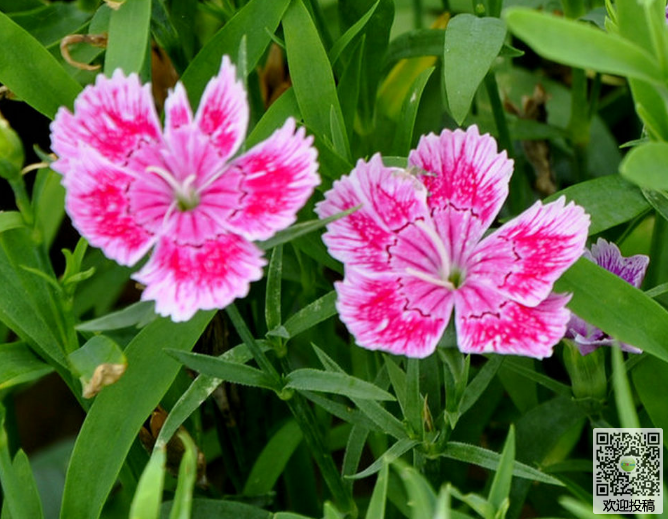
Dianthus preservation methods
1. Moisture retention. When it is propagating and preparing to bloom, always pay attention to its water requirements. Generally, once the soil dries out, the soil must be watered immediately, but because it is developing flower buds, its water demand is relatively high. Therefore, it is necessary to water in a timely manner.
At this time, be careful not to be greedy. If you pour too much at once, it will cause waterlogging. This plant is very afraid of waterlogging. Once watered, it should be drained in a timely manner. In addition, before spraying, water needs to be sprayed around it to increase air humidity, thereby preventing flower buds from cracking even if they do not open.
Fertilizer. Because it is about to bloom, it must absorb a large amount of nutrients for flower bud development. At this time, fertilizer needs to be applied every 10 days. The fertilizer used needs to be diluted and can be applied with watering.
3. Temperature. In summer, pay attention to shading it. In winter, place it in a well-ventilated place facing the sun and give it sufficient light.
Maintenance methods for Dianthus after flowering
1. Pruning. After the flowers wither, it is necessary to promptly cut off the residual flowers at the base of the flower stems, and soon new flower stems will grow again between its leaf axils.
2. Temperature. Keeping the ambient temperature between 14 and 28 degrees can make it bloom for a long time.
Four-season maintenance methods for Dianthus
Spring maintenance
Spring is the transition period from cold winter to plant growth. Protection at this time is particularly important. The best and most important point is watering. After spring warms up, pour water at room temperature to wake up the carnation. Do not pour too much; keep it moist, not soaked.
After the temperature rises and stabilizes, the plant is moved outdoors or onto a terrace, exposed to sunlight, and does not need shading.
Of course, it can be planted in spring. When the temperature is 15~20°C, potting can be carried out, and seedlings can grow in about 20 days.
Summer maintenance
During the high-temperature period in summer, it often enters a dormant state, has low fertilizer and water requirements, and fertilizer and water can be appropriately controlled. The interval for outdoor maintenance is about 3 to 5 days, and the interval during sunlight or high temperature is about 2 to 3 days. Rainy days or cold waves can extend or combine two times; indoor maintenance is 4 to 7 days. Extend and shorten appropriately according to weather conditions. Watering should be done in the morning or evening as late as possible, and the leaves should be kept dry at night.
Dianthus is afraid of stuffiness. When grown indoors, windows often need to be opened, and it cannot be placed in an air-conditioned room for a long time, or it needs to be moved outdoors for a period of time.
Autumn maintenance
Autumn is a strong growing season for Dianthus. Fertilizing and watering should be done at certain times. Outdoor maintenance should be carried out every 4 days. During sunny days or high temperatures, it should be 2~3 days. Rainy days or cold waves can extend or combine two times, about 8 days at a time. It should be placed indoors for 2~6 days, and should be extended and shortened according to weather conditions. However, in late autumn, watering needs to be gradually reduced.
Place Dianthus in a sunny place to fully receive sunlight.
Winter maintenance
During winter dormancy, the most important thing is to control watering and fertilizing. Watering should be done at noon on sunny days, once every 15~20 days, and watering should be reduced on cloudy days. Fertilize as little as possible. Before entering winter, just apply once.
Dianthus disease control methods
Leaf blight
Symptoms
At the beginning of the damaged leaf, the good part of the leaf is yellow and gradually spreads to the base of the leaf. Finally, the leaf all withers, the edges of the lesions are not obvious, and in the later stage they are grayish white, densely producing many small black spots. Although the leaves of Dianthus do not have a major impact, the leaves always look strange in relation to the flowers.
Prevention methods
Remove diseased leaves in a timely manner, take out severely infected plants and burn them.
Spraying 500 times a 50% piranol solution or 800 times a 50% carbendazim solution has a better control effect.
Brown spot disease
Symptoms
Brown spot disease mainly affects leaves, stems and flower stalks. Almost round spots appear on the leaves of damaged plants, grayish white in the middle, with yellow-brown ridges at the edges. The lesions merge with each other, and the leaves gradually dry out. In addition, when environmental humidity is high, many black mold layers appear on the lesions.
Prevention methods
After the flowers fade, reduce the source of infection, promptly clean up the parts that have already receded, throw them away, and do not give bacteria a chance.
During cultivation, appropriately applying phosphorus and potassium fertilizer will enhance the plant's disease resistance.
Spray in a timely manner. When the situation is severe, do not choose only one spray; it can be used alternately 2~3 times to avoid bacteria developing antibodies. In the early stage of the disease, promptly spray prochloraz oil, or Guoguang Yintai, once every 7~10 days, 2~3 times.
Fusarium disease
Symptoms
The pathogen is mainly produced at the roots. When the disease occurs, the roots slowly wither, causing loss of leaves and/or more nutrients, and reducing resistance. As the germ spreads, the stem gradually shrinks and softens, the leaves near the rhizome droop, the disease develops rapidly, and the plant quickly withers. When the environment is humid, white mycelium is produced on the rhizome part.
Prevention methods
Choose robust plants for planting, strictly disinfect before planting, and do not use diseased soil.
Timely clean up residual dead leaves on the pot surface and clean thoroughly.
Remove diseased plants in a timely manner to avoid affecting the growth of other plants. After repotting, promptly spray potassium permanganate or 3% ferrous sulfate, or 500 times 70% dikesone, to avoid recurrence.