How to grow hydroponic plants? I'll teach you the correct cultivation methods.
Hydroponic plants are a relatively popular way to grow plants. Hydroponic plants are more hygienic and clean than soil. However, the available nutrients are not contaminated, and yellow leaves and root rot easily occur. How should this be handled? What about that situation?
1. Treating root rot
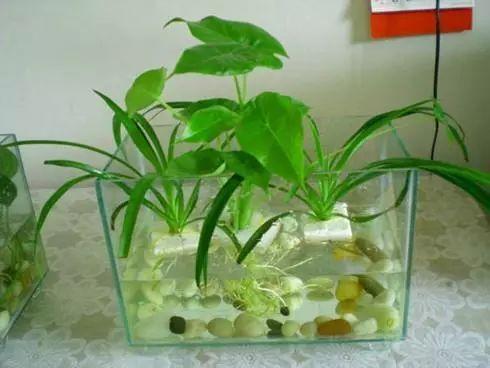
If a hydroponic plant shows root rot, you can add a few drops of potassium permanganate solution to the hydroponic plant's bottle. After mixing evenly, insert the plant into the bottle, soak it for a day, and then change the water. This relieves the symptoms of root rot. When changing the water, be careful to remove the rotten parts.
2. Placement of hydroponic plants
Hydroponic plants must be kept in a place with diffused light, paying attention to humidity, and with a well-ventilated environment. Change the water about once every 5 to 10 days. When changing the water, pay attention to cutting off withered, rotten, and aged roots to promote new roots to emerge quickly.
3. Put coarse sand into the bottle
If you want the roots of hydroponic plants to grow quickly or to improve their appearance, you can pour coarse sand into the hydroponic bottle, which is more conducive to the plant taking root. Putting 3 cm of thick gravel at the bottom of the bottle is enough.
4. Spray water on the leaves
If the weather is dry, you can properly wipe the leaves, or spray the leaves. Large potted plants should not be moved. You can place a basin of water beside it to increase humidity. When spraying flowers, the water sprays out from the watering can. Be sure to do it well, and do not spray water droplets in response.
5. Keeping fish in a hydroponic container
If you want to keep fish in a hydroponic bottle, you must choose small fish, such as guppies, swordtails, and small goldfish. About 1 to 3 is enough. Regularly add new water to reduce the breeding of impurities in the water. After the fish are added, the nutrients in the water are enough for the plants to grow. Do not add nutrient solution again; that is not good for the small fish.
6. Put in charcoal
Charcoal has a good purifying effect and can prevent rot. If hydroponic plants usually have root rot, you can break the charcoal into small pieces and put them into the hydroponic bottle. Replace them about every half month, or you can change the water. When you directly change it to new charcoal.
7. Iron nails prevent yellow leaves
Yellow leaves on hydroponic plants are usually caused by a lack of elemental substances. You can drip a few drops of ferrous sulfate solution into the water bottle every 7 to 10 days, or add a rusty nail to the water bottle to supplement the element.
8. Tablets for rooting
Do flower friends know? In fact, these tablets are also very helpful for flower growth. Expired or damp tablets, such as vitamin B12 and aspirin, have a very good effect on plant rooting and floating. After crushing the tablets and mixing them with clean water at a ratio of 1:1000 to dissolve them into a solution, drip a few drops into the solution bottle about every 10 days.
Do your hydroponic plants always have yellow leaves? See how the experts raise them!In recent years, hydroponic plants have become more and more popular. First, they are beautiful. All kinds of hydroponic glassware are very pretty, and second, they are both clean and easy to care for. Many flower friends will grow some hydroponic plants, but recently, many flower friends have said that hydroponic plants have problems. Root rot and yellow leaves are becoming more and more serious. How should we maintain hydroponic plants? /P>
1. Choose suitable hydroponic plants
Not all flowering plants can adapt to hydroponics. Plants commonly used for water culture include Araceae, Liliaceae, Agave, Sedum, Cactaceae, Eucalyptus, and other plants. Most woody plants require long-term domestication before they can be cultivated hydroponically.
2. Remove the roots and wash the roots
When flowers are changed from soil culture to hydroponics, if the hydroponic plants are to grow well, the most important thing is to "remove and clean the roots"; otherwise, it will affect the normal growth of the hydroponic plants and lead to infection by pests and diseases. Pour the selected plant out of the soil, shake it gently, tap it, then soak it in clean water for 15-20 minutes, then gently wash the roots by hand, and rinse with water 2-3 times until the roots are completely free of soil.
3. Change the water regularly
Hydroponic plants need to be changed regularly. The water in the hydroponic container is slightly cloudy, and this is the principle of water exchange. Under normal circumstances, change the water once every 10 to 15 days in spring and autumn; the changing period in summer is about 5 days; in winter, change it once every 30 days.
4. Clean and prune
Every time you change the water, wash the hydroponic container and prune the plant's roots and dead branches to keep the plant clean and hygienic. When hydroponic plants grow normally, some roots will rot regularly, and new roots will grow. When flower friends find rotten roots, do not worry; just deal with them in time. Prepare scissors for use, trim with alcohol, and then prune the rotten roots. Be careful not to damage the new roots during pruning.
5. Add nutrient solution
When changing the water, you need to add hydroponic nutrient solution. Generally speaking, you can use a special nutrient solution sold on the market for hydroponics. According to the instructions, you can prepare the appropriate concentration, such as diluting 400 times or 1000 times. Wrong. When preparing, tap water should be left to stand for two hours to half a day. After the temperature is close to room temperature, the chlorine in the water evaporates, and then the concentrated nutrient solution is added in proportion to become a nutrient solution for water culture and plant cultivation.
6. Sufficient light
Most hydroponic plants need enough light to diffuse natural light from windows and other places, so that the light is naturally diffused indoors. In summer, the light is strong. Hydroponic plants must be shaded to avoid direct sunlight. In winter, the light is weak. Place hydroponic plants in a south-facing living room or balcony so that the plants receive sufficient light.
7. Moisturize and keep warm
When the climate is dry, sprinkle the leaves with fresh water to maintain humidity. You can choose a small spray bottle to spray water twice a day. When the indoor temperature is below 5°C, attention should be paid to keeping the plants warm.
I want to learn to communicate with flowers and plants. Follow the WeChat public account: Meat and Flowers, WeChat ID: huahui87.
Put them into hydroponic plant water, and no longer be afraid of root rot and yellow leaves. Hydroponic plants are most afraid of root rot and yellow leaves. If these two points can be prevented, hydroponic flowers will do much better. This is how to make hydroponic plants without yellow leaves and rotten roots.Potassium permanganate
Potassium permanganate solution can relieve root rot in hydroponic plants. If the hydroponic plants at home have rotten roots, first cut off the roots and add a few drops to the water. After mixing, put the plant into the potassium permanganate solution, and after a period of time you will see improvement.
Coarse sand
Many flower friends, when growing hydroponic plants, just put some water and the plant in the bottle, so it looks a bit too monotonous. Putting some coarse sand inside can increase ornamental value and also promote the growth of the hydroponic plant's root system, but you cannot put too much. It is probably enough to put in 3 cm of thick sand.
Fish
For hydroponic plants, the nutrients in the water are limited. If you do not add nutrients, they may grow poorly due to lack of nutrients. Keep one or two fish in the hydroponic bottle; the fish feces are a very good nutrient.
Charcoal
Charcoal has a good adsorption effect. If you are afraid of root rot in the hydroponic plants at home, you can put some broken charcoal into the water, and you can replace the charcoal about once a month.
Rusty nails
If the water at home is rich in bamboo leaves, most of it is due to iron deficiency in the water. You can put a rusty nail in the water to provide iron to the water, and the leaves will soon turn green again.
Tablets
After crushing vitamin B12 or aspirin and mixing it with water at a ratio of 1:1000, you can add a few drops to the water of hydroponic plants to promote the growth of their leaves, and the plants can quickly take root.