What are the cultivation methods and growing techniques for snowdrops?
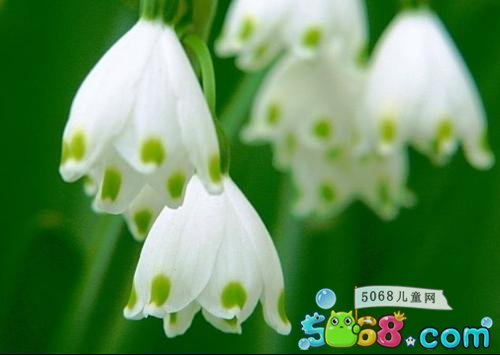
Snowflake lotus, also known as snowbell flower or lily-of-the-valley daffodil, is suitable for gardens and rock gardens. It can also be used for indoor decoration or as cut flowers in pots. It is deeply loved by people. What kind of cultivation techniques do you want to use to propagate snowdrops? The following is the editor introducing snowdrop cultivation techniques.
Humidity management
Snowdrops like a dry air environment; this environment lasts too long and is not suitable for rainy days, and they are easily infected by bacteria. Avoid rain and keep the leaves dry at night. The optimal relative humidity of the air is 40% to 65%.
Temperature management
Snowdrops like a cool climate and are afraid of heat, making summer difficult; when the temperature drops below 10°C, they are not frost-tolerant and will enter a dormant state. The most suitable growing temperature is 15 to 28°C.
Lighting management
In late autumn, winter and early spring, since the temperature is not very high, direct sunlight should be given to promote photosynthesis and flower buds, flowering and fruiting. If you encounter high temperatures or in summer, you need to cover it with about 50% sun. After flowering and being placed indoors for protection, it should be placed near doors and windows facing southeast to extend the flowering period as much as possible and increase the number of flowers.
Fertilizer management
Snowdrops do not need too much fertilizer and water, and are also afraid of fertilizer damage, so apply fertilizer and apply nitrogen, phosphorus and potassium fertilizer in portions. The requirement is to follow the principle of fertilizing (with water), such as light fertilizer and diluted application, small amounts and multiple nutrients.:
Spring and autumn seasons
These two seasons are their peak growing seasons. Fertilizer and water management follows the sequence of "Huabao" - “Huabao” - clear water - “Huabao” - “Huabao” - clear water in a cyclical order (at least twice a week), with intervals of about: 1 to 4 days for outdoor maintenance and 2 to 6 days for indoor maintenance. When the temperature is low in the morning or evening, the plants are usually sprayed. On mornings with lower temperatures, watering should be scheduled as much as possible.
Winter
During the winter dormant period, the main work is to control fertilizer and water. Fertilizer and water management follows the sequence of "Huabao" - clear water - clear water - Potting When the seedlings fill the pot, first place 2 to 2 cm thick coarse-grained substrate or ceramsite at the bottom of the pot as a waterproof layer, sprinkle a layer of fully decomposed organic fertilizer as base fertilizer, about 1 to 2 cm thick. Then, cover with a layer of substrate about 1 to 2 cm thick, and then separate the plant from the roots to avoid burning the roots. The substrate for potting can be selected from the following substrates. Peat + perlite + ceramsite = 2 parts + 2 parts + 1 part; turf + slag + ceramsite = 2 parts + 2 parts + 1 part; sawdust + vermiculite + medium-coarse river sand = 2 parts + 2 parts + 1 part. After potting is completed, pour water once, then place it in a slightly shaded environment for a week. When transplanting seedlings, first dig a planting hole, and sprinkle a layer of organic fertilizer at the bottom of the planting hole as base fertilizer (base fertilizer). The thickness is about 4-6 cm, then cover with a layer of soil and place the seedling in it, separating the roots to avoid burning the roots. After placing the seedling, backfill the soil, cover the roots, and water the soil in with your feet. Fertilization Ground planting should be treated with base fertilizer and a small amount of bone meal. If the bulbs are not planted immediately after harvest, they should be temporarily buried in wet sand. Snowdrops should be planted in full sun or sparse forest, requiring fertile soil and good drainage.