A Detailed Guide to Lily Cultivation Methods and Fertilization Methods
Many people like lilies, and the editor likes them too, because lilies are not only beautiful, but also purify the air and decorate the spaces we live in. Below, the editor introduces some methods that need attention in lily cultivation. I hope everyone likes it.
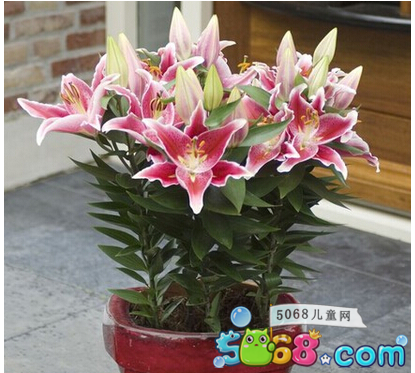
Lily cultivation methods
1. Choose a plant. The lily's "seed" is the bulb. Choosing plump, firm bulbs can make lilies grow better; the larger the bulb, the more buds there are.
2. Choose soil. Lilies like sandy loam soil that is deep and well drained. Choosing this kind of soil to water the soil will make lilies grow better!
3. Control the temperature. Lilies like a temperature of 15 to 25°C. If the temperature is below 10°C, their growth rate becomes very slow, but if the temperature exceeds 30°C, it is not suitable for their growth. Parents, remember that this temperature range can make your lilies more likely to succeed.
4. Proper pruning. Regularly pruning dead leaves and foliage can remove excess material from the plant, allowing nutrients to fully nourish healthy parts, so once dead leaves and yellow leaves are found, they will grow more beautifully.
Lily fertilization methods
Like other potted plants, lilies depend more on fertilizer. If sufficient nutrients cannot be guaranteed, lilies will grow slowly and be in poor condition. So what kind of fertilizer does this pot need? Those who like growing lilies may want to read on.
Lilies have a large demand for nitrogen fertilizer and potassium fertilizer. If the plant is in the growing season, it should be fertilized once every 10-15 days; if the plant is in the flowering period, the amount of fertilizer can be increased accordingly. Lilies have a relatively small demand for phosphate fertilizer. Each fertilization should be less than nitrogen and potassium fertilizer. If too much fertilizer is applied, it may cause the leaves to turn yellow.
Of course, if your potting soil is prepared by yourself, you may want to apply base fertilizer one month before planting lilies. Compost and grass ash are good choices. After lilies are planted, if conditions permit, you can also cover the surface with a layer of wood chips to prevent weeds from growing and reduce soil moisture loss.
Lily pruning methods
During the growth period of lilies, the plant usually has some dead branches and leaves. These leaves cannot provide water and nutrients to the plant. They must be cut off as soon as possible. When is it suitable to prune lilies?
Potted lilies are suitable for pruning in late autumn and early winter. Because lilies are a cold-tolerant plant, pruning will not cause the whole plant to freeze, and it prevents premature pruning from inducing autumn branches, which would affect the flowering and fruiting of the coming year. Both cold and frost protection are affected.
When pruning the branches and leaves of lilies, pay attention to the length of the pruning. Generally speaking, cutting off yellow leaves is enough. For branches that are too lush, they can be cut appropriately, but pruning should not be too frequent. It can be about cm. Lilies should maintain soil moisture after pruning. When the season is hot and the weather is dry, they should be watered regularly. Place the watering can on the soil surface for two rounds. The little ones will thank the owner for the good intentions.
Extending the lily flowering period
The simplest way to extend the lily flowering period is to prune once every 2-3 days, cutting only 1 cm each time. Because doing so allows lilies to absorb water better, provide more water and nutrients to the flowers, and make the flowers bloom longer.
In addition, controlling the room temperature for lilies at 15°C can also extend their flowering period.
For cut lilies, the flowering period should be extended by placing them in a bottle containing water, and a small amount of sucrose or salt or aspirin can be added to the bottle, and the life of the flowers can be greatly extended.