How to care for indoor Anthurium? Detailed methods and precautions
For Anthurium reproduction, the temperature should be 19 to 25 degrees; watering should be timely; choose loose, breathable soil and place it in a spot with scattered light; fertilize once every five to ten days during the growing period. In addition, it is necessary to control pests and diseases, and medicine can be sprayed promptly before they occur. Then repot, and both the pot and soil should be replaced, and water should be poured after repotting.
1. Growing environment
(1) Temperature: warm, preferably between 19 and 25 degrees. In winter, do not let it go below 13 degrees; in summer it should not be too hot either, not exceeding 32 degrees.
(2) Watering: water should be timely. Once or twice a day in spring and summer; about once a week in autumn and winter, depending on the temperature and humidity of the day. In summer, spray water to increase humidity.
(3) Soil: the main requirement is loose and breathable. Specifically, it can be mixed with humus soil, pond mud, river sand and plant ash. You can also add some base fertilizer.
(4) Lighting: it has a need, but not much. It can be placed in a spot with scattered light. When the light is strong, shade about 70%. In winter, place it somewhere it can touch sunlight.
(5) Fertilizing: about every 5 to 10 days during the growing period. The time is morning or evening.
2. Pest and disease prevention and control
These diseases include "anthracnose" and "root rot". After discovering them, it is necessary to promptly cut off the damaged leaves and branches, preferably burn them. Then, you can spray chlorothalonil and the like. Pests are also relatively common, such as snails, mites and so on. Snails are usually few in number and can be caught by hand. Mites can be sprayed. Whether it is disease or worms, it can be prevented before the disease occurs, and spray a fungicide once a month.
3. Repotting
After the plant grows for a period of time, the original pot can no longer meet its requirements and the soil does not have much nutrients, so the pot needs to be replaced. After replacing with a new pot and soil, pour water. After a week, water normally. Do not fertilize for one month.
How to keep Anthurium indoors?1. Introduction to Anthurium
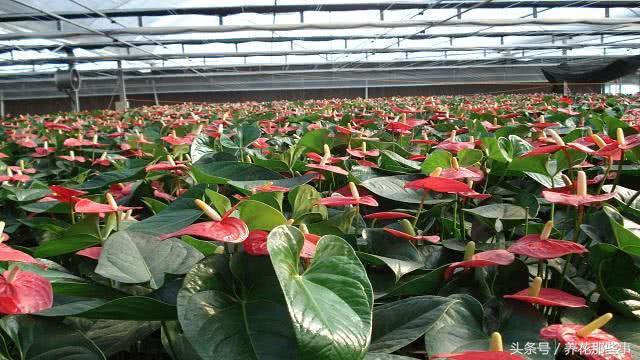
Anthurium, also known as flamingo flower, red crane, fire bird, candlestick. It is a perennial evergreen herbaceous flower of the Araceae family. Native to Central America and South America. Anthurium has a short stem and should not be used as a cut flower; it is mainly used for small and medium pots. When it blooms in spring, the green leaves are paired with bright red and shiny flames. It is very beautiful. The flame can last 50 to 60 days or longer. It is an excellent potted flower; when not blooming, it is a good foliage plant. It is usually used for landscaping in family rooms, living rooms and meeting rooms.
2. Environmental requirements for Anthurium growth
1. Soil
Anthurium prefers a moist and humid environment. The growing medium must retain water, be rich in fertilizer and have good permeability.
2. Lighting
Anthurium should grow normally under sufficient scattered light. In summer, avoid direct sunlight and leaf burn; when conditions permit, the flowers and autumn should be moved near a window to increase light. The plant must also be rotated regularly to ensure they can receive light and promote their crown.
3. Temperature
The optimal growing temperature for Anthurium is 16-24°C, and the lower temperature should be above 12°C. Please note that the pot should not be placed on a radiator or too close to a radiator. When the summer temperature exceeds 30°C, the flowering plant should be moved to a room in a northern ventilated position, and water should be sprayed around the plant to cool it.
4. Humidity
The normal growth of Anthurium requires about 70% air humidity. You can use a clean wet towel to wipe the leaves several times a day, or regularly spray water around the plant to increase air humidity. (But do not sprinkle water on the flowers, so as not to affect the viewing quality.)
3. Watering methods
Watering Anthurium is done according to how dry the soil is. We must water once every three days in spring and autumn. In summer, once every two days, and note that in summer, use a sprayer to spray the leaves at noon to increase humidity. In winter, you can water once every 5-7 days. When the weather is cold, water between 9 a.m. and 4 p.m. When watering, pay attention to alternating dry and wet, and avoid watering when there is severe water shortage, which affects the growth and development of Anthurium.
4. Fertilizing methods for Anthurium
The normal growth of Anthurium requires many nutrients, including large amounts of elements such as nitrogen, phosphorus and potassium, as well as trace elements such as iron, copper, manganese and zinc. However, the surface of Anthurium leaves is waxy and does not absorb nutrients. Therefore, carry out root fertilization and follow the principle of "lean fertilization". When fertilizing, note that the amount of nitrogen fertilizer should be increased during the plant's growing season; in late autumn and early winter, phosphorus fertilizer and potassium fertilizer should be added to help the plant resist cold; in winter, fertilizer should be controlled and water should be controlled, so the plant can pass winter safely. In addition, after applying liquid fertilizer, immediately spray the plant's leaves, rinse the leaves, and avoid burning the leaves.
5. Anthurium pruning methods
Under normal circumstances, during the growth of Anthurium, the petioles at the base gradually degenerate, and the stipules can be cut off promptly when they dry. When the peduncle turns yellow, it must be removed from the bottom of the guardrail 2 cm as soon as possible.
6. Pest control for Anthurium
These diseases mainly include leaf spot, anthracnose and root rot, while the common pests of Anthurium are red spiders and aphids. Mainly through controlling temperature, regulating moisture, and preventing with medicine. The most important thing is to observe promptly, prevent promptly, and remove pests and leaves promptly.
7. Choosing a pot for Anthurium
Anthurium is a light-sensitive fleshy root, so it is usually necessary to choose a pot with low light transmittance and many ventilation holes at the bottom. Therefore, peat pots, black plastic pots and the like are better. However, it is best not to choose a plastic pot for the night, and it is best not to use a glass pot.
8. Hydroponic Anthurium
1. Transplanting
Dig the potted Anthurium out of the soil, cut off the rotten roots, rooting roots and old leaves, wash the roots with water, disinfect with potassium permanganate solution, and then rinse the Anthurium with water. If transparent glassware is used to grow Anthurium, it is best to cover the outside of the glass with a black plastic bag to prevent glare. Cover the top with a transparent convenient bag (for heat preservation and moisture retention). Place it in a spot with scattered light and maintain a temperature of 10 degrees or higher.
2. Changing the water
The roots of Anthurium are very strong. It is necessary to regularly change the water for Anthurium, remove the mucus secreted by the roots of Anthurium and some algae plants, and cut off old roots and rotten roots. This helps increase the amount of dissolved oxygen in the water. Usually, the water is changed once every 2 or 3 days. In winter, it can be changed once a week. Each time the water is changed, nutrient solution is added once. When cultivating hydroponic flowering plants, as long as 1/2 of the Anthurium roots are immersed in water and the other roots are exposed to the air, the Anthurium roots can breathe. Insufficient dissolved oxygen in the water will cause root rot.
3. Light and temperature
Anthurium likes a warm, semi-shady environment and avoids sunlight. When cultivating hydroponic Anthurium, pay attention to the location, preferably in a ventilated and airy place, to avoid strong light. In summer, the temperature of the environment around hydroponic flamingo flower should not be higher than 28°C. In winter, the cultivation temperature of hydroponic flamingo flower should not be lower than 14°C. Below this temperature, the flamingo flower will freeze to death. When cultivating hydroponic flowering plants, as long as 1/2 of the Anthurium roots are immersed in water and the other roots are exposed to the air, the Anthurium roots can breathe. Insufficient dissolved oxygen in the water will cause root rot.