Detailed Guide to Bowl Lotus Planting Methods and Pest and Disease Control Techniques
The open flowers of the bowl lotus are very large and brightly colored. It also gives off fragrance and grows well. It is a precious aquatic flower. When propagating, pay attention to the method of making a beautiful lotus bowl. Below, the editor introduces the planting methods and pest control methods for bowl lotus. I hope everyone enjoys it.
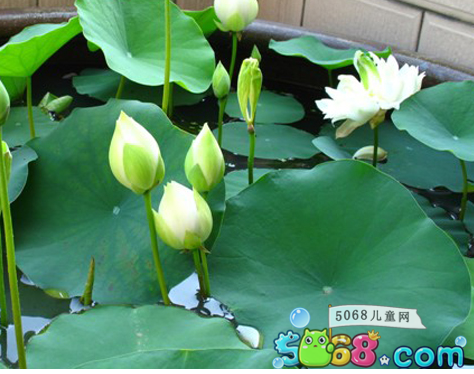
Methods for Planting Bowl Lotus
1. Transplanting: Use a bottomless clay pot or a plastic basin with a diameter of 45-75 cm to grow bowl lotus. Add half a basin of garden soil or river pond mud to the pot. When transplanting, press the fine roots of the small river seedlings into the mud. In the middle, plant one plant per pot, and after transplanting add an appropriate amount of water so that the water does not submerge the small lotus leaves.
2. Water: The amount of watering for bowl lotus differs at different growth stages. When planting, it should not be too much. Too much water will hinder the growth of young roots and cause root rot. When the leaves grow larger, gradually add water, watering in the morning and evening.
3. Fertilizing: Bowl lotus seedlings should be mixed with a small amount of rotted cake fertilizer or bean bran, peanut bran as base fertilizer, but fertilizer should not be applied excessively. Generally, adding a small amount of cake fat and other base fertilizer to the cultivation soil can meet its needs for the whole year.
4. Light: Bowl lotus loves sunlight. If daily light is less than 4 hours, it cannot form flower buds. During the growing period, it should be placed in a sunny balcony or windowsill in the sun to get plenty of sunlight. At noon in summer and early autumn, appropriate shading is needed.
5. Pruning: When the leaves of a bowl lotus grow too many and too densely, some leaves can be properly removed to promote the plant's respiration and ventilation. It also helps flowering. When using the same container for multiple cultivations, if the leaves are found to have strong sunlight, they should be cultivated in time.
Pest Control of Bowl Lotus
1. Rot disease
[Symptoms] The disease occurs throughout the whole plant and develops starting from the roots, extending to the underground stem, petiole, leaves and pedicel. The underground stem appears to have no symptoms at first, but some cross-sectional ducts turn light brown or brown and gradually expand.
[Prevention and treatment] Spray 50% carbendazim wettable powder 600 times liquid and 75% chlorothalonil wettable powder 600 times liquid.
2. Leaf rot
[Symptoms] On leaves floating on the water surface, the shape of the lesions is uncertain; some are shaped like an "S", some are shaped like a scorpion, brown or dark brown. Heavily diseased leaves turn brown and rot and are difficult to pull out of the water.
[Prevention and treatment] Spray 50% carbendazim wettable powder 800 times liquid or 70% thiophanate-methyl wettable powder 800 times liquid or 30% basic copper sulfate suspension 500 times liquid at the beginning of the disease, once every 10 days or so, for continuous control 2 to 3 times.
3. Rot
[Symptoms] The leaves on the leaves are covered with small black spots, which then expand into round, polygonal or irregular shapes. The edges are black, with yellow halo lesions. The gray-black center has a wheel pattern. The diseased parts easily break or fall off. The leaves and leaf edges are incomplete.
[Prevention and control] 50% carbendazim wettable powder 600 times liquid, or 75% chlorothalonil wettable powder 600 times liquid, or 36% thiophanate-methyl suspension 500 times liquid, spray once every 10 days, for continuous control 2~3 times.
4. Anthracnose
[Symptoms] On the leaves, original brown spots, then the spots expand to round lesions close to 10 mm or more, and the edges of the lesions are dark.
[Prevention and treatment] 75% chlorothalonil wettable powder 600 times liquid, or 36% thiophanate-methyl suspension 500 times liquid, or 50% benomyl wettable powder 1500 times liquid, or 80% anthracnose wettable powder 800 times liquid, spray once every 10 days, for continuous control 2 to 3 times.