How to sow nasturtium? Detailed steps and methods shared
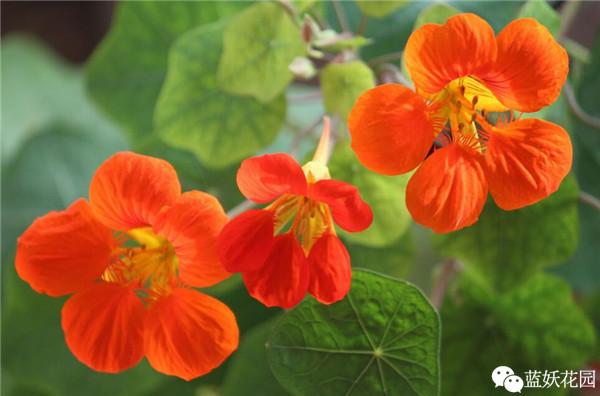
For buds growing nasturtium for the first time, what they most want to know is how to sow, when to move to a pot, and when to apply top dressing. The following is a brief explanation of the nasturtium cultivation process from sowing to harvest.
First, sowing
Nasturtium can be sown in spring or autumn. Autumn sowing of nasturtium is much better than spring sowing because its growth cycle is long. The plants are compact, the flower volume is large and concentrated, suitable for hanging, and the varieties are complete. Nasturtium grown in spring has thin branches and very long sections. They are suitable for climbing, small and compact.
It can be sprouted before sowing. Of course, if you are as lazy as I am, I will just plant it directly!
1. Sprouting method:
1. Soak the nasturtium seeds in clean water for a day, then wait for the wrinkled skin on the surface of the nasturtium seeds to stretch out and make them wrinkled.
2. Use a disposable plastic lunch box. Of course, other boxes are also possible. Coat the bottom of the box with 2 layers of paper towels and spray with water. Note: Do not use scented paper towels. Place the seeds on the paper towel, cover with a layer of paper towel, and spray wet. Then cover with the lid and begin sprouting. When the temperature is above 20 degrees, they can be exposed in about 3 days.
2. Sowing:
After the seeds stick out little white legs, they can be planted. First, put charcoal, perlite and vermiculite into the nursery at a ratio of 1: 1: 1.
2. Make a hole in the middle of the soil. The size of the hole should be enough to put the seed into it. Gently put the white seed into the hole, being careful not to damage the white sprout. Then gently cover with soil. Keep the soil moist, and after 3-5 days the seeds will break open.
Two, nursery
1. After nasturtium seedlings emerge from the ground, they should be moved to the brightest place as soon as possible, gradually moved into the sun for protection, so as not to remain for a long time.
2. When nasturtium grows 5-6 leaves, it must be pinched and the germination of side branches promoted. Pinch for the first time at 4 leaves.
3. Nasturtium seedlings do not need fertilizing. After the first topping, when the roots fill the seedling pot, they can be planted in a pot.
Third, planting out
Soil used for nasturtium cultivation can be used. Add peat + perlite + vermiculite to 10% granular chicken manure and 10% worm castings as base fertilizer, at a ratio of 1: 1: 1.
Fourth, topping and top dressing
After planting out, carry out the first topping when the side branches grow 4 leaves. Pinching needs to be done many times for the plant to reach its full effect.
To make nasturtium bloom early, alternate root and leaf spraying with diluted potassium dihydrogen phosphate every 7 days during the growing season.
5. Pollination
After nasturtium blooms, if there is no need to keep seeds, the spent flowers should be cut off in time to avoid excessive consumption of nutrients, so as to favor the formation of new flower buds.
Nasturtium raised outdoors does not need artificial pollination; wind and insects will complete this task. However, if it is raised indoors, it needs artificial pollination in order to set seed.
Artificial pollination is suitable on a sunny morning. When the stamens pop out pollen and the pistil is "human"-shaped, the pollen is applied to the pistil, and the same flower can be pollinated. After pollination the pollen will quickly fade. When it is spiral-shaped, it means pollination was successful.
6. Collection and storage
Ripe seeds will fall by themselves. After the seeds are dried in the sun, they can be stored in a cool place.
Blue Demon likes to grow some flowers and plants, likes flowers,
I suggest you pay attention to my WeChat public account: ilanyao
Every day, I will share Blue Deer's experience of growing flowers and planting flowers
Whether you are giving flowers or growing flowers, I suggest you add the Blue Demon Garden public account
How to grow nasturtium? When the seeds are planted, it will bloom in full bloom, and the flowers are beautiful.A friend grew some seed plants at home, and the flowers are beautiful. The leaves can also be used for tea, and the original name is nasturtium. It blooms in summer, and you can climb the vine. Seeds can also be grown, or they can be propagated by branches. The leaves are a bit like copper coins. Its flowers can be used to make tea, known as "Saiwai Longjing", and "better to taste three flowers than drink two liang of tea". After brewing, not only is the tea clear and bright, but the aroma is also light.
The method of growing nasturtium: 1. Spring or autumn is the sowing season. Soak the seeds in warm water for a day, then place them on a paper towel to sprout. The temperature is suitable. If the temperature is high, it will turn white within three days and can be planted in the soil. That is it.
2. For the soil for planting nasturtium, peat, perlite, humus soil can be used, adding a small amount of organic fertilizer, and about one week after planting.
3. When it grows to six or seven leaves, topping is pinching, leaving the ones below to continue growing, and during fertilizing with chicken manure or phlegm, fertilize twice, and it can be topped appropriately again. This will grow very well. If you do not want to sow, you can use cuttings to prepare sand. This will bloom once in summer and once in spring.
When is nasturtium usually planted and when does it bloom? How to plant the seeds? What should I do if the leaves are yellow?Nasturtium belongs to the genus Tropaeolum, also called nasturtium, cold lotus, golden lotus, dry lotus, golden lotus, cold golden lotus, big red bird. So when is it usually planted and when does it bloom? How to plant the seeds? What should I do if the leaves are yellow? According to the flower base in Suqian, Jiangsu, according to region and climate, the sowing of nasturtium seeds can be divided into spring sowing, autumn sowing and winter sowing.
When is nasturtium usually planted and when does it bloom?
Sowing:
1. Spring sowing (East China): High summer temperatures are not suitable for the growth of nasturtium, so spring sowing is very early. From early February to early March, it can sprout 30 to 35 days after emergence and bloom 40 to 45 days later. The characteristics of spring-sown nasturtium are wide leaves, slender stems, fewer flowers than autumn sowing, short single flower period, and few plants. Spring sowing has a short growth cycle, so it is more suitable for beginners.
2. Autumn sowing (East China): Autumn sowing of nasturtium starts in late September to early October, and February to March of the following year is the flowering period. The characteristics of autumn-sown nasturtium are thick leaves, thick branches, compact plant type, short stem sections, many flowers, long flowering period, and plump seeds. Because the growth cycle is long, autumn sowing is a test of flower lovers' patience and planting techniques.
Flowering:
Flowers solitary or 2-3 in cymes, petals 5, sepals 8-19, yellow, elliptic obovate or obovate, petals growing to the sepals, narrowly lanceolate.
In the north it is often used for growing flowers in one or two years. When environmental conditions are suitable, it can bloom all year round. One flower can last 8-9 days, and the whole plant can produce dozens of flowers at the same time. The fragrance is fragrant and the colors are gorgeous, winning people's love.
It can be grown year-round in southern China; it is sown in autumn in northern China and potted indoors. As a spring flower, it blooms during New Year's Day and the Spring Festival.
The leaves are beautiful, and the flowers are purple, orange and yellow. Nasturtium vines twine together, and the shape of the leaves is like a lotus bowl. When the milky yellow flowers bloom, they are an important ornamental flower.
How to grow nasturtium seeds?
1. Seed treatment: Because of the seed coat, nasturtium is thicker. Before planting, soak in warm water (about 40°C) or cold water for 12 hours, peel off the seed coat, then continue soaking for 12 hours, so that the water will not flow over the seeds. It should.
2. Seed sprouting: Take a clean unscented paper towel, fold it 6 to 8 layers, put it in a small dish, moisten it with purified water (it is appropriate to soak the paper towel), gently press the seeds soaked in the middle of the paper towel, then put the small dish into a transparent food bag, and tighten it for 15 to 30 minutes every day.
3. Sprouted sowing: Seeds sprouted with paper towels generally crack within 2 to 7 days, revealing the sprout tip. When the sprout tip is 2 mm, the seedlings can be laid out. After 2 to 5 days in the soil, the cotyledons will come off from the ground, and when the cotyledons are fully unfolded, they can be fully exposed to light.