How to grow jasmine and gardenia? Easy to learn
Jasmine and gardenia are the public's favorite flowers, and they are also grown in homes. What are the breeding methods for these two flowers? Below, the editor introduces the breeding methods for jasmine and gardenia, and hopes everyone will like them.
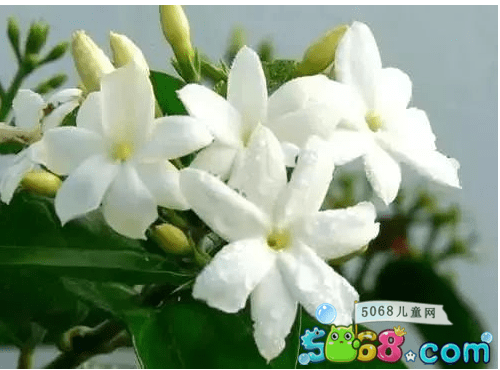
Jasmine cultivation methods
1. Growing environment: Jasmine likes heat, humidity, and ventilation, and needs sufficient light. It is cold-sensitive; potted jasmine in the south can be grown outdoors in winter, while in the north, warmth protection is needed in autumn and winter, and in the south it should be moved indoors. When light is strong, the branches are sturdy, the leaves are dark green, and the flowers are fragrant; when sunlight is insufficient, the flowers become fewer and less fragrant.
2. Water management: Jasmine is not drought-tolerant, and it also should avoid waterlogging. During the rainy season, water should be drained from the pot in time, otherwise the leaves easily turn yellow. In summer, on hot and sunny days, it should be watered twice a day, once in the morning and once in the evening. If leaf curling is found, water should be sprayed on the leaves to promote growth.
3. Soil management: For cultivating jasmine, fertile sandy soil and semi-sandy soil are suitable. Planting in slightly acidic soil with a pH of 6~6.5 results in dense roots and vigorous growth; if the soil is heavy, lacks substrate, has low fertility, and has poor ventilation, there will be fewer roots, shorter plants, thinner stems and leaves, and fewer flowers.
4. Reasonable fertilization: The high-temperature summer season is the vigorous growth period for jasmine. Use more organic fertilizer and phosphorus-potassium fertilizer, such as peanut cake powder, bone meal, superphosphate, and multi-element fertilizer, twice a month. In the summer growing season, the phenomenon of lush branches and leaves but no flowering often occurs. The main reason is that too much nitrogen fertilizer was applied, causing leaf growth. In this case, it is necessary to control fertilizer and water, increase the application of phosphorus-potassium fertilizer, promote the growth of flower buds, and pay attention to jasmine. Move it to a sunny, well-ventilated place.
5. Timely pruning: Jasmine grows rapidly in summer and should be pruned in time. For potted jasmine, pruning should keep the base 10 cm to 15 cm to promote the thickest new shoots. If the new shoots grow very vigorously, they should be topped by 10 cm during growth to trigger secondary branches to bloom more and keep the plant shape compact. After the flowers wither, the flowering branches should be cut off in time to reduce nutrient consumption, promote new branches, make the branches dense, and produce more buds and flowers.
6. Pest control: Jasmine often suffers damage from larvae, scale insects, and red spiders. July to September is the most serious period, and they often eat the buds. It can be sprayed with Bordeaux mixture or pyrethroid at 200 times water, once every half month. That is right; pesticides should not be sprayed only after pests and diseases appear, so prevention should be carried out first. Spraying time should be 9:00 a.m. and 4:00 p.m. on sunny days. It should not be sprayed at noon under the hot sun to prevent phytotoxicity.
How jasmine reproduces
Jasmine cultivation uses cuttings, and it can also be propagated by layering or division.
1. Cutting propagation: Conducted from April to October, select mature 1-year-old branches, cut them into cuttings with more than two nodes, remove the lower leaves, insert the cuttings into mud, half buried, cover with plastic film, maintain high air humidity, and they will root after about 40 to 60 days.
2. Layering: Use longer branches, lightly scrape the lower part, bury it in sand in a small pot, keep it moist frequently, and it will begin to root after 20 to 30 days. After 2 months, it can be separated from the mother plant and planted separately.
Jasmine fertilization methods
From June to September, during the flowering period, apply liquid fertilizer with a higher phosphorus content, preferably once every 2 to 3 days. The fertilizer can be made from bean cake and fish water, or ammonium sulfate, superphosphate, and general fertilizer. When the ingredients are mixed, the jasmine plant will be burned. It can also be sprayed on the leaves at night with a 0.1% potassium dihydrogen phosphate aqueous solution, which can also promote more flowering.
Jasmine flowering maintenance
Jasmine is very tolerant of fertilizer. As long as it is maintained properly, a potted jasmine can bloom three times a year. If fertilizer is insufficient and nutrients are lacking, it will no longer bloom after the flowers fade. If management is in place, it can keep blooming from the end of May to the beginning of November. The key is to master pruning, sunlight, and fertilizer.
Jasmine begins blooming in early summer. If managed properly, it may produce three rounds of flowers.
In early June, jasmine begins to bloom. The method of picking flowers is to remove leaves along with the flowers to promote the reappearance of new buds. At this time, apply light fertilizer water twice a week and keep the soil moist.
From the end of June to the beginning of July, this is the peak blooming stage. At this time, fertilizer and water management should be strengthened, fertilizing once every two days and watering once, applying fully decomposed organic liquid fertilizer. The ratio of fertilizer to water is 1:4. Watering should be sufficient, usually once a day. Usually watering should be done in the morning, while fertilizing is better in the evening. This continues until the end of July, because with sufficient fertilizer, the flowers can open.
In the first 10 days of August, flower formation occurs in the peak stage. At this time, fertilizing is slightly thicker than before, generally suitable fertilizer and water. To promote better flowering of jasmine, superphosphate solution can also be sprayed onto the leaves. By the end of August, fertilization will gradually decrease, once every 6 to 7 days, and watering still needs to be more frequent, maintained once every 2 days.
From early September to early October, the third round of flowers forms. At this time, fertilization should be stopped, and the amount of watering should be gradually reduced. As the weather gradually turns colder, bud formation will be affected, so the number of flowers is small. After the end of October, flowering ends, and it is only necessary to keep the soil slightly moist.
Gardenia propagation methods
1. Soil: Gardenia is an acid-indicating soil plant, and a slightly acidic soil environment becomes the key to gardenia growth. Generally speaking, fertile, loose, and well-drained acidic culture soil should be used for cultivating gardenia. The pH of the soil should be controlled between 4.0 and 6.5. If pine sawdust is thoroughly mixed into the soil, the effect is very good. Oh.
2. Temperature: The growth temperature for gardenia is 18°C-22°C, and 5~10°C is suitable in winter. Below 10°C it is prone to freezing, and both too low and too high temperatures are extremely unsuitable for growth. In summer, gardenia should be placed under sparse forest or under a well-ventilated shed, with high air humidity and filtered light. In winter, it should be placed in a sunny environment not lower than 0°C, letting it enter natural dormancy; too high a temperature will affect the next year's flowering.
3. Moisture: Gardenia likes moisture, so increase watering during the growing season. Each time watering is done after the soil surface turns white, it must be watered thoroughly. In the hot summer, it must be sprayed 2-3 times a day to increase air humidity and help the plant cool down. After the buds sprout, it should not be watered too much, to avoid dropping. In winter, watering is better kept dry to prevent waterlogging.
4. Fertilizer: Gardenia is suitable for fertilizer. To meet the fertilizer needs during the growing season and maintain the slightly acidic soil environment, ferrous sulfate can be mixed into the fertilizer solution for fermentation. After the growing season in April, you can apply additional fertilizer once every half month. When fertilizing, it is better to add some water to prevent burning. Fertilization must grasp the principle of thin fertilizer applied frequently, and avoid applying concentrated fertilizer or raw fertilizer. Stop fertilizing during dormancy.
5. Timely pruning: Gardenia has strong sprouting ability, and branches easily overlap, causing dense ventilation and scattered nutrients, so attention should be paid to timely pruning. For shaping, three main branches should be selected according to the tree shape, and other branches sprouting from the roots need to be cut off at any time. After gardenia thanks you for flowering, the branches should be cut off in time to promote the sprouting of new branches. When the new branches of gardenia grow three sections, they should be topped immediately to avoid blind growth.
6. Pest and disease control: Gardenia is most prone to yellowing disease and leaf spot disease. Attention should usually be paid to prevention and control, and if they occur, corresponding treatment measures should be taken. Common pests include stinging caterpillars, scale insects, and whiteflies. If there are a small number of pests, wipe them off with a damp cloth; if there are too many, pesticide should be sprayed. Under normal circumstances, disinfection should be carried out.