How to care for an Australian pine (Norfolk Island pine) bonsai? Master these few tips
The Norfolk Island pine is relatively tall, and we usually see it in parks or by the roadside. It is indeed rarely seen as a bonsai in people's homes.
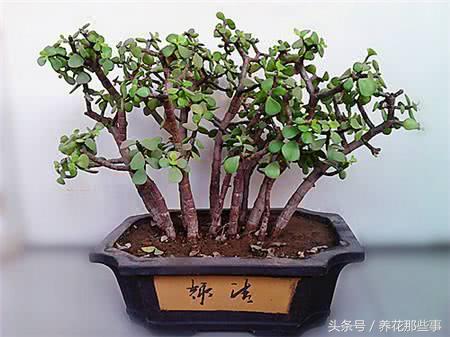
But many people like to turn it into a bonsai and have not yet succeeded. So today we will introduce the techniques for making a Norfolk Island pine bonsai. How should we maintain it?
Before making a Norfolk Island pine bonsai, we first need to do some preliminary preparation work. When choosing seedlings of the Norfolk Island pine, we must choose healthy ones with green leaves, and the color should be a relatively good green. Then you can move on to the next step, shaping the top. In terms of shaping, you do not have to be too rigid and can modify it according to your own aesthetics. You can also add some decorations to increase interest after making it. Of course, you cannot completely depart from its own innovative growth, as this is not good for its growth.
After this, I entered the later maintenance stage. When the Norfolk Island pine is growing in its peak season, do not forget to water it. You can also sprinkle some water around its leaves to increase soil and air humidity. Of course, you cannot water too much. The problem with overwatering is that there will be water and then root rot. Although there are always reminders, in reality many people will still forget this problem. Avoid these situations as much as we can.
Then there is the light for the Norfolk Island pine, as it likes the sun, so try to put it in the sun for a sunbath. However, when it is summer, if it is placed outdoors, a layer of shade should be provided. Preparations for sun protection must be made. If there is no sun protection, it will get sunburned and the leaves will be scorched.
If some of them are just diseased, or if parts are sunburned or rotted, they should be pruned off in time. Pruning work is especially important in bonsai and is an important step in improving its aesthetics. So deal with these to improve its ornamental value and also prevent these future pest and disease problems.
Pest and disease problems of the Norfolk Island pine are still very common and must be solved in time. However, if it is not particularly serious, you can use some tools in your own home to manually remove these, or use essential balm or washing powder. If you can solve the problem, you can try to solve it, but if none of these can solve it, then the area of pests and diseases is relatively large, and more serious cases can be treated with chemical agents.
Regarding the Norfolk Island pine bonsai, we introduced it today. After talking about its creation and significance, I think you have a better understanding of it. At this point, you can make a more in-depth understanding on your own.
Norfolk Island pine bonsai production techniques, and how should we maintain it?The Norfolk Island pine is relatively tall, and we usually see it in parks or by the roadside. It is indeed rarely seen as a bonsai in people's homes.
But many people like to turn it into a bonsai and have not yet succeeded. So today we will introduce the techniques for making a Norfolk Island pine bonsai. How should we maintain it?
Before making a Norfolk Island pine bonsai, we first need to do some preliminary preparation work. When choosing seedlings of the Norfolk Island pine, we must choose healthy ones with green leaves, and the color should be a relatively good green. Then you can move on to the next step, shaping the top. In terms of shaping, you do not have to be too rigid and can modify it according to your own aesthetics. You can also add some decorations to increase interest after making it. Of course, you cannot completely depart from its own innovative growth, as this is not good for its growth.
After this, I entered the later maintenance stage. When the Norfolk Island pine is growing in its peak season, do not forget to water it. You can also sprinkle some water around its leaves to increase soil and air humidity. Of course, you cannot water too much. The problem with overwatering is that there will be water and then root rot. Although there are always reminders, in reality many people will still forget this problem. Avoid these situations as much as we can.
Then there is the light for the Norfolk Island pine, as it likes the sun, so try to put it in the sun for a sunbath. However, when it is summer, if it is placed outdoors, a layer of shade should be provided. Preparations for sun protection must be made. If there is no sun protection, it will get sunburned and the leaves will be scorched.
If some of them are just diseased, or if parts are sunburned or rotted, they should be pruned off in time. Pruning work is especially important in bonsai and is an important step in improving its aesthetics. So deal with these to improve its ornamental value and also prevent these future pest and disease problems.
Pest and disease problems of the Norfolk Island pine are still very common and must be solved in time. However, if it is not particularly serious, you can use some tools in your own home to manually remove these, or use essential balm or washing powder. If you can solve the problem, you can try to solve it, but if none of these can solve it, then the area of pests and diseases is relatively large, and more serious cases can be treated with chemical agents.
Regarding the Norfolk Island pine bonsai, we introduced it today. After talking about its creation and significance, I think you have a better understanding of it. At this point, you can make a more in-depth understanding on your own.
How to grow a Fujian tea bonsai? Considerations for Fujian tea maintenanceThe name of the Fujian tea bonsai was born in Fujian. Its leaves are glossy and look impressive. Many people like to grow it because it is more convenient and the conditions are not particularly strict. Below I will take a scientific look at its non-strict conditions. After finishing, you may find that it is very easy to propagate. Why not give it a try?
From the most important perspective of watering, it likes water more. It needs to be watered every day. We should adjust according to the water needs of different seasons. At this time, some people may have doubts. Wouldn't watering every day be too troublesome? How can it be convenient? In fact, I want to say that watering today is not troublesome. If not, you have to calculate daily life. If you are fertilizing, you need to apply it once a month from April to October each year. Of course, this is also determined according to its growth situation. There is no need to follow a standard.
Fujian tea belongs to the semi-shade category. It likes sunlight, but not strong light. In the summer afternoon, if there is strong direct light, it is better to move the pot back into the house and place it in a cool place. Morning light is better. In the same winter, it should be placed indoors, otherwise it may be frozen. In winter, you can choose to move it outside at noon to receive light. In winter, try to choose a room temperature above 5°C.
Then there is the pruning of the Fujian tea bonsai. All bonsai should be pruned to be more beautiful and to receive people's attention. As it grows, it is important to cut off dead roots. At the same time, in order to promote the development of its new roots, we will choose to systematically prune its new roots in May and September, nothing more than picking buds, picking shoots and pruning. Specifically what to prune, or look at what it looks like now, and then you want it to grow in a certain direction for some pruning.
Pest and disease problems are also a headache for many people. First, we must prevent it, but if a problem occurs, we must think about how to cure it. Under normal circumstances, then we have two methods. One is acceptable, which does not rely on any pesticide for its own treatment. Well, it is necessary to use pesticides for control. For example, if the branches have rot, we can actively scrape off the rotted places. But if a yellowing problem appears on the leaves, then we should choose insecticides for control.
Having said that, I think you should feel that growing it is not difficult. In fact, as long as you judge according to the actual situation, just take care of it.