What to Do When Flowers and Trees Wither After Planting? Causes and Solutions
From Emergence to Harvest, How Do Peanuts Rot?
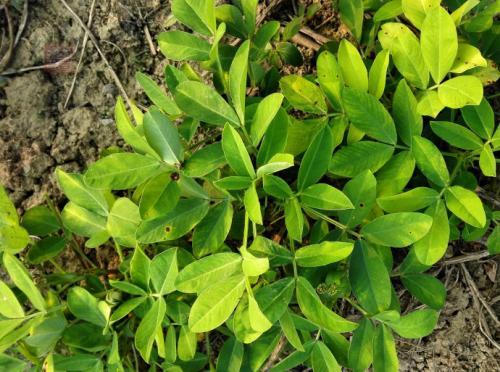 ?
Answer: After peanuts emerge, root wilt disease is found to be caused by two reasons: nematodes, and bacterial wilt and white blight syndrome.
?
Peanut nematode disease.
Symptoms: it first invades from the root tip, causing the main root to swell into a spindle shape, when the aboveground part is not yet obvious. Then, before the early flowering stage, irregular rice-grain-sized root-knots form at both ends of the lateral roots, and many small fibrous roots grow on the knots. These fibrous roots can form knots again after the nematodes invade once more, and fibrous roots grow on the knots. After repeated infection, the entire root system becomes a cluster of fibrous roots. In the middle and late stages of the disease, the stems and leaves of the aboveground part turn yellow-brown, the plant is yellow and stunted, the leaves are thin, and the lower leaves fall off. In severe cases, the whole plant withers on the pods, which are few, sometimes with irregular brown knots. The pathogen is the root nematode. The female is a long pear shape, visible to the naked eye, with milky-white tiny granules. The male resembles an aphid, visible to the naked eye but tiny and formless.
?
Control methods. 1 Strictly implement quarantine measures. 2 Dry the pods so that the moisture is reduced to below 8% before storage, which can kill the nematodes in the pods and reduce long-distance spread. 3 Reasonable crop rotation; a 23-year crop rotation has an obvious effect, and sweet potato rotation is also effective. 4 Remove weed hosts, clear out diseased plants and reduce the pathogen. 5 Chemical control: fumigate the soil with chloropicrin (6 ml per sq ft), or mix with 3% phorate, 3 to 4 kg per mu, and apply two weeks before sowing. During disease onset, 1 pound of phosphorus can be applied to each sporadic diseased plant.
?
Bacterial wilt and white blight syndrome.
Symptoms: 1 Bacterial wilt, with sudden wilting at the flowering stage, the main stem and the branches, the upper part of the upper part. At the beginning of the day, the weather is wilting, it recovers at night, the leaves are delayed in the morning, the leaves close in the afternoon, and the leaves gradually die. After death, the leaves are still blue-green. From mid-June to October, 2 white blight begins as part of a film, later expanding into large patches of death. If the disease is early, no peanut kernels are collected. 3 Rot, which occurs most severely in peanut pods. At the beginning of the disease, on sunny days, the leaves wilt at noon and return to normal in the morning and evening. After a few days they all die. Dead plants are easy to pull up, the cortex of the stems and roots rots and turns brown, there are few lateral roots, and the main root shrinks into the shape of a rat tail. The base of the stem produces pink mold.
?
Control methods. 1 Reasonable crop rotation: sweet potato, wheat, peanut rotation, or paddy-upland rotation. 2 Deeply tilt and smoke the soil in the field, collect grass and manure, light it to smoke the soil, which both disinfects and composts. 3 Strengthen field management, control underground pests, and reduce root damage during cultivation. 4 Use disease-resistant varieties. 5 Chemical control: about 10 kg of tea powder per mu mixed with 50 kg of lime as base fertilizer, which can remain effective for 40 days after application. Early discovery of central diseased plants; applying lime powder has a significant effect. In the early stage of the disease, using 3% lime water is effective. Carbendazim spray can also be used.
?
[The above is my opinion. If there are any mistakes, please leave your valuable opinion in the comment section and actively participate in the comments. We invite everyone to follow Sannong Daren, Xuri, and pay attention to agriculture, rural areas and farmers' issues! ]
Recommended for potted flowers, how to transplant better?We have learned biology, and grafting plants is a technique. When studying, I felt that grafting technique was particularly high-end and hard to do well. But in fact, as long as you master the grafting technique, it is still very simple. Study hard, and your flowers and trees can also be grafted yourself.
I don't know if anyone has seen a gardener graft. Are you also very interested? Let the editor talk a little now about grafting knowledge. The first step is to choose the type of fruit to graft. You cannot blindly transplant two plants together. Wild plants are a better choice, because wild plants are very strong, and wild plants survive in nature because they are. It is better to use the same tree species as your own plant to transplant your own plant. It is better to choose a young tree as the rootstock. The growth potential of young trees is relatively strong. Just like a newborn baby, life is more tenacious and easy to heal. Grafting is important for choosing plants that match each other.
The season is also very important, because the weather and climate of each season are different. Spring is the season when spring blooms. If you want to graft flowers and trees at home, it is better to do it in spring, and spring flowers are the better time. After all, it is the time when most plants revive and bloom and bear fruit.
Many grafting details need to be done well, and everything like cotton strips should be handled carefully. For a young or middle-aged mother tree that grows vigorously and has no pests or diseases, it is better to choose vigorous branches for cuttings. Such spikes are easy to survive and very robust after harvest, and the newly grown spikes are not easy to produce.
The purpose of grafting is to match two plants and find each other's strengths to make up for weaknesses. Therefore, in order to grow better, the grafting technique must be done well, otherwise the survival rate of the plants will decrease and the purpose of grafting cannot be achieved.
The most important thing in protecting plants is daily maintenance. After grafting, we need to pay more attention to daily watering. Choosing suitable plants, in a suitable season, and grafting with skilled technique can achieve the effect you want. People who like flowers and plants must know about plant grafting. Grafting technique is actually a technique that is slowly developing. The application of grafting technique is increasing.
This is a manifestation of technological progress. Through grafting we can eat more delicious fruits, and the survival rate of many plants and flowers is higher. Therefore, in order to achieve the goal, we must learn grafting technique well, otherwise it may not only fail to achieve the expected effect, but the original plant will also be damaged.