How to grow a banyan bonsai? Detailed explanation of cultivation methods and precautions
The eucalyptus bonsai is a vibrant and symbolic landscape. Therefore, maintaining its continuous growth has become an inevitable goal of maintenance and management. When cultivating a eucalyptus bonsai, attention must be paid to breeding methods. Below, the editor introduces the cultivation methods for eucalyptus bonsai. Please take note, and I hope everyone enjoys it.
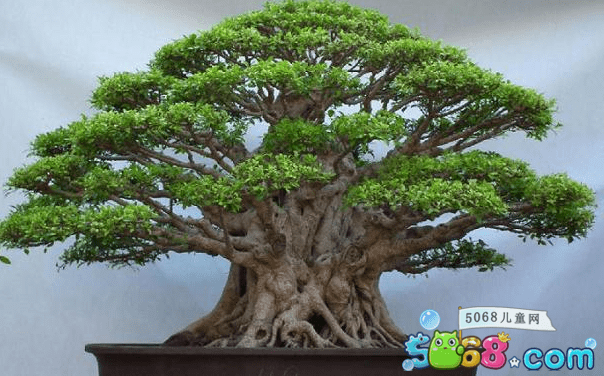
Cultivation methods for eucalyptus bonsai
1. Lighting: Eucalyptus belongs to subtropical plants and enjoys a sunny, well-ventilated, warm and humid environment. It is drought-tolerant and resistant to partial shade. Usually, it should be placed in a ventilated and well-lit place. There must be a certain amount of spatial humidity; insufficient sunlight, poor ventilation, and no indoor humidity. The plant can turn yellow and dry out, leading to death from pests and diseases.
2. Watering: Eucalyptus is planted in a pot. If it is not watered and replenished for a long time, the plant will wither due to lack of water, so it should be observed promptly and watered according to the dry and wet conditions of the soil to maintain soil moisture. Pour until water seeps out of the drainage holes at the bottom of the pot, but you cannot water only halfway (that is, dry and dry). After watering once, when the soil is white and the surface soil is dry, it needs to be watered a second time. Before watering, you cannot wait until all the pots are dry. In hot seasons, always spray water on the leaves or the surrounding environment to cool down and increase air humidity. Watering frequency should be less in winter and spring, and more in summer and autumn.
Fertilizing: Eucalyptus does not like fertilizer. More than 10 types of compound fertilizer can be applied monthly. When fertilizing, be careful to bury the fertilizer in the soil at the side of the flower pot, and water immediately after fertilizing. The main components of the fertilizer are NPK.
4. Pruning: Turning a wild stump into a bonsai view, pruning is a very important process. In the first year, the roots will be cultivated first, and the essence will be improved. Only unaligned buds will be removed. In the first year, after the branches are thick and lignified, they can be cut. It is mainly based on scissors, supplemented by tying. Cutting is suitable once a year, and movable and cutting strength can be done twice. The fork where the short branch is to be cut is thick, then cut again. Repeatedly, if you prune it correctly, it will take four years, and a good bonsai will appear in your hands.
Yellowing leaves of eucalyptus bonsai
1. Water yellowing: Young leaves are dark yellow and dull, old leaves show no obvious change, branches are yellow-green, new buds do not grow, indicating overwatering. Put the flower in ventilated, cool, self-blow-drying soil, then put it back in the pot.
2. Dry yellowing: Water-deficiency yellowing is not the same as water yellowing. Water-deficiency yellowing is dry leaf tips or edges, dry, old leaves fall from bottom to top, but new leaves grow more normally. When watering, pay attention to watering and watering.
3. Burn yellowing: Strong sunlight directly hitting some shade-loving flowers (such as spider plants, peacock bamboo carp, jade, etc.) can easily cause flower leaf tips, dry leaf edges, and yellow spots on the leaves in the sun-exposed part. Move to a shady place.
4. Insufficient light: In a long-term shady environment, the leaves cannot get enough sunlight and cannot form chlorophyll. The whole plant's leaves turn yellow and then fall off. Supplemental light can avoid the disease.
5. Fat yellowing: Flower yellowing caused by excessive fertilization or excessive flower concentration, manifested as dry brown tips on new leaves, generally thick and dull leaves, and uneven and unstretched, old leaves yellowing and closing. Fertilization should be stopped immediately, and part of the fertilizer should be washed out in large amounts.
6. Lack of fat: Lack of fat in young leaves causes color fading, yellow or light green, while old leaves are more normal or gradually turn from green to yellow. Check the potting soil. If there is dry caking, the soil should be replaced. Usually, dilute fertilizer should be applied frequently, and some water should be poured in promptly.
Notes on eucalyptus bonsai
1. Improper watering: Watering eucalyptus must follow the principle of not watering or watering, watering and watering. Dry here means the pot surface is dry, not that the pot is dry. Of course, even if it is dry, it will not cause great damage to the eucalyptus in a short time, because the eucalyptus leaves are thick and small and have a certain degree of drought tolerance.
2. Improper fertilization: Eucalyptus fertilization needs to use dilute fertilizer and diligent fertilization, avoiding the application of high-concentration fertilizer or unfermented and undecomposed organic fertilizer, otherwise fertilizer damage will occur, with light leaf damage and severe death.
3. Insufficient light: Eucalyptus grows well in an environment with sufficient light. If shaded at 30-50% during high summer temperatures, the leaf color is more emerald green. However, when the temperature is below 32°C, it is best not to shave to avoid leaf drop.
4. Caused by pests: Eucalyptus insect-caused leaf drop is mainly red spiders and scale insects. Although there are also "thrips", they only suck juice from one leaf, and the damage is less than the above two, and thrips are also easy to control; only the leaves can be removed and destroyed. Red spiders are relatively small, and the general damage is on the back of the leaves. This is caused by poor ventilation and dry air. After spraying the whole plant, you can spray plenty of water, such as phlegm, phlegm, etc. Scale insects are mostly found on stems, petioles, etc., with different sizes and colors, and shapes include round, oval, etc. They generally do not move, but the damage is relatively large and needs timely prevention. They can be wiped clean with a toothbrush or wiped, and laundry powder, 0.2% windproof oil solution can also be sprayed for prevention, or insecticides such as phosphine can be sprayed to control them, with good results.