How to care for a Clivia (Kaffir Lily) plant? A detailed guide to practical care methods
Many households have a hobby of growing flowers. With fresh green plants decorating the room, it can make a new home more natural and comfortable. Green plants not only serve as decoration, but can also make people feel better. I believe there are many households that grow Clivia. Clivia is sturdy and vigorous, and looks very nice. Let's take a closer look at the things to pay attention to when growing Clivia.
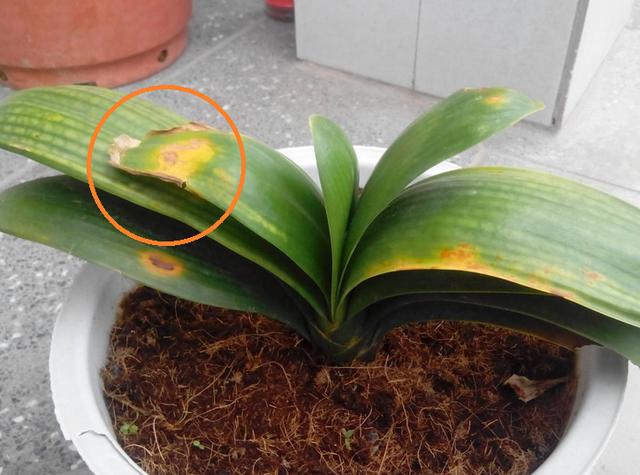
1. Control watering
When we water Clivia, we must never let water get into the Clivia flowers. If there is water in the flower pot, it will affect the breathing of the roots. When the roots rot, then the leaves won't have enough. The yellowing from lack of nutrients will ultimately lead to the withering of the Clivia.
A more scientific watering method is to check the moisture. After the soil surface in the Clivia pot has 2-3 cm of dry soil, we water again. In this situation, it is more beneficial to the growth of Clivia.
2. Temperature control
Green plants and flowers can only grow healthily and vigorously at suitable temperatures. So for Clivia, it is recommended not to let the indoor temperature drop below 5°C (in winter). If the temperature is too low, it can easily cause frostbite on Clivia leaves; the lower temperature for Clivia to sprout is 15°C, and the temperature for Clivia is around 10-20°C. If the temperature is too high, it will also affect the healthy growth of Clivia.
It is worth noting that although higher temperatures are beneficial to the growth of Clivia during the germination period, if the temperature is too high, it can easily lead to the growth of Clivia, so the growth of Clivia will not be very good.
3. Lighting
Clivia is afraid of glare and is not tolerant of high temperatures. If it is in strong light, the leaves of Clivia will easily lack water, which can easily cause the leaves to turn yellow.
A more suitable suggestion is to place Clivia in an indoor diffused-light environment, which is more beneficial to the development of Clivia.
4. Fertilizing
During the growth period, Clivia needs regular fertilizing, especially during the flowering period. If the temperature is below 10°C, stop fertilizing.
In addition, in autumn, Clivia's demand for fertilizer is relatively large. At this time, you can apply more fertilizer.
5. Preventing pests and diseases
If you encounter pests and diseases during the growth of Clivia, insects may bite the leaves of Clivia, and we need to remove the insects in time.
6. Changing the pot
Before changing the pot, stop watering for 1-2 weeks. In this situation, changing the pot will be easier. When changing the pot, pay attention to removing the rotten root system, and then disinfect it with potassium permanganate solution. The new potting soil is better as humus soil, which is more beneficial to the growth of Clivia.
After changing the pot, water it thoroughly the first time, and then place the Clivia in a diffused-light environment for maintenance. After about 2-3 days, the Clivia can basically be treated according to the usual care method.
These are some suggestions about Clivia cultivation, and I hope it can help all of you.
Clivia, does this problem stay the same as soon as summer comes? These key points make summer easy, super practical!Guide
The hot summer is already very hot. For some flowers, if you don't pay attention to them, they may die. Especially for green plants that are dormant or semi-dormant in summer, we need to manage them carefully. Many people like to grow them, but when they enter summer, they have problems with growing Clivia, and how to let it get through summer safely.
First, look at the most important factor, water control. Everyone knows that Clivia has fleshy rhizomes. Although it is more drought-tolerant, it prefers moisture. However, after entering summer, Clivia is in a semi-dormant state, and its root absorption capacity is relatively weak. If the potting soil is too moist at this time, it can easily cause root rot, but if the water is too little, it will cause the roots to dry out, which will affect the flowering situation for a year, so we must control water in summer, and keeping the pot a little moist is better.
The first point is to pay attention to controlling temperature. Because summer temperatures are high, some places can reach 30°C. Once it exceeds 25°C, the growth temperature of Clivia will stop its growth. Therefore, if it is to be safe in summer, and the temperature is not controlled. At least, we can put it on a well-ventilated balcony or on the north side of a window, or use a water basin, put a brick on top of the water basin, and then place the Clivia pot on the brick. On the brick, this will not only increase the moisture of the potting soil, but also provide a good cooling effect.
The third point to pay attention to is fertilizing. Because in summer, the physiological activities of Clivia are very weak, especially the absorption capacity of the root system is weak. Therefore, fertilizing must be stopped at this time, otherwise it is easy to cause fertilizer damage and affect the plant. For normal growth, if the propagation temperature is below 20°C, it can be fertilized normally.
The fourth point to pay attention to is the problem of changing the soil, because Clivia almost stops growing in summer, so it is necessary not to change the soil in summer, unless it is an unavoidable repotting. If so, it is recommended that after changing the pot, it must be placed in a cool and ventilated place. It is better to control the temperature at around 20°C, otherwise it can easily cause the plant to die.
The last point to pay attention to is lighting control. Summer light is particularly strong. If the plant is placed under strong light at this time, it is easy to get sunburned, and Clivia itself is a green plant that likes scattered light, so in summer, you must keep Clivia away from direct light, with very little scattered light.
Having written so much, finally let the flower novice sum it up: when raising Clivia in summer, control water, cool down, and ventilate. To keep it cool, you must remember this!
Clivia must be cultivated this way to learn it well. This will be learnedClivia symbolizes gentleness, politeness, talent, and pride. The key is that Clivia is also a decorative flower green plant. I believe many households have grown it. How can we ensure that Clivia grows well? Here are some things you should pay attention to.
1. Soil
First, loose, breathable, and well-drained, this is a must. In addition, Clivia is better to use humus soil, which can be prepared with broadleaf or coniferous leaves, and can be combined with some river sand to prepare it.
For example, coniferous humus soil can be combined with pine needles, rotted organic fertilizer, and river sand in a ratio of 5:3:2, suitable for seedlings and one-year-old Clivia.
It should be noted that unfermented decomposed fertilizer cannot be used.
2. Lighting
Clivia is suitable for growing in a semi-shady environment. In winter, the sun is not very strong, so you can grow it in the sun. In summer, you should avoid direct sunlight.
Under light, 3 hours of light per day in summer is enough. During the flowering period, light can be extended. The growth of Clivia is not only affected by light, but also by temperature. At 10-20°C. Photosynthesis is enhanced, and the leaves of Clivia are greener.
3. Temperature
I mentioned a point earlier. 10-20°C is the suitable growth temperature. If it is less than 10°C, it will affect the growth of Clivia. If it is high temperature, it is better not to exceed 25°C.
The other is the temperature difference between day and night. The temperature difference is better not to exceed 10°C.
In winter, the temperature is very low, so it can be placed in the sun. Relatively speaking, the temperature will be higher.
4. Watering
In the soil of Clivia, it should not be too dry or too wet. Each time you water, you need to water thoroughly. When it is preparing to bloom, you should water more. Usually, it is watered once every 20 days.
When the temperature is low, control the frequency of watering. Water in winter to avoid frozen soil.
5. Changing the pot
When changing the pot, try not to hurt the roots. If the potting soil is not easy to pour out, do not pull hard. First loosen the soil at the edge of the pot, then pour out the entire potting soil, and slowly separate the soil and roots.
If there are rotten parts, the rotten root parts need to be disinfected. Then change to a larger flower pot, first put a layer of soil at the bottom, then put the Clivia into the new pot, add some nutrient-rich soil, water, so that the Clivia can recover its original growth.
The above are some small experiences about Clivia planting. You can refer to them. If you plant Clivia in the future, you can grow it better.
Author: Home Decor Love