Allium giganteum: Cultivation Methods and Growth Habits Explained
Allium giganteum is an excellent landscaping variety. Its large flowers resemble beautiful hydrangeas and have high ornamental value. Below, the editor introduces the propagation methods and growth habits of Allium giganteum. I hope everyone finds it helpful.
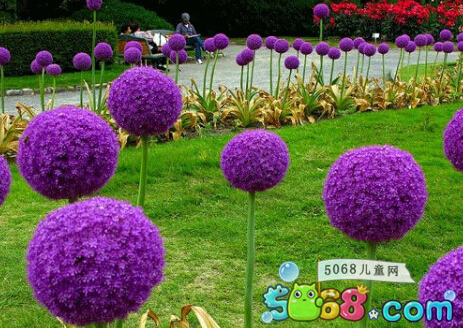
Propagation Methods of Allium giganteum
Allium giganteum is a flower with a very low rate of natural bulb multiplication. However, if the flower buds are removed early and nutrients are concentrated on the development of regenerated bulbs and daughter bulbs, the number of small bulbs can be appropriately increased. In summer, the above-ground part has died back, so the bulbs can be dug out, separated, and kept in a more ventilated place over summer.
2. Plant Allium giganteum in autumn. After planting, bulbs can reach more than 3 cm; bulbs less than 3 cm need to be planted one year before flowering. The bulb multiplication rate is high. Allium giganteum is cold-tolerant, requires ample sunlight, and needs loose, fertile sandy loam soil, avoiding waterlogging. It is suitable for cultivation in northern China.
3. For open-field cultivation of Allium giganteum, choose sandy soil with a low groundwater table, good drainage, and loose, fertile texture. The planting time should be from mid-to-late September to early October, with a plant spacing of 20 x 30 cm; the planting depth is such that the soil covering the bulb is 2 to 3 times the thickness of the fresh stem.
4. After planting Allium giganteum, level the surface slightly, then water. In winter, there is no need to cover for cold protection. When the leaves emerge in spring in March of the following year, water and earth up the soil in time, apply a liquid fertilizer every 10 to 15 days, and water once each time. Pay attention to cultivation, loosening the soil, weeding, and air-drying. A small amount of artificial spraying or shading can alleviate leaf changes in early summer.
5. When the stems and leaves of Allium giganteum wither, dig out the bulbs early before the rainy season so they do not rot after rain. Place them in a dry, ventilated place, then store them indoors in a ventilated spot. Wait until 9-10 months, then plant. The planting land must not be used continuously. Pay attention to applying decomposed organic fertilizer. Summers are rainy. Because the inflorescence is very large, Allium giganteum must be staked in time.
Growth Habits of Allium giganteum
Allium giganteum is native to Central Asia and the Mediterranean region. It is mainly concentrated in northern China. Its flowering season is spring and summer. It prefers a cool and sunny environment. It should be kept away from damp heat, continuous cropping, and semi-shade. The temperature is 15-25°C. It requires loose, fertile sandy loam soil, avoiding waterlogging, and is suitable for cultivation in northern China.