How to Solve Plant Diseases? A Complete Analysis of Practical Control Methods
Distinguishing among fungal diseases, bacterial diseases and viral diseases is very important for prevention and treatment, especially for chemical prevention and treatment.
Different agents can control different diseases; fungicides and biocides may not prevent viruses, and can cure bacterial diseases without controlling bacteria. Because the fungi that can make crops sick are some filaments, bacteria are single cells, and viruses are a kind of molecular organism without cell structure, their metabolism and temperament are also very different, and the symptom factors are different.
Types of Fungal Disease Symptoms
Fungal diseases are the most common among known diseases, with many types of symptoms appearing on all parts of plants. The common ones are:
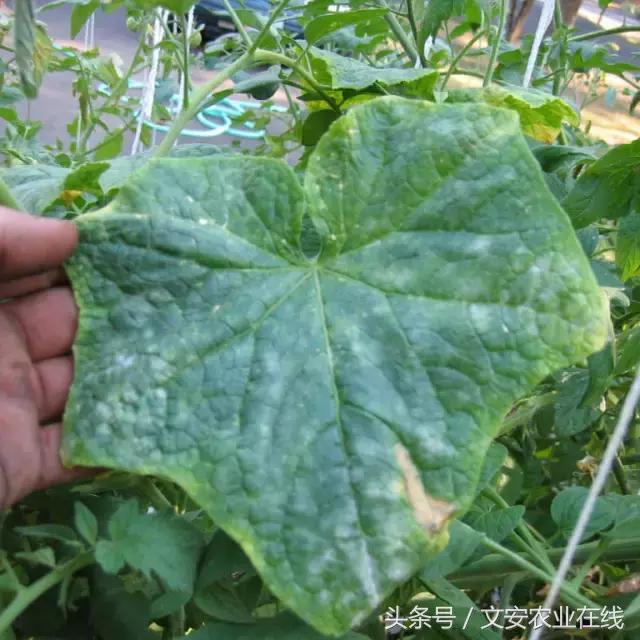
(Cucumber powdery mildew)
White powder
Flowers, fruits, leaves and branches are covered with white powder; in the later stage, large needle-like scattered particles appear on the white powder, and the particles change from white to yellow, and later turn black. This disease is called powdery mildew.
(Watermelon sooty mold)
Soot pollution
The surface of leaves, branches and fruits is covered with a layer of soot, which is easily wiped off by hand. It is usually called soot pollution. This disease is usually closely related to aphids, mealybugs and aphids.
(Wheat rust)
Rust powder
Leaves, fruits, branches and stems show scorpion-like, strip-like, hair-like or felt-like protrusions, which later often rupture, releasing pale yellow, orange, rust-brown or black powder, usually called rust.
(Grape downy mildew)
Downy mold
For damage to leaves, fruits and branches, leaves are the most obvious; a gray-white frost forms on the back of the leaves, the frost is either sparse or dense, and the front of the leaf is usually yellow with no obvious edge, often called downy mildew.
(Peanut powdery mildew)
White silk
It usually harms the leaves, stems and roots near the soil. When the environment is humid, white filamentous mycelium is produced. Later, it produces sclerotia the size of rapeseed. The sclerotia gradually turn yellow and brown, usually called white blight.
(Apple brown spot)
Spots
Symptoms of localized tissue death on flowers, fruits and leaves. According to the shape, color and size of the lesions, they are named round, angular, gray, brown, black, circular, dead spot, etc.
(Mango anthracnose)
Anthracnose
Similar to spots, but the color is often dark brown. There are black dots on the lesions. When humid, pink gel-like mucus appears on the black spots, which is a unique symptom of anthracnose.
(Peach leaf disease)
Deformity
The affected part of the plant becomes larger or smaller, grows unevenly, and loses its original shape. Disease occurs in the later stage of the illness.
(Poplar canker)
Canker
It occurs in the cortex of branches. The shapes of the lesions are round, nearly round, and long. Usually, the lesion is slightly raised around the central area, and the central tissue dies, sinks and cracks. Small black dots or discs are usually produced in the later stage.
(Apple wood rot)
Rot
It occurs in the xylem of the branches or roots of shrubs, causing the xylem to deteriorate, discolor and rot. Due to the rot of the xylem, the trunk is hollowed out, and the branches are easily damaged by strong winds.
(Apple ring disease)
Rot
It is usually divided into wet rot and dry rot. The juicy parts are destroyed, and wet rot or soft rot is low. The water content of plant tissues is soft and firm.
(Tomato disease)
Damping-off &
Rot of the roots and neck of seedlings causes the plants to fall over while the aboveground part remains normal, which is called damping-off. If the roots of the seedlings become lignified, the neck will not fall after rotting, and the leaves above ground will dry up, which is called drying off.
Characteristics of Fungal Diseases
1. Lesions must be present on all parts of the plant. The shapes of the lesions are round, oval, polygonal, wheel-shaped or amorphous.
2. There must be mold spots or powders of different colors at the lesions. The colors are white, black, red, gray, brown, etc. For example, in cucumber powdery mildew, white powder appears on the lesions on the leaves. In addition, like melons and tomato gray mold, gray mold appears on damaged leaves, residual flowers and fruits.
Bacterial Diseases
Bacterial diseases usually cause cell or tissue death after contact with host cells, and then absorb nutrients from the necrotic cells or tissues. The resulting symptoms are tissue necrosis, rot and shrinkage, and a few can cause tumors. Caused by hormones. The common ones are:
(Cucumber bacterial angular leaf spot)
Spot type
It usually occurs on leaves and branches. Lesions on leaves are usually formed as angular veins formed by veins. Bacteria destroy the plant's parenchyma, causing local acute necrosis.
(Rice bacterial blight)
Leaf type
Most of them are caused by Xanthomonas infection. After the plant is infected, the leaves eventually wither.
(Potato bacterial wilt)
Green and dry type
Usually, Pseudomonas aeruginosa infects the plant vascular bundles, blocking the transport pathways and causing the stems and leaves of the plant to wilt.
(Citrus canker)
Canker type
Usually, it is caused by Xanthomonas infecting the plant. In the later stage, the lesions become plugged, the edges are raised, and the center is sunken and ulcerated.
(Cabbage bacterial soft rot)
Decay type
The juicy tissues of plants usually show symptoms of rot after being infected by cells. Bacteria produce protopectinase, which decomposes the middle layer of cells, breaks down tissues, and releases odor from the juice.
(Rhydial Root Cancer)
Nodule type
Tissues on the plant's roots, rootlets or lateral roots and branches overgrow, forming deformities, tumor-like shapes or fibrous roots.
Characteristics of Bacterial Diseases
1. Leaf lesions have no mold or powder. Long, non-hairy lesions are an important difference between fungal diseases and bacterial diseases. For example, the similar symptoms of cucumber bacterial angular leaf spot and downy mildew, with polygonal lesions on the leaves, are easily confused. When moist, there is black mold on the lesions, but it is not on site.
Root rot shows mucus and odor. Odor is an important characteristic of bacterial diseases, such as Chinese cabbage soft rot.
3. Fruit canker or ulceration, with small protrusions on the fruit surface. For example, tomato canker, pepper scab blight.
Roots dry up, and root vascular bundles turn brown. For example, pepper bacterial wilt.
Viral Diseases
Viruses can only reproduce in living cells. Diseases caused by viruses infecting plants are called viral diseases. Viral diseases are mainly spread by insects such as aphids, spider mites and whiteflies, and can also be spread by contact with the sap of diseased plants.
The external symptoms of plant viral diseases mainly include discoloration, necrosis and deformity.
(Pepper mosaic virus disease)
Discoloration
Discoloration is the most common symptom of plant viral diseases. Among discoloration, leaf yellowing is the most common. Discoloration is mainly due to the inhibition of chlorophyll development caused by virus infiltration.
(Chinese cabbage viral disease)
Necrosis
Necrosis is the death of certain tissues or organs of the host caused by virus infiltration, such as the formation of various necrotic spots and ring spots on leaves. In addition, viruses sometimes cause systemic necrosis.
(Grape leaf disease)
Deformity
After the virus infects the host, it causes curling, leaf shrinkage, wrinkling, atrophy, clumping, cancer, clustering, dwarfing, shrinkage and various other types of deformity.
Characteristics of Viral Diseases
Viral invasion of plants generally does not kill the plant immediately, mainly changing the plant's growth and development. After infecting the host, the virus not only competes with the host for nutrients needed for growth, but also disrupts the plant's nutrient transport, changes the metabolic balance of the host plant, inhibits plant photosynthesis, and makes plant growth difficult and deformed. Symptoms such as yellowing can cause severe death of the host plant.
Pesticide Assistant
Prevention, Diagnosis and Solutions for Plant DiseasesAfter a plant is infected by pathogenic microorganisms or adverse environmental factors,
internal physiological activities and appearance and growth and development
certain abnormal states shown are discomfort,
The following are some methods for diagnosing plant diseases,
for reference.
Distinguish carefully
First, understand the sky, understand the land, understand the plant: those who achieve the three understandings can get started.
Second, understand the roots, know the stems, know the leaves, know the buds: those who achieve the four understandings can know the overall situation.
Third, look at the tips, look at the leaves, look at the fruits, look at the buds, look at the roots, look at the environment: do a good six-view diagnosis
Fourth, roots, leaves, burning disease and smell: one can conclude whether the disease is present or not.
Note: Bake the "diseased" part with a windproof lighter and smell it immediately:
An acidic smell means fungal disease, an odor means bacterial disease, both acid and odor mean a true and bacterial mixed disease, burnt feathers mean viral disease, and green leaves mean sunburn, herbicide, lack of water, freezing damage, high temperature, etc. are not diseases.
Overview
After a plant is infected by pathogenic bacteria or adverse environmental factors, the internal physiological activities and abnormal states shown by its appearance and growth and development are all pathological; the abnormal expression of the host plant itself is called a pathological state; the characteristics of the pathogen at the lesion site are called symptoms.
Discoloration: After a plant becomes sick, the loss of normal color of part or all of the plant is called discoloration.
Cause: Due to the inhibition or destruction of chlorophyll or chloroplasts, the proportion of pigments is unbalanced. Discoloration has two main manifestations:
Chlorosis and yellowing: The whole plant, the whole leaf or part of it changes color evenly; a decrease in chlorophyll causes chlorosis. The pattern of discoloration is: green, light green, light yellow, yellow, white, gray, red, brown, purple-black, drying and death.
The reasons are as follows
Lack of fertilizer (N, P, K, Mg, Ca, S), drought, waterlogging, freezing, sunburn, trace elements, chlorine damage, herbicides, phytotoxins, fertilizer, disease...
B uneven discoloration: mainly on leaves (reverse side, front side, both sides), fruit surface (shady side, sunny side, both sides), composed of colors such as dark green, light green, yellow-green, yellow, colorless, white, red, etc.
The manifestations are:
(a) Parts alternate, forming irregular mottled colors, and the outlines of different colored parts are clear.
(b) The outline of the discolored part is not very clear, which is called mottling. The reasons are as follows: lack of trace protein, viral disease, root rot, freezing, sunburn, magnesium damage, herbicides, phytotoxicity, fertilizer, disease...
Necrosis
Necrosis: refers to the death of plant cells and tissues.
Cause: Usually caused by pathogens killing or poisoning the plant, or by protective local suicide of the host plant.
Manifestation: Necrosis often appears on leaves as necrotic and leaf-like. The shape, size and color of necrotic spots vary with the disease, but the outline is relatively clear. Some necrotic spots have a group of discoloration rings called halos. Most lesions occur on leaves, with early chlorosis or discoloration, and later necrosis.
The necrotic tissue of the lesion sometimes falls off and forms perforation symptoms. Some necrotic spots have a circular pattern, called round spots or ring spots. Ring spots are composed of several concentric circles, each layer having a different color. Similar to the symptoms of ring spots, single-line or double-line rings or lines form on the leaves, and the etched epidermal tissue becomes necrotic.
Deformity
Refers to cell division and growth in the affected part of the plant, promoting or inhibiting disease, resulting in abnormal plant morphology or local morphology.
Cause: Mainly due to pathogens secreting hormonal substances or interfering with host hormone metabolism.
Performance
Dwarfing: The growth of all organs of the plant is inhibited proportionally, and the diseased plant is much shorter than the plant.
Dwarf: The implant becomes disproportionately smaller, and the internodes shorten. Causes: hormone damage, viruses, disease, lack of trace sugars, sunburn...
Special types
Branching: abnormally growing branches that form clusters of branches.
Rolled leaves: leaves also have many deformities, such as leaves being small with deep cracks, uneven leaf surfaces, and leaves rolling upward or downward along the direction parallel to the main vein.
Contracted leaves: leaves curl into shapes roughly perpendicular to the main vein.
Leaf drying: refers to large-area death of leaves, where the outline of the dead area is not as distinct as with leaf spot disease. Most of the leaf margin is dead, commonly called leaf burn. There is also a symptom called scab on plant leaves, fruits and branches. The lesion sites are shallow and very limited. The surface of the spots is rough, and some of them form corky tissue with slight protrusions.
Plant roots can form necrotic spots of various shapes. Necrosis of the tissue at the base of seedling stems leads to so-called damping-off (seedlings fall over at the necrotic site) and standing death (seedlings die but do not fall over). Necrosis of woody plant stems also has the symptom of dieback, where branches die from the top and spread to the main stem or trunk.
Branches have canker symptoms, and the necrosis is mainly in the xylem. The affected parts are slightly sunken, and the surrounding host cells sometimes proliferate and become corky, limiting further expansion of the lesion. Causes are as follows: excess N and P, lack of trace proteins, viral diseases, freezing, sunburn, arsenic damage, herbicides, diseases...
Gorgeous
Rot: refers to the decomposition and destruction of large areas of plant tissue.
Cause: decomposition by hydrolases produced by pathogens and destruction of plant tissue.
Difference between decay and necrosis: decay is the destruction and digestion of entire tissues and cells, whereas necrosis still retains the outline of the original tissues and cells.
Dry rot: when tissue rots, water and other substances flow out as the cells are digested. If cell digestion is slow, the water in the decaying tissue evaporates and disappears in time, forming dry rot.
Wet rot: refers to rapid digestion of cells, where the rotting tissue cannot lose moisture and forms wet rot.
Soft rot: mainly the middle lamella of the gel layer is destroyed, the cells of the rotting tissue are separated, and then the cells are digested.
According to the part that rots, they are called root rot, base rot, stem rot, fruit rot, flower rot, etc.
The nature of cankers and gummosis is similar to that of decay, and they are products of the breakdown of cells and tissues in the affected part. Excess N and P, lack of trace sugars, freezing, gummosis, sunburn, diseases, soil organic matter being too low...
Wilting
Wilting: refers to the phenomenon in which the whole plant or part of a plant droops and the leaves hang down due to dehydration.
Cause: due to damage to the plant root system, difficulty in water uptake and transport, or poisoning by pathogenic toxins, inducing blockage of the vessels.
Performance: rapid water loss during wilting while the plant remains green. If it cannot remain green, it is divided into wilt and yellow wilt. Causes: diseases, nematodes, lack of trace sugars, viruses, drought, sunburn...
How to diagnose diseases of medicinal plants?When you post a few photos, ask what disease this is
I want to use these photos to say that Xiao Ke cannot judge it.
When judging pests and diseases of medicinal plants, it is necessary to comprehensively analyze factors such as the distribution of the disease before and after its occurrence, soil conditions, terrain conditions, disease characteristics, fertilization, irrigation, spraying, and climatic conditions.
This is because:
(1) Different pathogens can cause similar symptoms, making them difficult to distinguish
For example, wilt disease can be caused by fungi, bacteria, nematodes and other pathogens.
(2) Infection of different hosts by different pathogens may show different symptoms, so it is not suitable to generalize at once.
For example, crucifer viral disease is mosaic on cabbage, while it causes deformation on radish.
(3) Physiological diseases such as deficiency and chlorosis are similar to viral diseases
Therefore, in the diagnosis of diseases, it is necessary to analyze the causes, make comprehensive analyses and comparisons, especially for some diseases with similar symptoms.
The manifestations of many diseases are regular. The following subsection teaches you to recognize these rules:
1. Understand the characteristics of the disease
Invasive diseases
They are caused by infection by pathogens (fungi, bacteria, viruses, etc.). They often appear scattered in the field, have a disease center, gradually spread to the surroundings, and will spread to each other.
Non-invasive diseases
They are caused by harsh external environmental conditions. In the field, they are usually in large areas, and the distribution of diseased plants is relatively uniform. There is no disease center, and there is no process from one point to another.
2. Then compare the specific symptoms
Symptoms such as fungal diseases and bacterial diseases mainly manifest as various lesions, perforations, wilting and a few deformities.
The diseased parts of the lesion sites in fungal diseases are caused by mold, powder, rust, granules, sclerotia, etc. The symptoms of fungal diseases may not be obvious in the early stage, and the pathogens will also show symptoms in the later stage.
In wilted fungal diseases, the vascular bundles of the stem turn brown.
In bacterial diseases, the diseased area has bacterial pus or bacterial ooze.
A common feature of bacterial leaf spot is that the lesions are vein-limited and polygonal. At the beginning of the disease, they are mostly water-soaked and translucent, usually with a yellow halo, then turn brown to black, and white spots or yellow or white or yellow pus are visible on the lesions.
In a wilted bacterial disease, the cross-section of the stem will turn brown, and pus will overflow onto the hand. Whether the pus is perpendicular to the cross-section of the stem differs from fungal wilt.
Bacterial rot disease produces a special odor and has no hyphae, which can distinguish it from fungal rot disease.
Viral diseases usually manifest symptoms such as yellowing, mosaic, wrinkling, clumping, stunting, and deformity.
Nematode diseases can cause slow growth, uneven color and short stature. Necrosis of apical buds or flower bud tissue resembles nutrient deficiency symptoms and is accompanied by root knots.
Through these symptoms, we can roughly distinguish them.
3. What should I do if I cannot distinguish them?
Take photos for us
a. Take some photos with obvious and clear symptoms
b. Clearly understand the problem area. If it is a leaf blade, both sides should be photographed
c. After photographing the partial photos, you can take an overall photo of the plant.
Give us detailed explanations
a. The area and distribution of disease occurrence
b. Weather conditions before and after disease onset
c. Management of fertilization, watering and pesticide application
d. Soil conditions, etc.
e. Or other management operations, etc.
This is just a point that is usually considered, and some specific situations will be specified.