What are the methods for growing African violets?
The African violet plant is small and delicate, comes in a dazzling array of flower colors, and can bloom in all four seasons, making it an excellent flowering plant for indoor growing. Many people love to grow it. Below, the editor introduces the methods for growing African violets, and I hope you will like them.
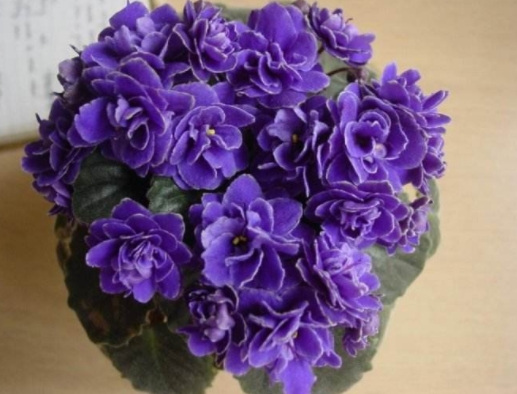
Methods for growing African violets
1. Soil: The potting soil should be loose and fertile, and it is best to use soil rich in humus. Generally, use 5 parts leaf mold, 3 parts garden soil, and 2 parts decomposed barnyard manure soil, or mix 6 parts leaf mold with 4 parts sandy loam. It can also be made by mixing equal parts leaf mold, peat soil, and sand evenly.
2. Watering: Watering is very important. In early spring, when temperatures are low, do not water too much, otherwise the stems and leaves are prone to rot, which affects flowering. In summer, when temperatures are high and the air is dry, water more and spray water to increase air humidity, otherwise the flower stalks droop and the flowering period shortens. However, when spraying, too much water splashed on the leaves can also cause leaf rot. In autumn and winter, as temperatures drop, watering should be reduced appropriately.
3. Sunlight: The light intensity African violets need is about 200 to 800 foot-candles, with an exposure time of about 8 to 12 hours. If you want to promote flowering, the light duration can be gradually extended to 16 hours. The intensity of direct outdoor light is often greater than 8,000 foot-candles, which easily causes sunburn to the plant's leaves and is not suitable for African violet growth. However, indoor light is also often insufficient, causing the plant to grow slowly, fail to bloom, or become leggy.
4. Temperature: It likes warmth. The suitable growing temperature is 16 to 24°C, from April to October it is 18 to 24°C, and from October to the following April it is 12 to 16°C. The daytime temperature should not exceed 30°C; high temperatures are unfavorable for African violet growth. At night in winter, the temperature should not be lower than 10°C, otherwise it is prone to cold damage.
5. Fertilizing: Fertilizer should be light and dilute. During the growth and development period, apply a dilute decomposed liquid fertilizer or compound chemical fertilizer combining nitrogen and phosphorus once about every 10 days, but note that nitrogen fertilizer must not be too much, otherwise the leaves grow very lushly but there are few flowers. For this reason, the ratio of nitrogen, phosphorus, and potassium fertilizer is best at 1:1:1.
6. Pests and diseases: Under conditions of high temperature and high humidity, fusarium wilt, powdery mildew, and leaf rot are likely to occur. A 1000-fold dilution of 10% fungicide 401 acetic acid solution can be sprayed or poured into the potting soil. Scale insects and red spider mites often harm African violets during the growing period and can be killed by spraying a 1000-fold dilution of 40% omethoate emulsifiable concentrate.
Precautions for African violets
1. Choice of pot and growing medium: Because the African violet's root system is small, the pot should not be too large when planting; choose a corresponding pot according to the size of the plant. The growing medium for potting requires loose, fertile, well-drained, neutral to slightly acidic culture soil.
2. Watering and fertilizing: The amount of watering should be determined according to the growing season. In winter and early spring, when temperatures are low, watering should not be too frequent; water only after the potting soil has dried, and keep relative humidity at about 40%. In summer, when temperatures are high, water more, and spray water around it frequently, with relative humidity not less than 70%. In autumn, as the climate becomes cooler, watering should be reduced accordingly. During the growing season, apply a dilute decomposed cake fertilizer water or liquid fertilizer once every 2 weeks, but note that nitrogen fertilizer should not be excessive. After flower buds appear, apply 0.5% superphosphate 1 to 2 times to make the flower colors more vivid. When watering and fertilizing, be careful not to get it on the leaves to avoid rot.
3. Temperature and light: The suitable temperature for African violet growth is 18 to 24°C. In summer, the temperature must not exceed 30°C, so measures such as shading, cooling, and increasing humidity should be taken. It must not be exposed to strong direct light, but it also should not grow for too long under overly shady conditions, which can cause fewer and paler flowers or even no flowers. For home growing, it can be placed in a spot with scattered light and good ventilation. In winter, the temperature must not be lower than 10°C.
4. Pay attention to preventing and controlling pests and diseases: During cultivation, it is prone to harm from root rot, crown rot, powdery mildew, aphids, mites, thrips, nematodes, and so on. Attention should be paid to ventilation and disinfection of the growing medium before use. When the above pests and diseases are found, relevant pesticides should be sprayed promptly for control.
The purifying effect of African violets. The African violet plant is short, can bloom all year round, has leaves as thick as velvet, and elegant and refined flower shapes, with rich, brilliant, and colorful flowers. It is an excellent ornamental plant for indoors. Placed indoors, it can purify indoor air, improve indoor air quality, beautify the environment, harmonize the mood, and relieve stress. It is also an ideal material for horticultural therapy.
Time: 2019-05-10Clicks: