How to grow bird's nest fern hydroponically? Detailed care points
The nest of the bird's nest fern grows outward, forming an empty "funnel" in the middle. Its appearance looks very much like a "bird's nest." That is how it got its name. Interior decor decorated with bird's nest fern is quite nice. Its unique tropical scenery adds a touch of vivid natural beauty. Below, the editor introduces the hydroponic cultivation and care points of bird's nest fern. I hope everyone likes it.
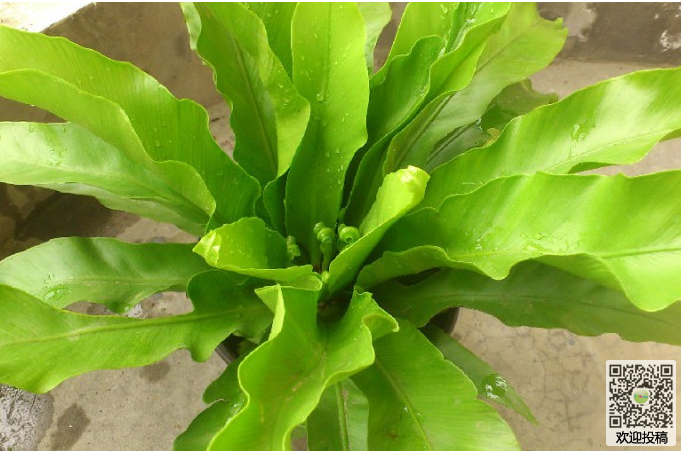
Hydroponic care points
1. For hydroponic bird's nest ferns, choose smaller individual plants and use the potted root-washing method.
2. During the growing season, spray water on the leaves frequently to increase air humidity.
3. Pay attention to fertilizer supply. When fertilizer is insufficient or the temperature is too low, the leaf edges will turn brown.
4. Scattered light is sufficient; avoid direct sunlight, so pay attention to shading in summer.
5. In winter, it can go above 8°C.
6. In summer, change the water about every 20 days; in winter it can be longer.
Hydroponic method for bird's nest fern
Temperature
The growth temperature of bird's nest fern is 16°C -27°C. When the temperature drops below 10°C, bird's nest fern growth will stall and the leaves will lose their glossy color. In winter, it is better to keep the temperature above 15°C. If conditions are not available, keep it at least 5°C, otherwise the edges of the nest will turn brown or even freeze.
Lighting
Bird's nest fern is semi-shade and not tolerant of strong light. During the growing period, it does not need strong direct light and mainly relies on scattered light. Let natural light in from windows and let it scatter naturally indoors. In summer, try to avoid direct sunlight.
Humidity
Spray water around and near the bird's nest fern every day to maintain humidity. You can spray water twice a day. Or wipe the leaves with a towel to increase humidity and clean the leaves of the nest.
Ventilation
Bird's nest fern can grow well in an air-circulating environment. Where bird's nest ferns are placed in water, open the area regularly to allow air convection so that fresh air from outside can enter the room.
Nutrient solution
Generally, everyone can use the special nutrient solution for hydroponics sold on the market. It should be noted that after tap water has been left to stand for one day, wait for its temperature to approach room temperature and for the chlorine in the water to evaporate, then add the nutrient solution in proportion.
Changing water
If tap water is used, it should be left to stand for one day to let the chlorine escape and to bring it to a moderate temperature. In summer, generally, bird's nest fern has its water changed about every 20 days; in winter it can be longer. If the water quality is clean, the bird's nest fern grows vigorously and there is no root rot. The longer the time, the less problem there is, but the amount of water lost to evaporation should be replenished in time.
Bird's nest fern flower language
The flower language of bird's nest fern is unique, fragrant, and ever green.
Legend of the bird's nest fern
In spring, the flower maiden brought her children Peony, Lotus, Chrysanthemum, Plum, and Sage, and she told them to make the most beautiful flowers in the world, so Peony, Lotus, Chrysanthemum, and Glutinous Plum all hurried. They wanted to open the most beautiful flowers in the world, but the mountain sage flower did not have this idea. She just wanted to bloom quickly; whether she bloomed early or late, it was all the same.
Among the sisters in the flowers, Peony was the winner. When she became bright in spring, she would open a vivid red, white, and brightly colored flower. When the single plain flower saw her, she felt very admiration. She felt that if she had such beautiful flowers, she would think that the spring glory had been taken away by Peony. She would wait until summer to speak.
In summer, the sun was very strong, and the mountain sage was dissatisfied. She worried that in summer she would be sunburned, but at this time the lotus was open to beautiful flowers, so the mountain sage sighed. She felt that summer flowers were also very good, but unfortunately, she could only wait until autumn.
Autumn ended; autumn was high, the sky was high, and the sky was high. The Su flower mountain only admired the autumn scenery and gradually fell asleep. Before the chrysanthemum opened, she opened her eyes and sighed that she was unlucky and had missed the chance to bloom. She could only wait until winter.
However, in winter, the weather was very cold, and only plum blossoms bloomed in the snow, but the flowers on the mountain could only curl up in the dry grass. Year after year, we still had not seen the flowers of the mountain sages!