What are the cultivation methods for bird of paradise? Understand in one article
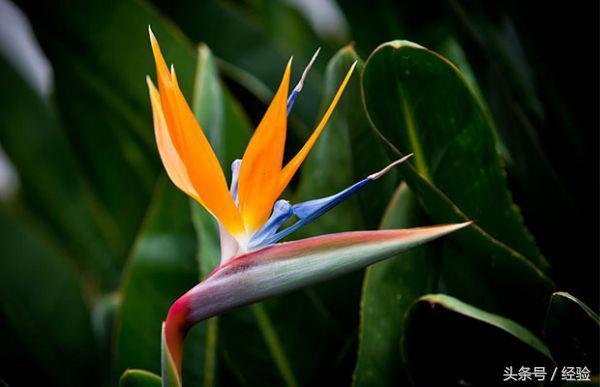
Bird of paradise (Strelitzia reginae), also known as the flower of the bird of paradise and the flower of the bird of paradise, is also a fine and precious flower in China. Its flowers are very delicate, solemn, generous, and charming, and it is called an indescribable flower.
Uses of Strelitzia
1. Decoration: Bird of paradise is always green, with very large leaves, and its overall appearance looks like a bird's head, so it also has the name bird of paradise. These flowers are beautiful and novel and can be used to decorate courtyards and flower beds. In floral design and flower art, bird of paradise is also good.
Symbolism: Bird of paradise has a very beautiful symbol and meaning. Therefore, when people visit relatives and friends, they often give their friends Strelitzia and express their good wishes to some people. Bird of paradise is the flower of Los Angeles, USA.
Viewing: Bird of paradise is a very elegant and beautiful plant. There are several flowers, and all the flowers grow on the peduncle. Below is a spathe, the flame is green, the edges are purple, the sepals are orange, and the petals are dark blue. The colors are very ornamental.
Why is it called bird of paradise
In the 18th century, Queen Charlotte, wife of King George II, liked this flower and thought its flower shape was especially similar to a bird's crest and beak. The birthplace of her birthplace was also called Bird of Paradise Village, so she gave this flower the name "bird of paradise," and later it was called bird of paradise.
Growth habits of bird of paradise (Strelitzia reginae)
Bird of paradise originated in southern Africa and belongs to subtropical long-day plants. Warm, humid, and sunny. It is afraid of cold, avoids heat, avoids drought, avoids jealousy, and needs loose and fertile drainage, with a pH of 6~7. The suitable temperature for sandy loam soil in the growing season is 20-28°C. It is planted in parks and flower beds in large cities in southern China and in greenhouses in the north.
How to solve cracking of bird of paradise leaves?How to solve cracking of bird of paradise leaves?
1. Root damage: If the roots of bird of paradise are damaged, it will affect the root system's absorption of nutrients and water, causing the leaves to turn yellow. At this time, you can repot the bird of paradise.
2. Insufficient fertilizer: Lack of nutrients causes leaves to crack and turn yellow. Fertilize in time, apply less each time, and remember to apply a little more.
3. Unsuitable soil pH: The soil is alkaline, and new leaves growing on bird of paradise easily turn yellow. Adjust the pH of the soil, or directly change the potting medium for the bird of paradise.
4. Sun exposure: Bird of paradise must not be exposed in summer, otherwise the leaves will turn yellow under the scorching sun. Therefore, Strelitzia should be placed in a sheltered spot and exposed to diffused light.
Bird of paradise potting method
1. Potting soil: Mix 5 parts humus soil or peat soil, 3 parts garden soil, 1 part rotted sorghum loam, and 1 part coarse sand to make soil for planting bird of paradise.
2. Temperature: Bird of paradise (Strelitzia reginae) grows in an environment of 12°C to 25°C, and the indoor temperature in winter should be kept above 5°C.
3. Watering: Watering should be sufficient in summer. In spring and summer, spray water on the leaves frequently and sprinkle water around the flowerpot. Watering should be reduced in late autumn, and watering should be controlled in winter.
4. Fertilizing: Fertilize once every half month. It is better to use fermented rice water or soybean soaking liquid at home. During the process of flower stem formation and full bloom, 0.5% superphosphate can be added to the fertilizer.
5. Lighting: There should be no less than 4 hours of direct light every day. During winter flowering, sufficient sunlight is beneficial for increasing flower yield.
Bird of paradise potted plant
Bird of paradise potted plant
Bird of paradise potted plant
How to make Strelitzia bloom quickly?Sowing and propagation methods of bird of paradise (Strelitzia reginae)
1. Sowing time: Late March each year is the best season for sowing seedlings.
2. Seed treatment: Before sowing, soak the seeds in 0.3% potassium permanganate or 50% carbendazim wettable powder for 2 hours, then soak them in 40°C warm water for 3 days.
3. Seedling substrate: Make bed soil from grass soil, slag, and fertile soil at a ratio of 1:1:2.
4. Seedling environment: Keep the seedling temperature at 25~30°C, air humidity at 60%~70%, and light at 5000~10000Lx.
5. Transplanting: Disinfect the soil. After the seedlings emerge and grow two leaves and one heart, the first seedling transplant can be carried out, with a plant spacing of 10×10cm.
6. Maintenance: Water after transplanting the seedlings, and pay attention to shading. Fertilize once every 5 days until the shade can be removed after they recover. Cover with film against frost before winter.
7. Field planting: After 2 years, the seedlings can be planted, and the time is best selected from April to May.
8. Watering: Spray water on the leaves every day. Add 0.2% potassium dihydrogen phosphate or 0.2% potassium permanganate to the water. Transplanted seedlings usually begin to bloom in 3 to 4 years.
Summer protection knowledge for bird of paradise
1. Summer temperature: If the temperature reaches 25°C, it can be placed in a basement for cultivation, keeping it between 15°C~25°C, which is suitable for growth.
2. Summer water and fertilizer: Control the amount of water to prevent root rot. Once a week, apply dilute fertilizer water made from inorganic salt vegetarian flower fertilizer. When the higher temperature is below 25°C, let it gradually receive more direct sunlight.
3. Lighting: Basement cultivation has no light. During the day or in the evening, bird of paradise can receive lighting through artificial light. Use 100 watts of incandescent light per square meter. The bulb is preferably hung 50cm above the plant.
How to care for bird of paradise in winter?
1. Temperature: Bird of paradise is afraid of cold. In the north, it needs to be brought indoors for cultivation in mid-October. Keep it indoors in a sunny place, and keep the room temperature at 10°C.
2. Moisture: Bird of paradise is afraid of drought and taboo, and watering needs to be increased or decreased according to the season. Water more in summer, reduce watering after autumn, and control watering in winter to keep the soil dry.
3. Lighting: Except in summer, bird of paradise needs sufficient light. If the light is insufficient, it will affect the growth of the plant and even flowering. Provide appropriate shade in summer.
4. Fertilizer: Revive bird of paradise once every half month, apply thin fertilizer water, and until the flowering period, add 0.5% superphosphate to the fertilizer, which can make the flowers bloom more vividly. Stop fertilizing after mid-October.
Why does Strelitzia not bloom?
1. Insufficient light: Direct sunlight in summer can cause the plant to lose water and delay flowering; if the light is too weak, it will affect photosynthesis and delay flowering.
2. Insufficient fertility: Insufficient nutrients will delay flowering. Fertilize once every half month during the growth period. However, if the plant grows too vigorously, consider reducing fertilization. The fertilizer can use a 0.2% potassium dihydrogen phosphate solution.
3. Pot too large: If bird of paradise is planted in too large a pot, the fleshy roots will expand and grow, consuming nutrients and affecting flowering.
4. Planting too deep: If planted too deep, there is no neck, and when the pot is changed, it has an effect on the flower buds, and the middle soil has no fleshy roots.
Is Strelitzia toxic? Is it suitable for indoor cultivation?
1. Toxicity: Bird of paradise is not toxic. Many cities have this flower in parks.
2. Living room cultivation: Bird of paradise is always green and very beautiful, symbolizing auspiciousness and freedom, so it is most suitable for indoor living rooms.
3. Not suitable for the kitchen: The kitchen space is small and the air is dirty, so it is not suitable to place bird of paradise.
4. Cannot be eaten: Many plants are slightly toxic, and as long as they are not eaten, there is no problem with ornamental flowers.
Breeding methods of bird of paradise
1. Temperature: The most suitable growth temperature is 15 to 25°C, and growth stops below 8°C. The cultivation temperature in winter should not be lower than 4°C. In the north, move the flowers indoors or into a plastic greenhouse in winter.
2. Lighting: Bird of paradise needs sufficient light. If it lacks light, it easily leads to poor plant growth and affects flowering. Pay attention to lighting.
3. Pruning: To improve the quality of flower buds, remove old leaves, diseased leaves, and useless flower and fruit branches in time.
4. Watering: Do not water too much. Ensure sufficient water during summer growth and autumn and winter flowering periods, and reduce watering when flowering in early spring. Water once a day in summer, reduce watering in winter, and keep the soil slightly dry.
5. Fertilizing: During the growing season, apply active humic acid fertilizer about every 2 weeks.
How to make Strelitzia bloom quickly?
1. Change the pot: Strelitzia reginae seedlings are repotted once a year, and after they are established, once every 2-3 years.
2. Choose a pot: When changing the pot, use a good gas-fired pot, and place a layer of broken tiles or 2-3cm thick coarse sand at the bottom of the pot to help drainage and ventilation.
3. Fertilizing: Choose loose, humus-rich soil as the culture soil, and add phosphorus and potassium fertilizer or cake fertilizer as base fertilizer.
4. Control lighting: In spring and autumn, it can be placed in a sunny place, and in winter it needs more light. In summer, you need to cover it with a shade net and place it under bright diffused light.
5. Control temperature: The winter temperature should not be lower than 4°C, reduce watering, and it can be exposed in winter. In areas where the winter temperature is below 4°C, flowers need to be moved indoors in winter.
6. Soil moisture: Sufficient water is needed in summer, autumn, and winter, watering once a day and spraying 1-2 times. After flowering in early spring, watering can be appropriately reduced. When it rains, pay attention to drainage.
Precautions for planting bird of paradise
1. Light in different seasons: In spring and autumn, flowerpots should be placed in a sunny place for cultivation, and in winter they should be exposed to more sunlight, otherwise it will directly affect leaf growth and flower color. In summer, the plant should be placed in a shady place to protect the leaves from burning in the sun.
2. Mainly use phosphorus and potassium fertilizer in autumn and winter: In autumn and winter, apply phosphorus fertilizer as the main fertilization. Using potassium dihydrogen phosphate and water on the roots can make the plant grow stronger and the flowers bigger and bigger.
3. Change the pot frequently: Generally, seedlings should be repotted once a year and the soil changed once. After the plant is established, change the pot once every 2 to 3 years and change the soil once, and carry out division in spring.