How to Grow Cypress Vine (Ipomoea quamoclit)? Cultivation Methods and Key Points of Growing Management
Cypress vine is an extremely beautiful ornamental garden plant. With this method, the survival rate is relatively high. Attention should also be paid to the planting management methods. Below, the editor introduces the breeding methods and cultivation management of cypress vine, hoping to be of help to everyone.
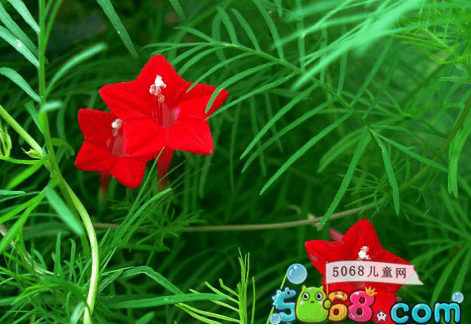
Breeding methods of cypress vine
1. Choosing a flower pot: choose a flower pot of appropriate size. Cover the bottom hole of the pot with two pieces of tile or a thin piece of foam. It must be ensured that the potting soil will not be washed away by water and that excess water can drain out in time. Place a layer of ceramsite or crushed red brick on the tile or foam as a drainage layer, about 2 to 3 cm thick.
2. Potting: For potting cypress vine seedlings or repotting large plants that have been grown for several years, first place a piece of coarse-grained substrate about 2-3 cm thick at the bottom of the pot as a drainage layer, then sprinkle a layer of fully decomposed organic fertilizer as base fertilizer, about 1-2 cm thick. It is covered with a layer of substrate about 1 to 2 cm thick, and then the plant is placed in to separate the fertilizer from the roots and avoid burning them.
3. Fertilizer and water: After watering the cypress vine, place it in a shady environment for one week. When transplanting seedlings, first dig the planting hole, sprinkle a layer of organic fertilizer at the bottom of the planting hole as base fertilizer, about 4-6 cm thick, then cover it with a layer of soil and place the seedling in it, keeping the roots separate to avoid burning the roots. After placing the seedling in, backfill the soil, cover the roots, firm the soil with your feet, and water once.
4. Pruning: In winter, the plant enters dormancy or semi-dormancy, and branches should be cut off, such as thin, pest-infested, dead and dense ones. The branches can also be combined with cuttings.
5. Removing from the pot: Place the flower to be repotted on the ground, first pat the pot with a tool to make the root system loosen and separate from the pot wall, then invert the flower pot with your left hand, gently pinch the plant with the index and middle fingers of your left hand, rest your wrist and fingertips against the edge of the pot, strike the bottom of the pot with your right hand, and then use your fingers to push the roots downward from the bottom hole to let the plant come out. After taking it out, gently tap the potting soil with both palms to let the excess soil fall off.
6. Changing the pot: Cypress vine grows very fast with care, and when it grows to a certain size, it is necessary to consider changing it to a larger pot so that it can continue to grow vigorously. The culture soil and composition ratio for repotting can be selected from the following: garden soil: slag = 3:1, or garden soil: medium-coarse river sand: sawdust (slag) = 4:1:2, or rice paddy soil 1, pond mud and humus soil.
Growing conditions of cypress vine
Since cypress vine is native to tropical regions, it prefers warmth, is sensitive to cold, is frost-resistant, grows very slowly at low temperatures, and needs a sunny environment.
Most species do not require a strict photoperiod, but cypress vine needs less than 12 hours of sunlight to bloom.
There are no requirements for soil, but it grows well in fertile and loose soil.
The seeds of cypress vine number about 139,000 seeds, and the seeds can be used for 3 to 4 years. The fruit ripening period is inconsistent, and the seeds fall off easily after ripening.
Cultivation management of cypress vine
Cypress vine is planted after the last frost. In areas where the nighttime temperature is still relatively low, early planting is generally not recommended. Cypress vine has a strong self-seeding ability. If you do not care about early or late flowering, you can use self-seeded seedlings in the first year of cultivation. However, because there is no seed selection or thinning of seedlings, the greening effect is worse. Cypress vine is planted in large quantities, with base fertilizer applied and broadcast.
Dig planting holes, take out the plastic seedlings, and plant the seedlings in the holes. Cover each hole with fine soil, then water, and the soil is sealed.
The planting spacing of seedlings or the fertility of the soil should be appropriately increased; seedlings should be planted later, growth should be delayed, and the plant spacing should be appropriately reduced. Timely watering can promote the growth of stems and leaves, but be careful not to let them grow too long, so as not to delay flowering.
In the early stage, manually guide the vines onto trellises, fences, trees or other supports. In the middle and later stages, the plant itself has a strong climbing ability, and apart from shaping, it does not need to be controlled; let it climb and twine. Potted plants should be watered and fertilized frequently.