How to care for the "Ten Thousand Taels of Gold" plant? Detailed care methods
"Jinwan 2" is also what we commonly call the abundant fruit plant and Ardisia crenata. Its plant form is beautiful, the fruit is red and bright, and a cluster of fruit grows beneath the green leaves, very beautiful. It is an evergreen dwarf shrub of the genus Ardisia. It symbolizes festivity and good fortune, and is a great flower for weddings, openings and housewarmings. It is an excellent fruit-bearing plant suitable for indoor potted plants.
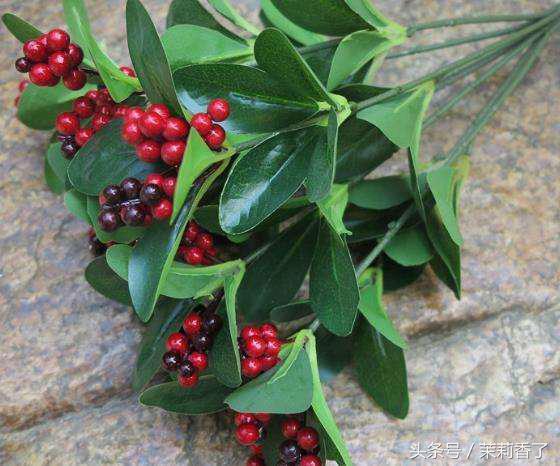
First, let us understand its growth habits: the abundant-fruit tree likes warmth, humidity and semi-shade, but it is cold-sensitive and should avoid exposure to sunlight. The growth temperature is 16-28°C, and the winter room temperature should be 5-8°C. It needs well-drained and fertile soil.
Propagation of "Gold and Two" can be done by seed propagation. This is also a better cutting time from late May to mid-June or late August to early September. At this time, the temperature is about 25°C~30°C, most suitable for plant growth. Cutting propagation grows quickly and is a common propagation method. When cutting, choose semi-woody branches about 10 cm long from the current year, remove the lower leaves, and place them with rooting powder into sandy soil at a depth of 3~5 cm, keeping it moist. Rooting begins after about one month, then after true leaves grow, transplant into the upper pot.
Gold and temperate varieties like cool, moist and neutral sandy soil. Potted plants generally use garden soil mixed with organic fertilizer as the growing medium, or use purchased nutrient soil, or nutrient soil can be provided. One preparation method: use 70~80% fertile soil (pond mud, humus soil, old garden soil, field soil), 10~15% coarse sand, 10~15% decomposed oil-free sawdust or unburned ash to make nutrient soil. In short, the nutrient soil should meet the requirements of fertility, looseness and good drainage performance.
Plant 3~6 plants per pot, keeping the potting soil moist and loose. In spring, place it in a greenhouse or on a balcony in the morning, keep the soil moist, and pay attention to indoor ventilation. Keep the relative air humidity at 50~70%. In spring and summer, according to the weather, temperature and plant growth, water once every 3 to 7 days. Pay attention to watering appropriately at the right time, keeping the soil in a moist state, and also keeping it dry. In summer, a shade shed can be built with a shade rate of 60%~90%. Afterward, apply fertilizer once a month, with low fertilizer concentration, applying thin fertilizer, with more phosphorus fertilizer. After new leaves sprout, they begin to be top-dressed. During the flowering period, appropriately apply phosphorus and potassium fertilizer, with no nitrogen fertilizer; after the fruit turns red, do not fertilize, and the amount of watering should be reduced; the temperature suitable for growth is 20~30°C. In winter, control the temperature between 18 and 24°C, and the temperature should not be lower than 5°C.
Prune appropriately; when new shoots are more than 8 cm long, pinch off the top to promote branching and prevent legginess.
Artificial pollination: in summer and autumn, when the abundant-fruit plant blooms, avoid spraying water on the flowers, so as not to cause pollination failure and affect the results. On sunny mornings, a soft brush can be used to spread the pollen and assist artificial pollination to increase the fruit-setting rate.
Pest and disease control: comprehensive control measures should be taken, focusing on prevention of major diseases, supplemented by treatment. The abundant-fruit plant is prone to aphids and black spot disease. 5% imidacloprid EC can be sprayed at 2000-3000 times dilution to control aphids; 50% carbendazim wettable powder at 700-800 times dilution or 70% thiophanate-methyl WP at 1000 times dilution and other broad-spectrum pesticide sprays can be used for control.
How to grow hydroponic plantsFirst, the advantages and disadvantages of hydroponic plants are not mentioned. This article mainly discusses how to grow hydroponic plants. Maintaining hydroponic plants is much simpler than soil cultivation, but some details cannot be ignored.
Although in theory all plants can be grown hydroponically, including the prickly pear, hydroponics does not mean it is suitable for hydroponics. Sometimes, hydroponic culture is only a way of preserving them. What we get is short-lived pleasure, along with the loss of plant growth.
The above paragraph tells flower lovers that hydroponic plants are not a better way of maintenance. Let us look at how to grow hydroponics.
1. Hydroponic plants are not suitable for keeping in an environment with too strong sunlight, because sunlight exposure will cause green algae in the water, and the roots are easily rotted. A better maintenance environment should be under diffused light or backlight (most hydroponic plants are foliage plants, so they can be properly maintained in the dark.)
2. The roots of hydroponic plants should not be placed entirely in water. Plant roots also need to breathe. Therefore, when we treat hydroponic plants, we should appropriately expose the roots to the air by about 1-5 cm; for different plants. Exposing more to the air can help plant roots breathe. For example, in the picture below, we can see that part of the root system is in contact with the air.
Regarding the issue of nutrient solutions, many nutrient solutions are fake. If you are not sure whether the nutrient solution you bought is correct, do not use it. If you insist on changing the water, you can provide nutrients.
Regarding changing the water, we must first prepare clean water. If it is tap water, we should let it sit for two days in advance, then change the water. For hydroponic plants, in fact these 4 points are the main ones: one should not be exposed to sunlight, the second should give the roots air to breathe, the third should be cautious with nutrient solutions, and the fourth should change the water regularly.
Finally, it is still an old saying: although plants can survive in hydroponics, it is difficult for them to grow well, and there is a process of acclimatization, especially for some exotic flowers and plants (the green stems of the scorpion will not be mentioned; no matter how you add water, they will not die). Therefore, one must be psychologically prepared to treat hydroponic plants.
It is a good and fine New Year flower: copper coin grass "Jin Er Er" maintenance and solutions!Copper coin grass likes a warm and humid environment; make sure the room temperature is above 17°C. If you are growing it hydroponically, you can change the water once every two months. If you are growing it in soil, you should water once every one to two days, and the leaves should be sprayed in time. If you want copper coin grass to grow well, you can grow it with half soil and half water. At the same time, place the copper coin grass on an indoor or outdoor balcony and other places with only half a day of light, and the copper coin grass will quickly burst into growth! What if the copper coin grass falls over? This situation indicates that the copper coin grass is short of water, or the indoor environment humidity is too low. Water the copper coin grass immediately; if it is hydroponic, spray water on the branches and leaves, and soon the copper coin grass will "stand up." What should I do if the copper coin grass leaves do not grow? In this case, first consider the lighting problem; it is very likely to have been dried out. Move the copper coin grass to a semi-shaded indoor place, with half soil and half water, plus half a day of light, and it will soon be able to grow vigorously.
Gold is more afraid of dryness; water once a week. Indoor air conditioning and heating will make the air humidity relatively low, so always spray water to moisten the branches and leaves and create a high-humidity environment. It is afraid of freezing, but it cannot be stuffy at the same time. Therefore, it is better to ensure the indoor temperature is around 15°C. When the weather is good, open the windows at noon for ventilation. What should I do if the golden and red fruits are gone? Consider whether it has been overwatered recently. Poke a chopstick 2 or 3 cm into the potting soil. If the chopstick is very moist, it means there is too much water, and place it in a well-ventilated place. What should I do if the leaves of the two thousand gold dry up and fall off? This indicates that the gold lacks fertilizer, especially nitrogen fertilizer. You can boil a little soybean, then use the method of fermented rice water to decompose it and then water the flowers, but be sure to pay attention to low concentration.