What are the cultivation and management methods for wintersweet? This article gives you a detailed introduction
When growing plum, a good management method is needed so that the flowers you cultivate can grow well, beautifully and pleasantly. Below, the editor introduces the cultivation and management methods of wintersweet, hoping to be helpful to everyone.
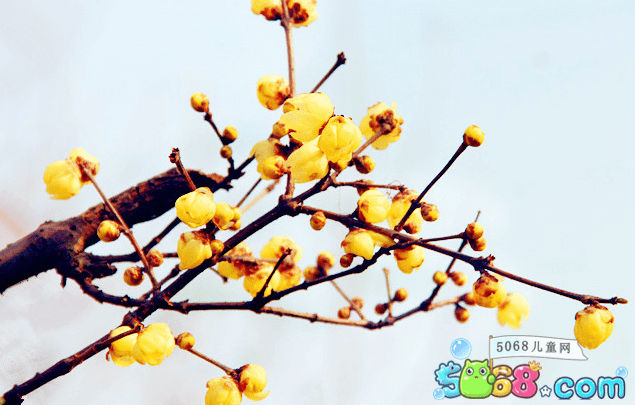
Wintersweet cultivation and management methods
1. Watering: Plum watering is usually used to keep the soil moist for a long time. Pay attention to drainage during the rainy season, and water promptly during the dry season. During the flowering period the soil should be moderately dry, and excessive watering is not suitable. Potted plum should not be watered when dry or otherwise in spring and autumn, and in summer it should be watered morning and evening every day.
2. Fertilizing: Apply organic fertilizer after fertilizing; from spring to June, after the new leaves sprout, fertilize once every 10-15 days; during the flower bud differentiation stage, apply decomposed organic fertilizer. From July to August. Mix fertilizer with phosphorus and potassium fertilizer, and apply organic fertilizer once in autumn.
3. Shaping
1. Standard tree form: In the seedling stage of plum, the leftover branches are not developed and are cultivated into a trunk. When the trunk reaches the expected height, the top of the branch is cut to promote branching. When the branches grow to 25 cm, they are topped again to form a canopy, and the base is cut off at any time. Sprouted branches.
2. Clump-form tree shape: Pick the wintersweet seedlings to promote branching. After the clump is formed, the young shoots are cut during the dormant period, and weak branches are left with 2 to 3 buds for short cutting. New shoots are treated in mid-June. Once you have done one topping, you should prune after the basic shaping and maintain the original type.
4. Pruning
1. Thinning and topping: When the sprouted leaves are about 5 cm long, remove the dense, inward-facing and ground-level buds. During the lunar period from May to June, topping should be carried out. During the rainy season, branches, twigs and tangled growth are cut off in time. Branches, windbreak and shade branches.
2. Pruning before flowering: Before the flower buds drop their leaves, leave a pair of leaf buds on the flower buds, cut off the upper part of the flower bud, and remove dead branches, diseased branches, weak branches and branches. Dense, long and unsplit branches. And renew the roots.
3. Pruning after flowering: After the plum blossoms, old branches, dead branches, dense branches and long branches are removed, weak branches or shoots are cut back, and main branches that are too high, too long or too strong. It can be cut back at a larger middle-slanting branch to control branch height, branch length and branch vigor.
6. Pests and diseases
1. Anthracnose: Thoroughly remove diseased leaves and destroy them by burning to reduce the source of infection; spray 50% thiophanate-methyl 800-1000 times solution, or 50% carbendazim WP 1000 times solution.
2. Black spot: Remove diseased leaves and destroy them by burning to reduce the source of infection; spray 50% carbendazim wettable powder 1000 times solution, or 65% zineb 500 times solution, or 0.3 degree Be lime sulfur mixture.
3. Locusts: Cut off egg-bearing branches and destroy them by burning; spray 10% imidacloprid WP 6000 times solution, or 70% acetamiprid WP 1500-2000 times solution, or 50% malathion EC 1000-1500 times solution.
4. Red-necked longhorn beetle: Hit the branches with a stick and kill the fallen insects promptly. When frass holes are found, pierce the larvae with wire, or plug a cotton ball with dichlorvos into the frass hole and seal it with yellow mud. Fumigate.
5. Japanese wax scale: Spray 2.5% deltamethrin or kungfu cyhalothrin 4000-5000 times solution, 10% cypermethrin EC or 20% pyrethroid EC 3000 times solution for control.
How to blend wintersweet tea
Wintersweet tea can be blended with bitter gourd tea, kuding tea, snow lotus, rose, honeysuckle, carnation, ginseng flower, snow lily, blue tea, sweet flower, lemongrass, reishi, osmanthus, cinnamon flower, magnolia flower. With different combinations of several generations of flowers, calendula, camellia, lotus, rhododendron, etc., different combinations produce different effects.
The effects and benefits of wintersweet tea
1. Wintersweet tea has the effects of clearing heat and detoxifying, stimulating appetite and stopping stasis, detoxifying, stimulating muscles, and benefiting qi and relieving cough.
2. Wintersweet tea has the effect of treating heat with thirst, dizziness, chest tightness, vomiting, polio, and whooping cough
3. Plum tea has the effect of lowering blood sugar and stimulating the uterus and intestines.
4. Wintersweet tea has the effect of treating fever, thirst, chest tightness, cough, burns and other conditions.
5. Regularly drinking plum tea also has the effect of improving acne, dark sores, and dark spots.