How to care for oleander at home? Master these few methods
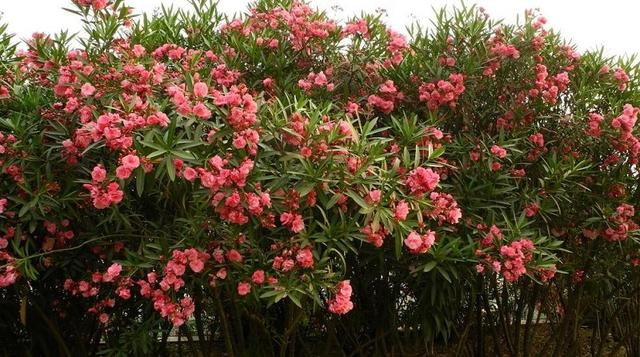
Image from the internet
Oleander, native to India, Iran and Afghanistan, has a long history of cultivation in China, covering the entire city. It likes pleasant light, a warm and humid climate, red flowers and white flowers.
Oleander is indeed poisonous. It is a poisonous plant included in the Chinese plant atlas database. Its toxic components are oleandrin and nerigoside; the leaves, bark, roots and sap have high levels. The toxicity of fresh bark is stronger than that of the leaves. After the toxicity weakens. The flowers contain components such as digitalis, scorpion and peach aphid, with relatively weak toxicity. After human poisoning, the initial stage is mainly digestive tract symptoms, such as loss of appetite, nausea, vomiting, diarrhea, abdominal pain, cardiac symptoms, palpitations, slow pulse, premature contractions, electrocardiogram with sinus bradycardia, atrioventricular block, ventricular or atrial tachycardia, neurological symptoms still include drooling, dizziness, drowsiness, numbness of the limbs. Dilated pupils, bloody stool, drowsiness, convulsions and death in severe cases.
Parks and households in Shanghai habitually plant oleander in front of and behind houses. Everyone is very concerned about its toxicity. Although oleander is poisonous, it is not contact-toxic. As long as it is not directly eaten into the stomach, it will not be poisonous to the body, so do not be afraid of it. The villagers who want to be told about pruning should wash their hands before pruning and eating, and do not let oleander sap get into your eyes. Some people are allergic to pollen and should avoid taking part in pruning.
Seven kinds of DD oleanderThe bamboo charm in the breeze is shameful,
needs to hang branches.
Do not compete with spring flowers,
the fragrance of midsummer's scent.
Oleander flowers are beautiful, opening on the branches, the flowers have fragrance, and the colors are red, yellow and white, shaped like funnels. The pink oleander flower is a natural color, while white and yellow are artificially cultivated varieties. For peach-colored oleander, the flower language is a curse, beware of danger. For yellow oleander, the flower language is a deep friendship. For white oleander, the flower language is pure friendship.
The whole plant of oleander is highly toxic, and the symptoms after poisoning are nausea, vomiting, drowsiness, arrhythmia, etc. Severe poisoning may cause loss of consciousness or death, so when facing oleander, just enjoy it.