How to grow blue snowflake? A detailed guide to its cultivation methods
The blue snowflake is green and very lively. Its color is light and elegant, and it feels very comfortable. It is very good at propagating and rarely encounters pests and diseases. Below, the editor introduces the breeding methods for blue snowflake, hoping to be helpful to everyone.
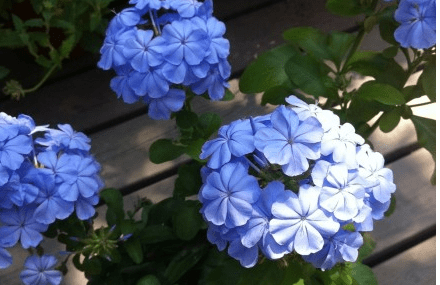
Specific breeding methods for blue snowflake
Choosing a pot
When we choose a flowerpot for the plant, it is better to choose a relatively large flowerpot, because we know the plant is a shrub, so as it grows, its footprint may become larger. If the pot is too small, it may limit its growth, which is not the result we want to see. However, the flowerpot does not need to be too deep.
Substrate
It is better to grow it with peat. If you use ordinary planting soil, the plant may not grow very well, and then you can mix in some perlite.
Fertilizer
Overall, this plant is very hungry for fertilizer. Usually, fertilizing generally has no special requirements for the species, and ordinary fertilizer suitable for other plants usually works. In addition, in the past, some fertilizer could be sprayed on the leaf surface, and the effect was also quite good.
Water
This plant also likes a humid environment. If it lacks water for a long time, the leaves of the plant may turn yellow. If it lacks water for a short time, it can recover quickly even after adding water. In addition, if it is the rainy season and the plant is in the flowering period, then it is better not to put it outdoors, to prevent the flowers from being damaged by rain.
Pruning
After flowering, cut off the remaining flowers so it will bloom new flowers. In addition, it is better not to leave old branches for more than two years, and only keep newly grown branches.
Specific methods for pruning blue snowflake
We must remember one thing: this plant is not afraid of pruning, so we can prune it.
After the plant's flowers have passed, we must cut off the flowers that have already withered. In this case, the plant will be able to bloom new flowers immediately. The time is not too long, generally 20 days to one month. Isn't that amazing?
It is also necessary to cut off some aging branches. Generally, branches more than two years old should not be kept. In addition, black branches should be cut off. The strong green branches that have just sprouted are what we should keep.
There is also pruning of leaves. For example, if there are seven leaves on a branch, we can leave only three or two leaves. Then, the branches will become stronger, and there will be more side branches and small leaves, especially in continuous rainy weather. However, after the plant starts growing long, you can reduce it.
Pollination methods for blue flower
Before pollinating the flowers of blue flower, flower friends must know that the flowers of blue flower are male and female. The top style of the female flower is like a small open umbrella, as if it is always ready for pollination. There are five filaments in the middle of the male flower, with anthers at the top. If you want to successfully pollinate blue flower, male flowers and female flowers are essential. When flower friends have both male flowers and female flowers at the same time, they can prepare a pollinator for them.
Blue and white flower is an insect-borne flower. Outdoors, they mainly rely on insects for pollination. When we cultivate them artificially indoors, we need to master some tips on how to pollinate blue flower. First, it is better to choose around 8 a.m. as the time to pollinate blue flower. The specific time depends on the situation. When the temperature is high, it can be earlier, and when the temperature is low, it can be delayed. Next, you need to prepare some cotton swabs and use the cotton swabs to stick pollen onto the parent plant so that it reaches the female style. Flowers that are successfully pollinated will not degrade even after dropping, and after maturing they will become flower seeds.