Five common cucumber diseases and pest prevention measures
Cucumberis a widely cultivated annual trailing or climbing herbaceous plant of the Cucurbitaceae family, and it is very suitable for balcony vegetable gardening! During its growth, it is highly prone toaphids, root-knot nematodesand other pests and diseases. Below, the Juqiao website editor introduces the symptoms of pests and diseases during cucumber cultivation andcontrol methods。
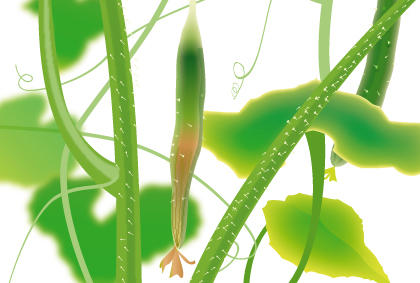
Basic information about cucumber
| Chinese name | Cucumber |
|---|---|
| Cultivation difficulty | Easy |
| Growth cycle | About 60 days |
| Main diseases | Downy mildew, powdery mildew, brown spot, anthracnose, gray mold |
| Main pests | Aphids, whiteflies, spider mites |
For gardening enthusiasts who want to grow cucumbers on a balcony, the following is a detailed introduction to the key points for protecting cucumbers from diseases.
Types of diseases affecting cucumber growth
Many cucumber diseases have symptoms, and if you pay attention and observe during cultivation, it is fair to say they are easy to prevent.
Pay attention to high temperature and high humidity, and it is important to regularly apply fertilizer by improving ventilation and drainage.
Downy mildew
Downy mildew is a disease in which leaves turn brown along the veins and gradually become light brown or grayish white. When the leaves dry out, they become very fragile, and when the leaves are wet, they become sticky. The lesions can connect with each other until the disease spreads across the entire leaf.
Downy mildew likes humidity, and it occurs at temperatures of 15 to 20°C. It is caused by pathogens contained in the soil, and it is spread by wind and rain. Symptoms occur on the lower leaves and are characterized by gradually spreading across the leaves.
Powdery mildew
Spots form on the leaves, grow like white mold, and eventually the leaves die. Powdery mildew is likely to occur in environments with high temperature and low humidity (many cases from April to October), and it is very likely to occur when the temperature is around 17 to 25°C. It is difficult for it to occur in midsummer and midwinter.
Brown spot
Before symptoms begin, small brown spots appear somewhere. They spread in concentric circles, causing blackened leaves on the spots, and then causing leaf drop. Brown spot is likely to occur in hot and humid environments, such as during continuous rainy days or when ventilation deteriorates.
Anthracnose
Anthracnose occurs not only on leaves and branches, but also in cucumber fruits.
Small dark brown spots spread concentrically, and the inside of the spots becomes large grayish-white lesions. As the symptoms progress, a hole forms in the center of the affected area. Black soot-like spots spread, causing rot and fruit drop.
Tip: Anthracnose is likely to occur in hot and humid environments, and it is a disease that easily occurs in rainwater during the rainy season.
Gray mold
www.diyju.com
Gray mold is a disease that occurs in flowers, young fruits, leaves, and tendrils. If it occurs on leaves, it becomes brown round lesions and gray mold. It is likely to develop at temperatures around 20°C and humidity, or when there is a sudden cold snap.
Measures against diseases
Downy mildew measures
To prevent downy mildew, try to avoid rain exposure, improve ventilation and drainage, and avoid excessive humidity. This is also an aspect of eliminating fertilizer loss.
In the early stages of development, pay attention and observe; if symptoms spread, use medication for control as soon as possible.
Tip: When using medication, spread the medication around the leaves.
Measures to prevent powdery mildew
Treating powdery mildew is not difficult, and using a preventive spray made from commercial vinegar is effective.
When symptoms are very mild, the infected leaves can be torn off and the condition can be seen. If symptoms spread, spray diluted vinegar on the affected areas every 1 week using water, baking soda, etc. If the symptoms do not disappear, it is necessary to use medication for control, otherwise the leaves will die.
Countermeasures for brown spot, anthracnose, and gray mold
Improving sunlight and ventilation is important. Fertilize scientifically, carry out formula fertilization, apply more organic fertilizer, and apply organic fertilizer only after it is fully decomposed. Apply chemical fertilizer as a top dressing in appropriate amounts and evenly, and apply as little fertilizer with residual secondary components such as ammonium sulfate as possible, so as to reduce the soil solution concentration.
Prevention is important against diseases
Once a plant becomes diseased, it may become a source of infection for other plants, so prevent the disease no matter what.
Remove diseased leaves at an early stage, and once symptoms are found, control them as soon as possible.Regularly applying fertilizer and preventive nutritionis also important.
The above is the content introduced by the Juqiao website editor on the prevention and control of cucumber pests and diseases, especially being careful during the rainy season. Protect cucumbers from diseases, and once pests and diseases occur, eliminate them promptly. If everyone wants to learn more tips for growing potted cucumbers in a balcony vegetable garden, please continue browsing other content on this website!