Detailed Guide to Making a Mini Bonsai from Pomegranate Seeds
Pomegranate is sweet, sour, and warm in nature, with effects such as killing insects, astringing, and reducing phlegm. Pomegranate fruit is rich in nutrients, and its vitamin C content is one to two times higher than that of apples and pears. How can you make pomegranate seeds into a cute little mini bonsai? Next, we will bring you the method for making a mini bonsai from pomegranate seeds. Let's take a look.
Method for Making a Mini Bonsai from Pomegranate Seeds
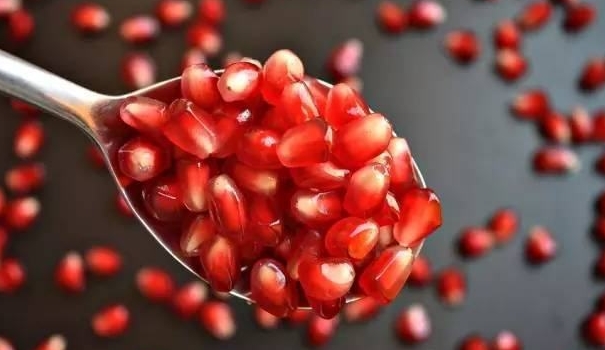
Preparing the Pomegranate Before Making the Bonsai
Tools
One ripe pomegranate, a suitable flower pot, enough humus soil
Temperature
Better to be above 20 degrees Celsius
Steps for Making the Bonsai
First Step
First, put the pomegranate seeds into water and carefully wash off the outer transparent film. Carefully discard the seeds floating on the surface.
First Step
Prepare a small bowl, pour in water, and soak the pomegranate in it. Soak for about eight days, and remember to change the water every day.
Third Step
Choose a container you like, with no hole at the bottom. Fill it with potting soil until it is nine parts full, then spray with a small watering can to moisten it.
Fourth Step
Spread the pomegranate seeds evenly over the soil, and cover the seeds with pebbles. Spray water back and forth with a small watering can. Remember to spray water every day!
After waiting for about three weeks, a small bonsai will begin to have a little head! In another month, you will have a lush pomegranate seed forest!
How to Grow Pomegranate Flowers
Planting
Pomegranate can be planted all year round, but it is better in early spring and autumn. However, there is a slight difference between the north and the south. Suitable for planting in both north and south in autumn, it is more favorable for the growth of pomegranate.
For pomegranate planting, generally choose high-quality seedlings with complete root systems and full flower buds. Choose a deeper clay pot, plant deeply, apply a certain amount of base fertilizer, and keep it in the sun.
Water and Fertilizer Management
Pomegranate is not tolerant of drought, so during normal maintenance, pay attention to timely drainage to prevent overwatering in plant growth. Of course, during the germination stage, fruit expansion stage, and leaf fall stage, attention should be paid to watering during these three periods to ensure the soil is moist and not waterlogged.
In the same year just after planting, you need to add fertilizer, adding an appropriate amount of urea to the fertilizer. Before fertilizing in autumn leaves, it is usually buried in a pit beside the plant. For potted fertilization, keep the fertilizer away from the rhizome to avoid burning the roots. Fertilization is also needed during the fruiting period to promote full fruit. In addition, during the growing season, according to the growth of the plant, topdressing should be timely; nitrogen fertilizer should be the main factor, and phosphorus and potassium fertilizer should be increased in time.
Ensure Sunlight
Pomegranate is a sun-loving plant. When people had not yet discovered the beauty of pomegranate, pomegranate flowers swayed in the wind, with sunlight and rain, and they grew very well. Therefore, potted pomegranate plants in the house must be guaranteed enough sunlight, as long as there is no lack of water, even if it is glare.
Plastic Pruning
The principle of pomegranate pruning is: shape, invisible, invisible. Therefore, when pruning, according to the growth space of each branch, branches and enough growth space are allowed to continue growing, while denser branches can be pruned.
Precautions for Pomegranate Flower Cultivation
Thinning and Fruit Thinning
The amount of pomegranate is relatively large, and it can bloom for a long time from May. Because pomegranate flowers are raised, the pomegranate must be eaten. Therefore, when the pomegranate blooms, small flowers are cut off in time to ensure large fruit and good quality.
Flowering Ring Stripping
Generally, ring stripping is carried out in early May, which temporarily hinders the downward transport of photosynthetic organic nutrients, thereby increasing the fruit-setting rate.
Pomegranate Flowering Time
The pomegranate flowering period is concentrated in the spring and summer seasons, from May to July each year. Pomegranate flowers usually begin to sprout in late March and begin to bloom in mid-to-late April. Flowering begins in May. It is the flowering period of pomegranate flowers in June, and the flowering period ends in early July. After the flowering period, pomegranate flowers will begin to bear fruit.
Four-Season Maintenance Methods for Pomegranate Flowers
Spring Maintenance
When the spring temperature rises to 10°C, move the pomegranate outdoors for maintenance (or an open balcony) to strengthen water and fertilizer management. For half a year, it is a fertilizer, NPK multi-element compound fertilizer. Do not apply a single fertilizer, otherwise it will cause long branches. Not conducive to growth.
Watering should be dry and wet, and watering should be poured out, because the pomegranate bonsai pottery clay is deep and difficult to pour at one time. If conditions permit, it can be watered by the immersion method, putting the potted plant into a pool and letting the water slowly soak the potting soil. However, the immersion method cannot be used often, once a month, and water is usually watered at other times.
Summer Maintenance
Pomegranate blooms in May. Management at this time is very important. Before flowering, pay attention to the application of phosphorus and potassium fertilizer, reduce the nitrogen fertilizer content, and promote flower bud differentiation. When flowering, cut off a part of the flowers, keep the large flowers, and remove the connection between the flower and the flower stalk as a "triangle"; this part will not be produced, and will automatically fall off within a certain period and consume nutrients. Time
Pause flowering during fertilization. The results show that strengthening water and fertilizer management promotes the growth of pomegranate fruit.
Autumn Maintenance
Autumn is the best time to enjoy pomegranates, but after removing the pomegranates, pay attention to fertilization. You can apply more phosphorus fertilizer and potassium fertilizer, and less or no nitrogen fertilizer, to prevent the plant from growing long branches, which is not conducive to fruiting the next year. After the leaves fall, cut off long branches, diseased branches, overlapping branches, and weak branches. As the temperature decreases, water and fertilizer are gradually reduced to complete preparations for overwintering.
Winter Maintenance
Pomegranate flowers hibernate in winter. If hibernation is insufficient, it will affect the flowering of pomegranate. Most families move pomegranates to a warm place before entering winter, and there is a room with heating or air conditioning, which is not conducive to hibernation. The best overwintering temperature for potted pomegranate is -2 to -5°C; below -10°C is frostbite. If the temperature is higher than 5°C, it is not conducive to its complete dormancy.
Attention should also be paid to the time of entering the room in winter. It is too early to affect growth now. It should re-enter in winter, when the temperature drops to -5°C, place it in a low-temperature environment not higher than 0-2°C, control watering, and water once a month.