How to Grow Cattleya Orchids: A Detailed Guide to Cultivation Methods and Precautions
Cattleya can be described as a plant that likes to grow in humid places. Its leaves look large and stiff, but its flowers are very beautiful, so many people still like it. Here are the cultivation methods and precautions for orchids, and I hope they are helpful to everyone.
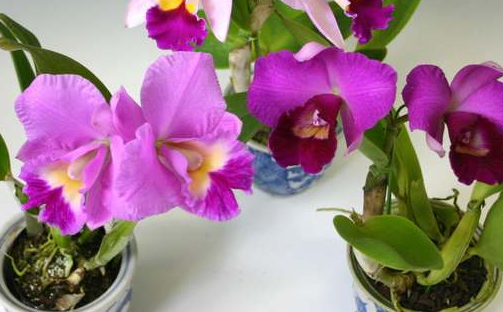
Its cultivation methods
Temperature
The suitable growing temperature for the cattleya is 20-30°C. In March of the following year it changes to 12-24°C, during the day it becomes 25-30°C, and at midnight it becomes 15-20°C. A difference of 5-10°C is better. To prevent it from entering a semi-dormant state, the winter room temperature should be above 10°C. When the temperature is below 12°C, it needs to be moved indoors as soon as possible. In summer, when it exceeds 35°C, a fresh environment must be created so that it can maintain strong growth and avoid rot of the stems and leaves.
Lighting
Cattleya is suitable for growing in a semi-shaded environment. Too much light easily scorches it and induces other diseases. Except in winter, it should be shaded 50-60% in the other seasons. In winter no shading is needed; you can place it in front of a window and give it a little sunlight.
Moisture
Cattleya has high air humidity requirements. During the growing season there should be enough water, but not too much water, especially in winter, when the plant is in a semi-dormant state, watering must be controlled. Otherwise it can easily cause root rot and death.
Planting material
For growing Cattleya plants, it is necessary to replace the planting material every 1-2 years, preferably at the spring shoots or after flowering, and then repot.
Fertilizer
Cattleya needs relatively little fertilizer, and the fertilizer required needs to be fully decomposed. When the temperature exceeds 32°C or is below 15°C, stop fertilizing, and during the flowering period and dormancy period, stop fertilizing to avoid damaging the rhizomes.
Cattleya cultivation considerations
When cultivating Cattleya, do not casually change the direction of the flower pot. If you constantly change its orientation, it will cause the fleshy leaf stalks to shrink due to light. If the leaves become deformed and turn yellow, it will affect flowering.
Cattleya grown at home is propagated by the division method. Usually, vigorously growing plants are divided every three years. Its division method is basically the same as that of Chinese orchids. After division, each new plant needs at least three or more pseudobulbs, otherwise it will not flower or will flower within 2-3 years
Its gift etiquette
A corsage is made from 1 to 2 cut flowers, and a beautiful mini bouquet is more popular. If it is a potted plant, it can be wrapped in thin decorative paper, and the knot is decorated with an ornament. It is mainly divided into the following two points:
Cattleya's flower shape is bright and colorful, and the market uses it for illustrations at festivals and banquets. If Cattleya is used, with Phalaenopsis as the main material, together with the above Phalaenopsis, Yuzhu, Wenzhu bottle arrangements, etc., it looks bright and elegant, full of grace, and has a strong sense of rhythm.
If you use Cattleya as the main flower, then with red silk, carnation, Monstera adansonii, and bear grass, it is light and lively. The flowering period is relatively long, and each flower can bloom for about 1 month; the flowers can be cut for about 1-2 weeks. Cattleya, Dendrobium, Phalaenopsis and Vanda are four of the most valuable ornamental orchids. The bride's bouquet is even more indispensable.