What conditions are needed for growing strawberries? Methods, timing and greenhouse technology management
Strawberries are rich in various nutrients and are highly favored by consumers on the market. With the improvement of science and technology and the development of strawberry varieties, strawberries on the market are getting bigger and bigger. Growing strawberries has almost become the main source of income for farmers, so what conditions are needed for growing strawberries? Below we will learn together about what conditions are needed for growing strawberries, the planting methods and timing, and knowledge related to greenhouse strawberry cultivation technology and management.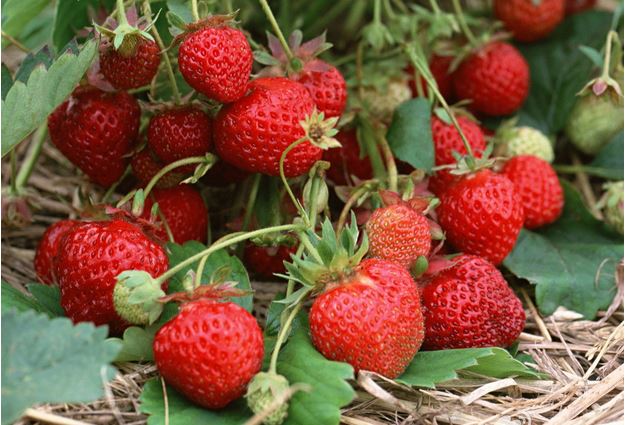
Growing conditions for strawberries
1. Soil: Strawberries are best grown in fertile, loose, neutral or slightly acidic loam soil. Overly heavy clay soil is not suitable for cultivation. Sandy soil with plenty of manure applied and frequent watering can also be used to grow strawberries.
2. Temperature: Strawberries prefer warm and cool climates. The root growth temperature for strawberries is 5-30°C, with an optimum of 15-22°C. The optimum temperature for stem and leaf growth is 20-30°C. Buds suffer frost damage at -15-10°C. During the flower bud differentiation stage, the temperature must be maintained at 5-15°C, and during the flowering and fruiting stage, 4-40°C. When strawberries are overwintering through summer, if the temperature is above 30°C and sunlight is strong, shading measures need to be taken.
3. Light: Strawberries are light-loving plants, but they also have strong shade tolerance. Under strong light, plants are short and sturdy, fruits are small, color is deep, and quality is good. Under moderate light, fruits are large, color is light, sugar content is low, and the harvest period is longer; excessively weak light is unfavorable for strawberry growth.
4. Water: Strawberry roots are shallowly distributed and transpiration is high, so water requirements are strict, but they differ slightly at different growth stages. In early spring and at flowering, strawberries need soil moisture no lower than 70% of maximum field water capacity. During fruit growth and ripening, demand is greatest, reaching over 80%. After harvest, when runners are produced and new adventitious roots form, soil moisture content should also be no lower than 70%. In autumn, which is the period for plants to accumulate nutrients and form flower buds, soil moisture must also be no lower than 60%. Strawberries are not tolerant of waterlogging and require good soil permeability, so attention should be paid to field drainage during the rainy season.
Strawberry planting time
Strawberries are generally planted in spring, autumn, or even in all four seasons, because they are perennial plants. Strawberry cultivation has a three-year cycle. In the first year, only a small number of strawberries can be harvested. In the second year, the harvest will be much greater, but by the third year or after three years, strawberry yields will decline significantly, and the plants need to be replaced.
Strawberry planting methods
1. Site selection and land preparation
Strawberries have very strong adaptability to soil and can generally be grown in most types of land. However, strawberries have the characteristics of liking light, water, and fertilizer, and fearing waterlogging, so the site is usually chosen as loam or sandy loam with higher terrain, level ground, loose soil texture, convenient drainage and irrigation, good sunlight, and rich organic matter.
Strawberries prefer neutral or slightly acidic soil, with a suitable pH value of 5.5-7.0. Bed preparation must be done carefully, otherwise it will seriously affect the survival rate of transplanted seedlings and their growth after recovery. Make the bed surface and bed ridges straight, and the soil fine and level. Irrigate the land 2-3 days before planting seedlings to settle the soil.
2. Seedling transplanting
Transplanting should be carried out on cloudy days or after four or five o'clock in the afternoon to avoid direct sunlight exposure. Seedlings should be disease-free and vigorous, with 3-5 leaves, more than 10 new roots, and plump terminal buds. Planting depth is key to seedling survival; planting too deep or too shallow will cause seedling death. The correct method is to keep the root crown level with the ground surface, with the arched back facing outward, so that it is deep enough not to bury the heart but shallow enough not to expose the roots, and let the root system spread out fully. After planting, press the soil firmly, then water thoroughly immediately, and continue watering for 3-4 days. Check promptly after watering, and replant seedlings with buried hearts, exposed roots, or that have fallen over as required. After transplanting, if there is bright sunshine, it is best to use reed curtains or leafy branches for shade.
3. Management after planting
After strawberry seedlings survive transplanting, shallow cultivation and weeding should be done promptly, and diseased leaves, old leaves, and runners should be removed promptly and destroyed in a centralized manner. When two new unfolded leaves appear, in addition to watering thoroughly after fertilization, attention should also be paid to watering at ordinary times to maintain soil moisture.
Cover to protect against cold so that strawberry seedlings overwinter while remaining green and to maintain soil moisture. Before winter arrives, plastic film mulching is needed, which is also a yield-increasing technique. Use polyethylene film 0.008-0.015 mm thick, cover the seedlings according to the width and length of the bed, pull the film tight and smooth so it fits closely against the bed surface, and press the edges of the film firmly with soil.
4. Spring management
When seedlings begin to sprout in early spring, remove the plastic film. In the Baoding area, seedlings are lifted through the film in mid-to-late March, that is, align with the seedlings under the film, tear a small hole in the film, not too large, then use fingers to gather the seedling leaves under the film up through the small hole onto the film, exposing the bud heart, leave the film in place and press it firmly, continue covering, and remove dry and withered old leaves.
5. Fertilization and watering
After lifting seedlings through the film, the soil is generally rather moist, so do not rush to water. The first watering in spring can be postponed until the bud stage, but attention should also be paid to the fact that spring has frequent winds and dry weather, so check soil moisture at any time. When the surface is dry, water promptly.
From the bud stage to the early flowering stage, more water is needed, so watering should be sufficient. If drought occurs during the fruit harvest period, watering is needed, and it is best to water in the evening after harvest, at night, or the next morning. However, water lightly to prevent the fruits from being soaked and causing rot. If conditions permit, drip irrigation is best and gives better results.
6. Harvesting
The ripening period for open-field strawberry cultivation is mostly concentrated in May and June. At this time, temperatures are high and the weather is hot. In order to keep the fruits fresh, harvesting should be carried out in the cooler morning or evening. This can improve the freshness retention rate and intact rate of fresh strawberries.
Greenhouse strawberry cultivation technology and management
1. Timely greenhouse covering for heat preservation
Generally, when the temperature drops below 5°C, semicircular small arch sheds should be promptly placed over the strawberry cultivation beds and covered with colorless plastic film. In the early stage after covering, attention should be paid to ventilation to prevent the temperature inside the shed from exceeding 30°C, especially around noon on clear, cloudless days with strong sunlight, when high temperatures must be prevented from scorching the seedlings. In addition, when the minimum temperature inside the shed is around 5°C, paper quilts or straw mats should be covered over the shed film at night for heat preservation, and removed promptly after sunrise during the day to increase sunlight exposure and raise the temperature inside the shed, carefully preventing frost damage or root rot.
During the coldest days of winter, if the maximum temperature inside the shed is below 10°C, the insulating covering materials should not be removed during the day either, so as to help strawberries overwinter safely. After the "fifth nine-day period" and "sixth nine-day period," when the outside temperature stabilizes above 0°C, the paper quilts or straw mats can be removed after sunrise during the day, but they must be promptly put back before sunset in the evening to maintain a relatively high temperature inside the arch shed. When the temperature inside the small arch shed is also stably maintained above 5°C at night, the covering can be removed, and attention should be paid to weather changes at all times, with timely ventilation to prevent high-temperature damage.
2. Preventing early buds and early flowering
In the process of greenhouse strawberry production, plants are prone to early budding and early flowering. If this phenomenon occurs too much, it will seriously affect strawberry yield and quality. The occurrence of early budding and early flowering in greenhouse strawberries is related to the following factors:
First, it is related to varietal characteristics. Varieties whose flower buds differentiate easily and whose dormancy is relatively shallow, such as Lihong and Qiuxiang, require only about 50 hours of dormancy. The low-temperature requirement during the dormant period is relatively small, making them prone to early budding.
Second, it is related to premature flower bud differentiation caused by the influence of fertilizer and temporary planting. On the one hand, during seedling raising and before flower bud differentiation, if nitrogen uptake is relatively low, strawberry flower bud differentiation often occurs earlier. On the other hand, if temporary planting is done too late, the temporary-planted seedlings are too small, or aged seedlings form, or the soil in the temporary planting bed is too dry or too wet, or fertilizer is insufficient, all of these can cause strawberry flower buds to differentiate prematurely. These will all cause early budding and early flowering in strawberries after transplanting.
To prevent early budding and early flowering in strawberries, the following should be done in production:
First, choose suitable varieties. For greenhouse cultivation, varieties with relatively shallow dormancy should be selected. If varieties with stronger dormancy are chosen, heat-preservation covering should not be done too early.
Second, during the seedling-raising process, fertilize reasonably, strengthen management, and cultivate vigorous seedlings. By removing old leaves, removing inflorescences, straightening runners, spraying gibberellin, and other measures, strengthen the management of mother plants and produce high-quality vigorous seedlings.
Third, pay attention to temperature control after covering the shed. The temperature inside the shed should be controlled below 25°C during the day and above 0°C at night. In severe winter, through measures such as placing small sheds inside the large shed, thickening the covering, and setting up wind barriers for heat preservation, ensure normal strawberry development. For plants that have already developed early buds and early flowers, remove the flower buds promptly, strengthen fertilizer and water management, and promote axillary buds to flower and bear fruit to reduce losses.
3. Strengthen fertilizer and water management
Greenhouse strawberries have a long fruiting period, so on the basis of heavy basal fertilizer application, reasonable topdressing should be carried out to meet their nutritional requirements. Topdressing follows the principle of "small amounts, many times." From covering the shed to the bud stage, fertilizer can be applied about once every 10 days along with shallow watering, each time applying 10 kg of urea, 5-8 kg each of superphosphate and potassium chloride per mu. In addition, in the middle and later stages, combined with pesticide spraying, foliar spraying of multi-element micro-fertilizer or organic nutrient solutions such as Zhibaosu can be done to increase strawberry fruit weight and sugar content.
If the temperature inside the greenhouse is too high, soil moisture evaporation is large, so timely irrigation is needed. In the early stage, when the outside temperature is high, irrigation should be carried out in the evening; in the later stage, when temperatures inside and outside the greenhouse are relatively low, irrigation should be carried out in the morning. After irrigation, first raise the greenhouse temperature, then increase ventilation to reduce humidity. Do not water too frequently, and each watering should be thorough. Stop watering 1 week before flowering, and 15 days after flowering, water once combined with fertilization.
4. Preventing deformed fruit
Mixed planting of some varieties with abundant pollen among the main cultivated varieties is an effective measure to prevent deformed fruit in greenhouse strawberries. The local main cultivated variety is Baojiao Zaosheng, and the pollinating varieties are Chunxiang, Fengxiang, etc., generally planted at 5%-10%. Pesticides must not be sprayed during the strawberry flowering period, to prevent reduced pollen germination rate, affecting fertilization and producing deformed fruit. Pesticides can be used before strawberry flowering to control diseases, and after flowering, diseased plants should be promptly removed, and diseased leaves and inflorescences removed to control the spread of disease.
When soil moisture is insufficient, timely dark irrigation under plastic film between ridges should be carried out. When fertilizer is lacking, apply 15 kg of 45% ternary compound fertilizer per mu combined with watering. Do not apply ammonium bicarbonate. Diluting fertilizer with water and applying it through holes gives better results, as this can promote fertilizer with water and meet the needs of normal strawberry flowering and fruiting. For each batch of flower buds formed in greenhouse strawberries, release bees inside the shed, stocking 5,000 bees per standard shed, so that the pollination rate can reach 100%. The bee release times are 8-9 a.m. and 3-4 p.m.
5. Pest and disease control
When using small arch sheds to cultivate strawberries, because the microenvironment inside the shed has high temperature and high humidity, it is very easy for diseases such as powdery mildew and gray mold, as well as underground pests, to harm strawberry plants. For insect pests, before transplanting, 25% phoxim can be mixed with water or fine soil and spread in the soil, or trichlorfon powder can be spread in the soil for control. For diseases, after mulching, promptly spray 40% thiophanate-methyl at 300-400 times dilution or Bordeaux mixture at 240 times dilution.