Snake fruit: cultivation methods, nutritional value, benefits, effects, contraindications, and the best time to eat snake fruit
The exterior of snake fruit looks very similar to snake skin, and its taste is sweet, crisp and refreshing, and its nutritional value is relatively rich. It is a famous fruit in Southeast Asia. It is said that snake fruit also has beauty and skin-nourishing benefits, and it is deeply loved by people. Below, let's follow the editor to learn about snake fruit's cultivation methods, nutritional value, benefits, effects, and contraindications, as well as the best time to eat snake fruit.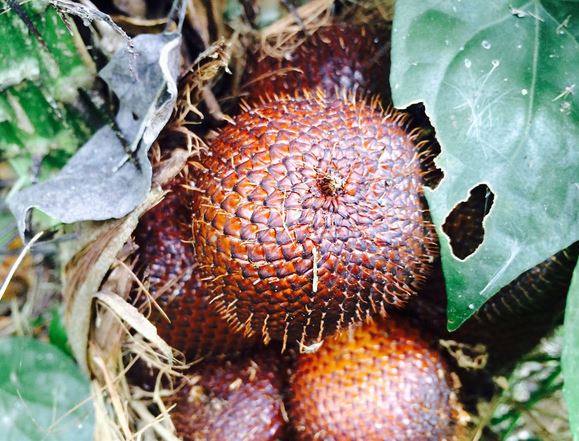
The growing environment of snake fruit
Snake fruit prefers a tropical humid climate, and high temperature and high humidity are important conditions for its growth and development. The most suitable growing conditions are an average annual temperature above 22°C, an average temperature in the coldest month above 18°C, and relative humidity above 85%.
Snake fruit cultivation and seedling-raising techniques
1. Woodland selection: Selecting newly afforested land requires consideration of altitude, moisture and light transmittance. Snake fruit can be planted on land at an altitude of 300-600 m, but the most suitable is 400-600 m. Snake fruit has relatively high water requirements and needs year-round moisture. Newly planted stands require shade, so it can be planted under existing stands. There are no restrictions on the tree species composition of the stand; both coniferous and broadleaf trees are acceptable, but the canopy layer needs 20%-30% light transmittance. After 2-3 years of planting, it can withstand full sunlight.
2. Spacing: Row spacings include several types: 1.5 m × 1.5 m, 1.5 m × 2.0 m, 2.0 m × 2.0 m and 2.5 m × 3.0 m.
3. Land preparation: Full clearing is generally used, and the specification of planting holes is generally 50 cm × 50 cm × 50 cm.
4. Seedling raising: Snake fruit seedling methods include sucker propagation and seed propagation. Sucker propagation means selecting robust suckers from the many suckers sprouted by the mother plant, inserting them from the top downward into a plastic container, filling it with soil or rice husk, and after 2 months, when the suckers have grown more roots, cutting them off and transplanting them into bamboo-woven containers to continue cultivation. When transplanting, cut half of the leaves of the sucker, tie it tightly with nylon rope or bamboo strips, place it in a bamboo-woven container, pour on thin mud, and place it under a shade net to continue cultivation.
Key management points after snake fruit planting
1. Water and heat management: Indonesia has good water and heat conditions. Below an altitude of 600 m, irrigation is basically unnecessary, and there is no problem of low-temperature freezing damage.
2. Nutrient management: Generally, fertilizer is applied twice a year, 1-2 kg per plant each time, respectively in the dry season (March-August) and the rainy season. The fertilizer used is a compound fertilizer of major elements, such as a compound fertilizer with an N:P:K ratio of 1:1:1. No fertilizer containing trace elements is applied.
3. Leaf number control: The number of leaves of snake fruit needs to be properly controlled. For the "Pondoh" variety, the number of leaves is generally controlled at 7-8 per plant, and for the "Bali" variety, the number of leaves is generally controlled at 14-16. Whether the leaves are dead or not, they can be cut off, but the leaf below the fruit should be retained to support the fruit. The cut leaves are generally not removed, but are spread on the ground to reduce soil erosion and increase nutrients.
4. Ratio of female to male plants: For the "Pondoh" variety, the ratio of female to male plants is 50:1, that is, 1 male plant for every 50 female plants. Each inflorescence of the male plant has 4-5 branch inflorescences, and each branch inflorescence is used to pollinate about 10 female plants. There is also a female-to-male ratio of 20:1, that is, 1 male plant for every 20 female plants.
5. Artificial pollination: For "Pondoh", artificial supplementary pollination is needed. Each inflorescence is artificially pollinated 2 times, with an interval of 3-4 days. That is, cut off the male inflorescence, lightly tap the male inflorescence over each open female inflorescence so that its pollen falls onto the female flowers, and then add a protective cover above the pollinated female inflorescence to prevent rain from washing it away. The protective cover can be made of plastic film or snake fruit leaves, but a plastic protective cover has a better protective effect.
6. Pest and disease control: According to surveys and feedback from fruit growers, snake fruit plantations have relatively few pests and diseases. The relatively serious insect pest is a kind of beetle, which mainly feeds on the roots and can cause plant death. Rabbit urine can be used for control.
The nutritional value of snake fruit
1. Snake fruit is rich in multiple vitamins and minerals, and has relatively high levels of trace elements such as iron, zinc and calcium.
2. Snake fruit is rich in nutrients. It is one of the fruits with the highest potassium content, and it is also rich in pectin.
3. Every 100 g of snake fruit contains 321.97 J of calories, 0.5 g of protein, 20.9 g of carbohydrates, 28 mg of calcium, 18 mg of fat, 4.2 mg of iron, 0.04 mg of vitamin (B1) and vitamin (C2) mg.
The benefits and effects of snake fruit
1. Increase bone density
Snake fruit contains a variety of minerals, among which calcium and potassium are especially high. Calcium is an important component of human bones, and after the body absorbs it, it can reduce the occurrence of calcium deficiency symptoms and can significantly increase bone density. Potassium is also a nutrient necessary for the human body. It can quickly excrete sodium from the body and can reduce the occurrence of multiple adverse symptoms such as high blood pressure and body edema.
2. Beauty
Beauty is also one of the important benefits of snake fruit. After people eat it directly, they can absorb multiple nutrients, accelerate the regeneration and metabolism of skin cells, and play a role in nourishing the skin. In addition, snake fruit can also be used externally. After removing the peel, the flesh can be applied directly to the skin, which can have a good whitening and wrinkle-reducing effect. The flesh of snake fruit can also be crushed and made into a facial mask. Applying the prepared mask to the skin every night has excellent moisturizing and hydrating benefits.
3. Lower blood pressure
Excess sodium in the human body is an important factor causing high blood pressure and stroke. Snake fruit contains sufficient potassium, which can combine with excess sodium in the body and excrete it, thereby lowering blood pressure. At the same time, potassium ions can effectively protect blood vessels and reduce the incidence of high blood pressure and stroke.
4. Detoxification
Eating more snake fruit in daily life can have the important benefits of detoxification and beauty. This fruit contains a large amount of natural pectin, and this substance can clear multiple toxins accumulated in the human body.
5. Promote urination and reduce swelling
Snake fruit is a tropical fruit that can promote urination and reduce swelling. This fruit contains multiple trace elements, among which the content of the trace element potassium is relatively high. After entering the human body, it can promote the decomposition and excretion of the trace element sodium in the human body, and can also reduce water retention in the human body, allowing excess water to be quickly excreted from the body. It has a good effect on eliminating edema caused by nephritis and high blood pressure in humans.
6. Prevent cancer
Research experts in Japan have shown that polyphenols in snake fruit can inhibit the proliferation of cancer cells. A study by scientists from Finland is even more encouraging: the flavonoids contained in snake fruit are a highly effective antioxidant. They are not only one of the best blood vessel cleansers, but also a nemesis of cancer.
Contraindications: (Pregnant women are advised to eat less snake fruit)
1. Do not eat non-fresh snake fruit
When purchasing snake fruit, be sure to choose fresh snake fruit. Do not buy non-fresh snake fruit that is about to spoil. Fresh snake fruit has a glossy appearance and no scars. After the outer skin is removed, the flesh is white and tender, just like peeled garlic.
2. People with deficiency-heat should not eat snake fruit
Snake fruit is generally suitable for the public, and is especially suitable for people who use their brains for a long time, with benefits for brain health care and beauty and skin benefits. However, snake fruit is a cooling fruit, so people with cold stomach and weak constitution should eat as little as possible. In addition, snake fruit has a relatively high calorie content, and patients with cough symptoms caused by deficiency-heat should avoid eating it.
3. Do not remove the stem when washing snake fruit
When washing snake fruit, be sure not to remove its fruit stem, because some pesticide residues and harmful microorganisms may remain on the skin of snake fruit. After removing the fruit stem, these harmful substances will enter the flesh of the snake fruit through the small hole left by removing the stem, causing the flesh to be contaminated a second time. Eating it this way is also unsafe, and adverse reactions such as abdominal pain and diarrhea may occur. To wash snake fruit clean, it is best to rinse it continuously with tap water. Flowing water can prevent pesticides from penetrating into the fruit. Do not eat the washed snake fruit immediately; it is best to soak it in residual cleaning solution for 5 minutes.
The best time to eat snake fruit
Because snake fruit is a tropical fruit, it can be eaten once ripe. However, it is best not to refrigerate it. If it is to be placed in the refrigerator, it should first be put in a fresh-keeping bag, and the storage time should not exceed 48 hours.
Snake fruit is generally sold in fruit bunches, or the bunches can be broken apart and the loose fruits piled together. Fruits kept in bunches have a longer shelf life and can be stored for 2 weeks; fruits kept as loose fruits have a shorter shelf life and can be stored for 1 week. However, when you buy them home or someone gives them to you, the time is generally longer than this, so it is best to buy only as much as you can eat. If you want to store them for a long time, it is recommended to make them into candied fruit for long-term preservation; the taste is also very good.