Advantages of Partridge Chicken Farming Technology, Costs, Profits, Market Prices and Nutritional Value
The Partridge Chicken is a native Chinese chicken breed of the dual-purpose egg-and-meat type. Partridge Chickens have relatively strong disease resistance, well-developed muscles, and fine, springy meat, and they are more nutritious than ordinary chickens. They are widely favored by consumers in the market, so farming Partridge Chickens is relatively high in economic value. Below, the editor will introduce the key points of Partridge Chicken farming technology, advantages, costs and profits, the market price and nutritional value of Partridge Chickens. Let's take a look!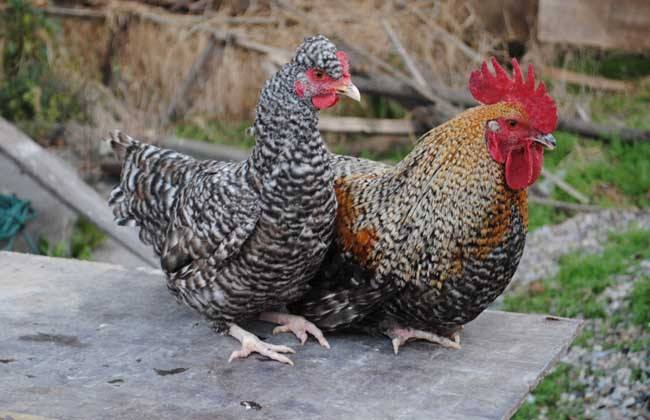
Living Habits of the Partridge Chicken
1. Partridge Chickens have a high activity level from a young age, strong climbing ability, and long flight distances. Therefore, this chicken has strong disease resistance, a well-built physique, and well-developed muscles. This breed's meat is firm, fine, and springy.
2. The Partridge Chicken has a very broad food chain. Wild grasses and flowers in the mountains, leaves and grass roots, grass seeds and tree fruits, moths and insects, fly maggots, earthworms, insects, and so on can all become part of this chicken's food chain.
3. Partridge Chickens have a very strong instinct to return to their nests. No matter how far they roam for food during the day, when the sun sets in the west, they all return to the nest and roost on the perch to rest. Therefore, they are very suitable for free-range raising in different regions (plains, hills, grasslands, mountainous areas, etc.).
Farming Technology for Partridge Chickens
Site Selection
Choose mountainous forest land that has passed environmental monitoring and meets pollution-free requirements, and the site should be relatively enclosed, facing the sun, sheltered from wind, and dry. Therefore, the farming site is chosen in contiguous mountain forests in Xia Keng far away from all pollution, with enough space for the chickens to move and run, and pasture and herbs are planted on the mountain land to increase forage, so the chickens can freely feed. A wire fence about 3m high is set up around the mountain forest land to prevent the chickens from straying out.
Chicken House Construction
Although it is free-range farming, a chicken house must be built to provide the chickens with a place to lay eggs and rest at night. The chicken house is relatively simple to build, sheltered from wind and facing the sun, warm, sun-proof, and rain-proof. The area should be large enough, with 15 chickens per square meter. Wooden perch racks are installed inside the house for the chickens to roost on. Along the walls around the chicken house, 3 to 4 tiers of nesting boxes are built for the chickens to lay eggs in. Light bulbs are installed inside the house to provide supplemental lighting at night. Set up enough feed troughs and waterers, with 1 feed trough and 1 waterer for every 30 chickens; when the chickens are let out, these devices are placed outside the house.
Selection of Partridge Chick Chicks
Choose chicks with a strong constitution and good spirits.
Feeding Technology
1. Brooding and rearing stage: from hatching to the first twenty days, the feed during these twenty days is all puffed feed. Where there is no puffed feed, it is best to scald the feed until cooked, dry it, and then feed it, to reduce intestinal diseases.
2. Early rearing stage: from the completion of the brooding and rearing stage to the following twenty days, during these twenty days, 20% green feed can be added (that is, cabbage, pumpkin, carrot, celery, zucchini, etc., and any vegetables that people can eat can all be used as green feed for this chicken, mixed with crushed cornmeal and other coarse grains and fed together). Various vegetables contain large amounts of vitamins and various nutrients, which greatly increase the edibility and deliciousness of Partridge Chickens and can also substantially reduce production costs.
3. Growing and finishing stage: within three months after the early rearing stage, the amount of various green feeds added during this growing period can reach about 45%. Note that the moisture of the mixed feed must be well controlled; it should not scatter or drip water when held in the hand. During the laying period, reducing green feed to about 35% is more scientific.
Epidemic Disease Prevention and Control
1. Vaccinate according to the normal immunization schedule.
2. Precautions for immunization and vaccination.
(1) Carry out immunization and vaccination strictly according to the vaccine instructions, standardize the vaccination operation method, and use up the vaccine as soon as possible after opening it to ensure immunization quality.
(2) Before immunization and vaccination, conduct a health check on the flock. Chickens that are sick, or have abnormal spirit, appetite, or body temperature, or are in poor condition should not be vaccinated or should have vaccination postponed.
(3) After immunization and vaccination, immediately clean and disinfect injection equipment and tools; soak empty vaccine bottles, etc. in disinfectant solution for disposal.
(4) After immunization and vaccination, carefully observe the flock. When serious adverse reactions occur, use first-aid measures such as anti-shock, anti-allergy, anti-inflammatory, anti-infection, cardiac support and fluid replacement, and sedation and antispasmodic treatment.
3. Disinfection: thoroughly clean and disinfect the site before introducing chickens. After introducing chickens, clean and disinfect the site, feed troughs, and water troughs once a week, and at the same time carry out disinfection with chickens present once each time. After each batch of chickens is sent to market, thoroughly clean the chicken house, remove the surface soil from the ground, wash the feeding utensils, and then carry out spray disinfection. Finally, spread a layer of slaked lime on the ground.
4. Preventing animal damage and theft: install light bulbs outside the chicken house to keep the area around the chicken house bright all night, then build a small shed beside the chicken house and raise a few dogs. When there is any movement, the dogs bark, which has a certain effect on preventing animal damage and theft.
5. Attach importance to insect killing and rat extermination work: poison and kill rats 3 times a month, frequently apply pesticides to kill mosquitoes and flies, and eliminate the transmission routes of infectious diseases.
6. Regularly use coccidiostat powder and broad-spectrum intestinal deworming drugs. Regularly use coccidiostat powder and broad-spectrum intestinal deworming drugs to expel parasitic worms such as nematodes, coccidia, and tapeworms.
7. Pay attention to daily observation. In daily work, pay attention to observing the flock's feeding, droppings, spirits, drinking, breathing, and other conditions. When sick chickens are found, isolate and treat them promptly. At the same time, often patrol the mountain forest to observe whether there are wild animals threatening the chickens' safety and causing stress reactions.
Key Points for Partridge Chicken Farming
1. Individuals that are healthy, well-shaped, and conform to the breed characteristics should be selected for raising.
2. Ecological free-range Partridge Chicken farming is very seasonal. The time for introducing chicks is best controlled from March to September each year; the weather in other months is cold and not suitable for this farming method. For brooding, it is generally better to use indoor brooding on wire floors. As the age in days increases, the lighting time and intensity should be gradually shortened and weakened. During the brooding period, it is best to choose complete formula chick feed. Let them feed freely every day and drink clean water freely.
3. Within 20 days after the brooding and rearing stage is completed, 20% green feed can be added (cabbage, pumpkin, carrot, celery, zucchini, and other vegetables that people can eat can all be used as green feed for this chicken, mixed with crushed cornmeal and other coarse grains and fed together). Vegetables contain large amounts of vitamins and various nutrients, which can not only greatly increase the edibility of Partridge Chickens but also substantially reduce production costs.
4. Attach importance to daily hygiene, epidemic prevention, and disease control work. Frequently disinfect sheds and utensils, and immediately isolate and treat sick chickens when found.
Farming Prospects of Partridge Chickens
As people's consumption levels and standards improve, the original meat-type chickens and some laying hens are gradually being eliminated by the market. High-quality small-bodied dual-purpose meat-and-egg breeds like the Partridge Chicken are increasingly loved by consumers. As a rare Chinese poultry, the Partridge Chicken has become the first choice breed for ordinary people's dining tables, holiday gifts, high-end catering, and farmhouse restaurants. At present, chicks are in short supply, adult chickens are in tight supply, and market potential is relatively large. At the same time, the eggs laid by Partridge Chickens also have high nutritional value and high market selling prices, and the profits are very considerable.
Farming Costs and Profits of Partridge Chickens
1. Input.
(1) Breeding chicken cost: at the Suzhong Luye Partridge Chicken Ecological Farming Park, 1 Partridge Chicken chick sells for 8 yuan.
(2) Feed cost: calculated at 40 yuan of feed cost per chicken (it may fluctuate during farming).
(3) Epidemic prevention and medical costs: about 5 yuan per chicken.
(4) Other costs (labor, water and electricity, depreciation of farm assets, etc.): about 10 yuan per chicken.
2. Output. At present, the average market price of Partridge Chickens is about 60 yuan/kg. Generally, when finished chickens are sent to market, their body weight is about 2 kg, so the output can reach 120 yuan per chicken. Good free-range Partridge Chickens sell for more than 200 yuan each and are still in short supply, so the price is hard to define.
3. Income. After deducting input, raising 1 Partridge Chicken can yield at least 57 yuan in income.
Farming Advantages and Nutritional Value of Partridge Chickens
The Partridge Chicken is a typical lean-meat rare poultry game breed, so its adult chickens have high economic value. The skin is thin, subcutaneous fat is low, the muscles are firm, the immunoglobulin content in the blood is high, the bones are fine and hard, and the pores are small and dense. It tastes delicious, tender and smooth without being greasy, with a long-lasting fragrant aftertaste. This chicken has stable genetic performance, strong adaptability, tolerance to coarse feed, is good at foraging, and is alert and active. It only needs a mixture of corn, bran, cakes, and green feed as a supplement every day. It has strong disease resistance, lays relatively many eggs, and has good meat quality. It is a pollution-free green food.
High in amino acids and trace elements, low in cholesterol, and has the effects of nourishing yin and strengthening yang, strengthening the spleen, and activating the stomach and prolonging life.
The meat has good color, dense texture, and is tender and delicious. Even after long or repeated steaming and boiling, the meat remains loose but does not fall apart, and the flavor does not change. When eaten, the meat is springy and the soup is refreshing and fresh. The flavor of 10-week-old young chickens is even more unique, like game birds. The flavor of this chicken's breast meat is basically consistent with that of the leg meat, making it an excellent delicacy for meals.
In the eyes of people today who advocate health and pay attention to health care, the Partridge Chicken is also a black health food. It has the effects of nourishing yin and tonifying the kidneys, generating blood and supplementing qi, strengthening the body, and benefiting the brain. It is suitable for nourishing consumption by postpartum women, patients, and people recovering after illness. It has obvious effects on anorexia caused by zinc deficiency syndrome in children, food avoidance, low immunity, failure to grow taller, as well as cardiovascular and cerebrovascular diseases in middle-aged and elderly people, thyroid tumors, and anti-aging.