What to Do When Pistacia weinmannifolia Drops Its Leaves or Its Leaves Droop? Detailed Solutions
Pistacia weinmannifolia grows under limestone forests or in scrub at altitudes of 580-2700 m. Because of its special uses and ornamental value, it has become a popular potted plant on today's flower and plant market. Anyone who has grown Pistacia weinmannifolia knows that it is a sun-loving tree that prefers warmth and plenty of light.
Pistacia weinmannifolia grows under limestone forests or in scrub at altitudes of 580-2700 m. Because of its special uses and ornamental value, it has become a popular potted plant on today's flower and plant market. Anyone who has grown Pistacia weinmannifolia knows that it is a sun-loving tree that prefers warmth and plenty of light. Yet people often cause Pistacia weinmannifolia to drop its leaves or have drooping leaves through improper care. So how should we remedy this? Let's take a look below at what to do when Pistacia weinmannifolia drops its leaves and the solutions, as well as what to do when its leaves droop.
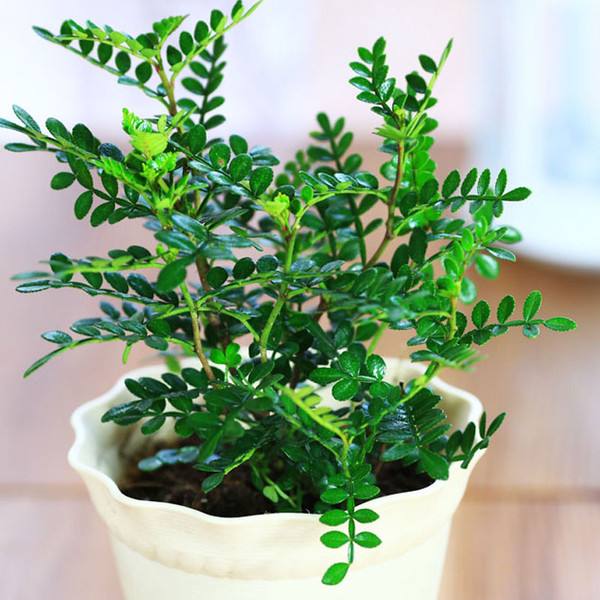
Causes of Leaf Drop in Pistacia weinmannifolia and Solutions
1. Improper watering. Watering should follow the principle of not watering until the soil is dry, and watering thoroughly when you do. Do not let it stay waterlogged for long periods or let water sit in the saucer for a long time! Even more, never water only the surface layer of soil; you must water thoroughly! Generally speaking, watering for more than 10 seconds up to a few minutes (depending on pot size and soil type) until water drains from the bottom is sufficient.
2. Unsuitable light. This condition easily appears when there is a long-term lack of light. Poor ventilation can also cause Pistacia weinmannifolia to drop its leaves. Good ventilation conditions should be maintained. To grow Pistacia weinmannifolia well, ensuring sufficient light and ventilation is very important. If yellowing or falling leaves have already appeared, move the Pistacia weinmannifolia to a spot with plenty of sunlight so the plant can carry out photosynthesis, and it will recover quickly.
3. Environmental change. Pistacia weinmannifolia is relatively sensitive, and a major change in environment takes about two weeks to adapt to the surroundings. If it is repotted, or during the growing season when a large number of new buds sprout and grow, old leaves may also drop while new leaves sprout. This is a normal phenomenon and nothing to worry about.
What to Do When Pistacia weinmannifolia Leaves Droop
(1) Too much watering damages the root system, leading to insufficient water supply, so the leaves droop.
(2) Watering is not timely, causing sudden water shortage. Because its root system is fine and shallow, when water is briefly lacking the leaves droop, and if this lasts a little longer, the leaves yellow one after another and the plant may even die.
(3) Lack of fertilizer and light. Check whether nutrients are insufficient; if you do not usually fertilize much, then add a small amount of flower fertilizer. In addition, Pistacia weinmannifolia is a sun-loving tree, and insufficient sunlight can also cause leaves to droop, so remember to let it get some sun every day.
(4) Effects of pests and diseases. At this point you should check whether there are mosquito bites, and if so, spray mosquito repellent.
Solution: Pistacia weinmannifolia has relatively many branches and leaves, so water evaporates quite quickly. Especially in summer, the amount of watering needs to be increased, but it should still be done after the soil dries out. Pistacia weinmannifolia does not need to be watered too often; generally once every three days is appropriate. If you find it growing rather weakly, you can replenish water immediately to ensure what the plant needs for growth.
Common Problems in Growing Pistacia weinmannifolia and Solutions
(1) Symptoms: The leaf margins of new leaves turn black, and then the blackened parts become soft and collapse. In severe cases, the leaves of the whole plant turn black and the plant dies.
Cause: Fertilizer burn caused by excessive fertilizing.
Solution: If the fertilizer burn is not too serious, it is recommended to immediately pull up the plant, wash the root system clean in clear water, cut off the rotten roots, then place the root system in a cool place for about half a day, and change the soil and replant. If the fertilizer burn is serious, flush repeatedly with clear water at 5-10 times the usual watering amount.
(2) Symptoms: The leaf color of the plant gradually becomes dull, accompanied by leggy branches and weak, insufficiently sturdy growth.
Cause: The plant has long been kept in a dimly lit place, cannot get the light it needs, and cannot carry out the necessary photosynthesis effectively.
Solution: Move the plant to a spot with sufficient light for care, and obvious changes will soon appear.
(3) Symptoms: The plant stops growing. In the early stage, the leaves droop, and then gradually fall. By the time the leaves begin to fall, the root system has already rotted very seriously, ultimately causing the plant to die.
Cause: You must remember that Pistacia weinmannifolia fears waterlogging and tolerates drought. The above symptoms appear precisely because the grower did not grasp this key point of care, and overwatering caused the root system to rot and the plant to die.
Solution: In the early stage, as soon as the leaves begin to droop, take the plant out of the pot and check the root system. If the rot is not severe, immediately prune the rotten roots and place the plant, out of its pot, in a ventilated spot, but it must not be exposed to constant wind. After letting it dry slightly, put the plant back into the pot. It is best to drill holes in the original pot to achieve a ventilating effect. Unless the medium is very dry, do not water. Wait for the plant to recover; once it begins to grow new roots, this shows the plant has been successfully saved.
To care for Pistacia weinmannifolia, you only need to grasp three key points: it fears waterlogging and tolerates drought, it fears heavy fertilizing, and it fears dimness. Care will then become a very simple matter.
Pest and Disease Control in Growing Pistacia weinmannifolia:
If there are scale insects on the branches and leaves or red spider mites on the leaves, you can spray targeted pesticides for control, such as methidathion and chlorpyrifos to control scale insects, and dicofol and hexythiazox to control red spider mites, and so on. As long as Pistacia weinmannifolia is cared for properly, pests and diseases rarely occur.
What generally needs attention is the occurrence of root rot. On this point, as long as the grower becomes “very lazy” and waters less (watering less means watering fewer times, but when watering is needed, it must be thorough), root rot can be prevented.
Time: 2019-05-05Clicks: