What to do when Lucky Bamboo leaves turn yellow and roots turn black and rot? Detailed explanation of hydroponic precautions
Lucky Bamboo, because of its beautiful symbolism and elegant posture, has become a beloved household plant, but in daily life, even though many people are extremely fond of it and care for it carefully, problems such as yellowing leaves and black, rotted roots are unavoidable, and in the end it does not live very long. So generally speaking, what should be noted when growing Lucky Bamboo hydroponically? Below, the editor will reveal one by one the above problems that arise in Lucky Bamboo cultivation and the hydroponic precautions.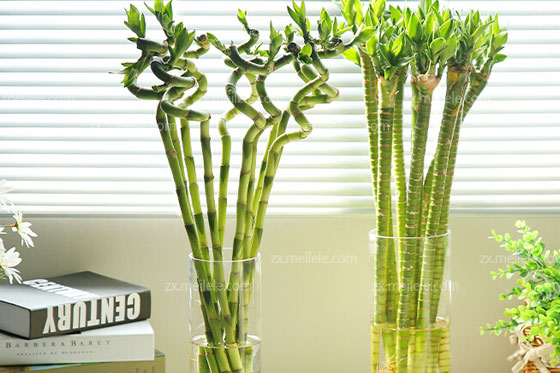
Growth habits of Lucky Bamboo
Lucky Bamboo prefers shady, humid and high-temperature conditions, is tolerant of waterlogging, highly tolerant of fertilizer, strong in cold resistance, and fond of semi-shaded environments. It is suitable for growing in well-drained sandy soil or semi-muddy sand and alluvial clay;
Lucky Bamboo prefers a warm environment, with a suitable temperature of 18℃~24℃. It can grow all year round, but below 13℃ the plant goes dormant and stops growing. When the temperature is too low, due to insufficient water absorption by the roots, yellow-brown patches will appear at the leaf tips and leaf margins. The minimum wintering temperature must be above 10℃;
Lucky Bamboo is not strict about light requirements and is suitable for growing under bright scattered light. Too strong light or exposure to the sun can cause leaves to turn yellow, lose green color, and grow slowly.
Analysis of the phenomenon of Lucky Bamboo leaves turning yellow
1. Sunburn yellowing and light-deficiency yellowing: Similarly, too much or too little light can also cause Lucky Bamboo leaves to turn yellow. The yellowing caused by too strong light is called sunburn yellowing, which appears as yellow spots on the parts of the leaves facing the sun; light-deficiency yellowing is when insufficient light leads to insufficient chlorophyll synthesis and yellowing, with the whole plant's leaves turning yellow and falling off. It can be avoided simply by strengthening the light.
2. Fertilizer yellowing and fertilizer-deficiency yellowing: Every plant needs fertilizer, and the concentration of fertilizer directly affects the plant's growth state. Just the right amount of fertilizer makes the plant thrive, while too much or too little fertilizer can trigger a series of problems, such as Lucky Bamboo leaves turning yellow. Too much fertilizer makes new leaves thick and lusterless, while old leaves scorch, turn yellow and fall off; the fertilizer should be washed out. Insufficient fertilizer makes young leaves lighter in color and old leaves gradually turn yellow; apply thin fertilizer.
3. Water yellowing and drought yellowing: To determine whether Lucky Bamboo leaf yellowing is water yellowing or drought yellowing, you can judge from the different characteristics of the yellowing leaves. Water yellowing shows on young leaves, while the old leaves do not turn yellow; drought yellowing shows old leaves withering, turning yellow and falling off, while new leaves grow relatively normally. Once determined, you can increase or reduce water according to the cause of the yellowing.
Causes of Lucky Bamboo turning yellow and solutions
1. Wind causing Lucky Bamboo leaves to turn yellow: Placed next to a TV or in a place often blown by an air conditioner or electric fan, the leaf tips and leaf margins of Lucky Bamboo easily dry up.
Solution: Do not place Lucky Bamboo next to a TV or in a place often blown by an air conditioner or electric fan.
2. Too much watering causing Lucky Bamboo leaves to turn yellow (water yellowing): Too much water in the bottle used for growing Lucky Bamboo.
Solution: It is recommended that the water not exceed 5cm.
3. Sun exposure causing Lucky Bamboo leaves to turn yellow (sunburn yellowing): Long-term exposure to sunlight will cause leaves to turn yellow.
Solution: Just move it back to a shady place, and it will improve after a period of time.
4. Insufficient sunlight causing Lucky Bamboo leaves to turn yellow (light-deficiency yellowing): Long-term lack of light easily makes Lucky Bamboo turn yellow.
Solution: Lucky Bamboo likes scattered light, but in winter it is best to give it sufficient light.
5. Conditions and environment causing Lucky Bamboo leaves to turn yellow: Such as too dark light, stuffy and unventilated conditions, dry air, etc.
Solution: If it is due to light, first cut off the yellow leaves and create a clean, temperature-appropriate, cool, humid environment with good scattered light for it. When bamboo stems rot, untie the binding on the Lucky Bamboo, pick out the rotten ones, and re-tie them so that it gradually recovers.
6. Too low temperature causing Lucky Bamboo leaves to turn yellow: Lucky Bamboo leaves turn yellow in an environment below 10°.
Solution: In winter, pay attention to keeping it warm, and do not put it outdoors or by a window, but also note that the temperature cannot be too high, as too high will also cause yellowing.
7. Too much fertilizer causing Lucky Bamboo leaves to turn yellow (fertilizer yellowing): The tips of new leaves appear dry and brown, and the tips of old leaves dry, scorch, turn yellow and fall off. Generally, although the leaf surface is thick and glossy, most of it is uneven.
Solution: Be sure to stop fertilizing, and reduce the frequency of fertilization, using more clean water for irrigation.
8. Long-term lack of fertilizer causing Lucky Bamboo leaves to turn yellow (fertilizer-deficiency yellowing): Often not fertilizing and only watering, or not changing the pot for several years, the roots of Lucky Bamboo will knot together, causing malnutrition and yellowing leaves.
Solution: Fertilize appropriately, or change the pot and tidy the roots.
9. Alkaline soil causing Lucky Bamboo leaves to turn yellow: If the soil is alkaline, the leaves will turn yellow.
Solution: You can use alum fertilizer water to spray it, and the leaves will improve.
What to do when Lucky Bamboo roots turn black and rot?
When hydroponically grown Lucky Bamboo roots turn black, it is mainly because the water has not been changed for a long time and the water lacks oxygen. Plant cell respiration needs oxygen; when oxygen is lacking, the plant will temporarily carry out anaerobic respiration, producing alcohol, which over time harms the plant, causing alcohol poisoning of the root cells, massive death, and in severe cases root rot. It is recommended to change the water more often. You can also use sharp scissors to cut off all the blackened roots completely, not leaving even a bit of black. Cultivate it over the drainage hole of a flower pot, cover it with two pieces of tile, place 3cm of coarse-grained soil, put base fertilizer on top, and remember to cover the base fertilizer with soil to avoid damage from fertilizer contact. Place the plant in the middle, add soil to 2cm below the rim of the pot to make future watering convenient; then place the flower in a cool, ventilated place, mist the leaves frequently, and after half a month normal fertilizer and water management can resume.
Lucky Bamboo care tips
1. Try to choose a semi-shaded environment for placing Lucky Bamboo. Lucky Bamboo relatively likes shady and humid environments. In such an environment, Lucky Bamboo grows relatively fast and the leaves grow very brightly.
2. The suitable growth temperature for Lucky Bamboo is 20—28℃, so try to place Lucky Bamboo in a relatively warm room, which can ensure lush growth with abundant branches and leaves. Although Lucky Bamboo can tolerate a low temperature of about 3℃, being in low temperature for a long time will affect its growth, especially in cold winter when frost damage must be prevented.
3. Avoid leaving Lucky Bamboo exposed to the sun for a long time or placing it in a dark place without a bit of sunlight, as over time this will cause leaves to turn yellow, lose green color, and grow slowly. Especially from April to September, avoid direct strong sunlight and exposure, otherwise the leaf surface is likely to become rough, scorched, and weak in growth.
What should be noted when growing Lucky Bamboo hydroponically?
1. Temperature: Lucky Bamboo is suitable for growing between 16 degrees and 26 degrees. Cold easily causes the plant to die. In winter, do not place it on a balcony, next to a window, or in other relatively cold places, and never let the water freeze. Anti-freezing measures can be taken when necessary, but if you choose to use air conditioning at home, try to keep the temperature between 16 degrees and 26 degrees.
2. Light: Although Lucky Bamboo is a shade-loving plant and is generally placed indoors, with low sunlight requirements, if it cannot come into contact with sunlight at all, the leaves will likewise wither and yellow and growth will be poor. Therefore, try to place it in a bright, ventilated environment so it can fully receive light, which in winter is more beneficial to the growth of Lucky Bamboo.
3. Placement: Do not place Lucky Bamboo next to a TV or in places often blown by an air conditioner or electric fan, so as to avoid drying of the leaf tips and leaf margins. It is best to place it in a place with sufficient light.
4. Changing water: Generally, after Lucky Bamboo has been grown for a period of time, it will grow many small fine roots. In winter, try to change from changing the water to adding water. After rooting, it is not suitable to change the water; after the water evaporates, only add water in time. Frequent water changes easily cause yellow leaves and withered branches. The added water is best well water. The water must be kept clean and fresh; do not use dirty water, hard water, or water mixed with oil, otherwise root rot is likely.