Why does jasmine only grow leaves and not bloom? Care for it this way to keep the flowers coming
People love jasmine because its flowers are pure white, elegant and noble, and its fragrance is fresh, especially during its blooming period, when the fragrance fills the whole yard and makes people feel as if they are bathed in a sea of flowers, bringing a joyful mood. But when the jasmine we grow only grows leaves and does not bloom, what is going on? How should we care for it so that jasmine keeps blooming? Now let the editor tell everyone below.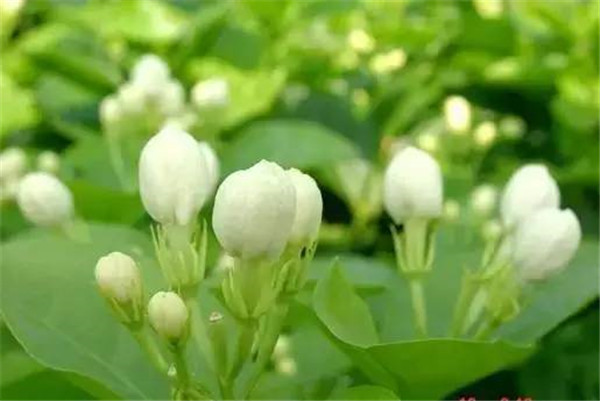
Why does jasmine only grow leaves and not bloom
Growing some jasmine at home is something many people probably like. The fresh and elegant flowers and pleasant fragrance always make people feel refreshed. But when the jasmine we grow only grows leaves and does not bloom, it always makes many people unhappy. So what should we do? Let us take a look below at how the editor solves it.
1. Not enough light
Jasmine relatively likes to grow in places with plenty of sunlight. If we keep jasmine in a shady environment for a long time, it will definitely cause the jasmine to grow excessive leaves without blooming.
Solution: In our daily care of jasmine, we must place it in a place with plenty of sunlight for better care. If it is grown at home, a balcony and courtyard are very good choices, and while giving it proper light, we should also water it appropriately.
2. No pruning
Jasmine also needs pruning. If, during our care of jasmine, we let it grow without pruning, the branches and leaves of the jasmine will become too lush. This will consume a lot of the plant's nutrients, resulting in insufficient nutrients for blooming.
Solution: During the growing period of jasmine, we must prune some of the overly dense branches as well as some leggy branches, so that the plant can bloom better during its flowering period.
3. Incomplete fertilizer
Jasmine relatively likes fertilizer. Once fertilizer is insufficient during our care, it will also affect the plant's blooming. Moreover, if too much nitrogen fertilizer is applied, it will not only fail to bloom but also cause the jasmine leaves to become slender.
Solution: When caring for jasmine, we must properly increase fertilizer for it, and during fertilization, we must pay attention to the combination of various elements. Before the jasmine flowering period, control the amount of nitrogen fertilizer and try to add some phosphorus fertilizer. Only in this way can blooming be promoted.
How to grow jasmine
1. Slightly acidic soil
For growing jasmine, we had best prepare some relatively fertile, loose, and well-aerated acidic sandy soil for it. This will allow the jasmine to grow more vigorously.
2. Water often
Jasmine has relatively high water requirements. Especially during its growing period, we had best keep its soil moist. Generally speaking, in early spring and autumn, we had best water once every 2-3 days or so, while in summer, we had best water it every morning and evening. But in winter, we had best just keep the potting soil slightly moist.
3. Plenty of light
Jasmine relatively likes to grow in an environment with plenty of sunlight. Therefore, during our care, it is best to let it receive full sun, so that the jasmine can grow more vigorously. But in the hot summer, when the midday sunlight is strongest, we had best still provide proper shading.