Strawberry Cultivation Techniques and Daily Management, Sowing Time and Pest and Disease Control
Strawberry is one of the common fruits in daily life. It is not only bright red and delicious but also highly nutritious, and enjoys the reputation of “Queen of Fruits.” Strawberries originated in Europe and are widely distributed in our country. With the development of greenhouse cultivation, strawberries have become a fruit that can be eaten all year round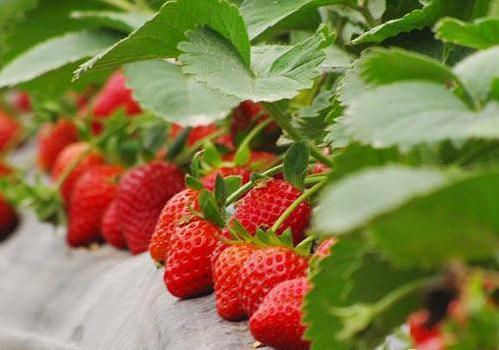
Strawberry propagation methods are divided into two types: seed propagation and division propagation. Division propagation can be further divided into two types: rhizome division and new stem division. Which method to choose can be determined according to actual conditions
1. Site selection
The strawberry plot should be chosen on flat ground, slightly elevated terrain, with deep, loose, fertile sandy or loamy soil that has good water permeability and aeration. Before planting strawberries, prepare the soil, mainly by clearing weeds and debris, applying fertilizer, plowing, harrowing level, and making beds. The plot can be sprayed with 50% phoxim emulsifiable concentrate at 1000 times dilution to control grubs, mole crickets, cutworms, and other pests.
2. Timely planting and greenhouse covering
To strive for an early market, strawberry transplanting into the greenhouse should be done in early September. Seedlings should be transplanted as soon as they are lifted. Plant 2 rows per bed, with a row spacing of 25 cm and a hole spacing of 20 cm, planting about 12,000 plants per mu. Water immediately after planting, and bury any exposed roots into the soil layer. The greenhouse is generally covered around mid-November.
When planting, the inflorescences should face the furrow, and the planting depth should be such that the root crown is level with the soil surface. The heart of the seedling must not be buried in the soil.
3. Watering
Strawberries have different water requirements at different growth stages. During the flowering period, field water holding capacity should be maintained above 70%; during the fruit enlargement period, field water holding capacity should be maintained above 80%; during the berry ripening period, water should be properly controlled, maintaining field water holding capacity above 70%; during the flower bud differentiation period, water should be appropriately reduced, maintaining field water holding capacity between 60%-70% to promote flower bud differentiation.
Fruit enlargement period. Strawberry water demand increases, and drip irrigation can be used for watering so that the soil layer above 7~8 cm is in a moist state. Strawberries both like water and fear waterlogging. If strawberry plants are soaked in water for too long, the leaves will turn yellow. Therefore, a good drainage system should be established around the strawberry plot, and accumulated water should be drained promptly after heavy rain. The field should be dry after rain.
4. Temperature
The minimum temperature during the flowering and fruiting periods should be above 5°C. The most suitable temperature for strawberry plant growth is 15-25°C; the optimum temperature for photosynthesis is 20-25°C; the suitable temperature for flowering is 15~24°C; the optimum temperature for flower bud differentiation is 17-25°C; the optimum temperature for fruit setting is 25-27°C; the suitable temperature for fruit development is 18~22°C.
5. Light
Strawberry is a light-loving plant, but it is also relatively shade-tolerant. During the flower bud formation period, it requires 10~12 hours of short-day sunlight and lower temperatures per day. If artificially given 16 hours of long-day treatment per day, flower bud formation will be poor, and it may even fail to bloom and bear fruit. However, giving light treatment after flower bud differentiation can promote flower bud development and flowering. During the flowering and fruiting period and the vigorous growth period, strawberries need a longer photoperiod of 12~15 hours per day.
Greenhouse strawberries have a long fruiting period. To prevent premature aging due to fertilizer depletion, apply a heavy base of high-quality decomposed farmyard manure, topdress in time, and frequently spray foliar fertilizer. Water immediately after planting. During flowering and the early stage of berry growth, water once each. If there is drought, water once every 5-7 days. During rainy autumn periods, drain water in time. Drainage ditches should be made around the strawberry plot so that water in the furrows inside the greenhouse can be drained completely.
Master the principle of applying thin fertilizer frequently. After planting and establishment, apply 0.5% compound fertilizer solution. About 20 days after harvest, topdress once more. Depending on the specific situation, use 0.2% potassium dihydrogen phosphate plus 0.4% urea solution for foliar topdressing.
7. Plant adjustment
During the strawberry growing period, runners, old leaves, diseased leaves, and residual calyxes after fruit harvest must be removed in time; select and retain 2~3 healthy tillers per strawberry plant, and promptly remove the rest; remove low-position small flowers.
8. Artificial pollination
During the strawberry flowering period, use a brush to dab the flowers every day from 8~9 am, which can significantly increase yield and the rate of good fruit. It is best to place bees in the greenhouse. Complete pollination.
9. Remove diseased leaves and old leaves
Strawberry plants renew old and new leaves frequently throughout the year. During the growing season, when the lower leaves of the plant lie horizontally and begin to turn yellow and wither, they should be removed in time from the base of the petiole. Overwintering old leaves often host pathogens, and should be removed as early as possible after new leaves grow, so as to improve ventilation and light penetration and accelerate plant growth. Diseased leaves should also be removed when found, and weak side buds on the plant should also be thinned out in time. Do not throw the removed diseased and old leaves in the strawberry plot. They should be collected and burned or buried deeply to reduce the spread of pathogens.
10. Pest and disease control
In low-temperature and rainy weather, strawberries are prone to gray mold. It can be controlled by spraying 50% procymidone wettable powder at 1000~1500 times dilution; for powdery mildew, 20% triadimefon emulsifiable concentrate at 3000~4000 times dilution can be used. In addition, attention should be paid to timely control of aphids.
11. Integrated pest and disease control
In low-temperature and rainy weather, strawberries are prone to gray mold. It can be controlled by spraying 50% procymidone wettable powder at 1000~1500 times dilution; for powdery mildew, 20% triadimefon emulsifiable concentrate at 3000~4000 times dilution can be used. In addition, attention should be paid to timely control of aphids.
For greenhouse strawberry pests and diseases, agricultural control should be primary and chemical control supplementary. The occurrence of pests and diseases can be prevented through measures such as selecting disease-resistant varieties, cultivating virus-free strong seedlings, planting on high ridges, mulching with plastic film, reasonable crop rotation, cleaning the soil, avoiding drought, and avoiding high humidity.
If disease is found, note that pesticides should not be used before and after flowering, so as not to affect pollination and increase deformed fruit. Choose high-efficiency, low-toxicity, low-residue pesticides and strictly control pesticide dosage and the safe interval period.
12. Spraying hormones
Spray 10×10-6 gibberellin solution separately when the first heart leaf grows and when strawberry flowering occurs. This not only has an obvious yield-increasing effect, but can also improve fruit quality.
13. Timely harvest
Strawberry picking is generally done from 8-10 am or 4-6 pm. Generally do not pick dew-covered fruit or sun-heated fruit, so as to avoid rot and deterioration. When harvesting, handle gently and do not damage the calyx.