Is Aspidistra toxic? Where is the best place to keep it at home, and what should you do if the leaves turn yellow and it stops growing new leaves?
The Aspidistra (cast iron plant) has beautiful, emerald-green leaves, and many people like to use it to purify the air and decorate their homes. Although the Aspidistra is a low-maintenance plant, it still needs occasional careful attention to prevent problems such as yellowing leaves. Many people probably have this question: Is Aspidistra toxic? Below, the editor will explain whether Aspidistra is toxic, where to keep it at home, what to do about yellowing leaves, and why it does not grow new leaves.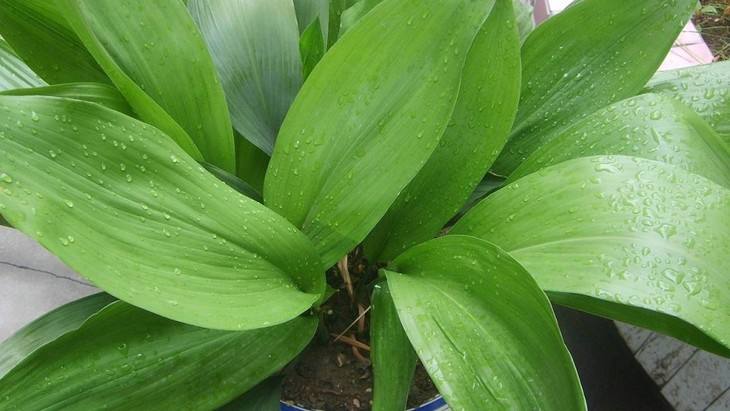
Is Aspidistra toxic?
Aspidistra is not toxic. Not only is it non-toxic, it can also purify the air. Aspidistra helps remove formaldehyde and can effectively absorb harmful gases such as carbon dioxide and hydrogen fluoride, making it an excellent indoor air-purifying plant. Growing Aspidistra indoors can decorate the home, purify the indoor environment, absorb waste gases from the air, and release the oxygen we need, achieving a kind of air-exchange effect.
Where is the best place to keep Aspidistra at home?
Place it in the living room: to screen off foul odors from the bathroom
If the bathroom is directly in front of or beside the living room or dining room, you can place the Aspidistra between the living room and the bathroom. First, it absorbs the bad odors from the bathroom and purifies the air. Second, it blocks unfavorable energy. However, the same issue still applies: the plant should be swapped out or moved every few months, and moved to a cool place to get some ventilation. This ensures the plant stays clean and keeps family members from being affected by foul odors.
Place it in a corner: to screen off the energy of the trash can
If there is a trash can near the sofa at home, you can place an Aspidistra there to isolate unfavorable energy and purify the air. It not only purifies the air but also constantly reminds you to keep the trash can clean.
Place it in front of a hallway: to block negative energy from the hallway
If your seat happens to be in line with a hallway, you can place a broad-leaved potted plant like the Aspidistra to block part of the hallway's negative energy. However, you should control the height of the Aspidistra so that it blocks the view in front of you when a person is seated.
Place it beside the sofa: to block negative energy from electrical appliances
If there are large appliances in front of or behind the sofa or chairs at home, you can also place an Aspidistra there. This blocks the negative energy brought by electrical appliances, but do not keep the plant beside them all the time. Move it outdoors every 3 months to receive some sunlight; otherwise, staying with electrical appliances for long periods will gradually cause the plant to wilt.
Place it in the bedroom: absolutely not
Generally speaking, Aspidistra is not recommended for the bedroom. Apart from the bedroom, it can also be placed in a corner of the balcony or by a window, but do not block the south-facing light. This is because sunlight and ventilation coming from the south are especially important. If the balcony faces south, you can place it to the side rather than blocking the window, and try not to place the plant in line with the kitchen, as this can easily cause the potted plant to turn yellow and wither.
Causes of yellowing leaves in Aspidistra and solutions
1. Too much direct sunlight
Aspidistra dislikes direct sunlight. Even a short period of exposure to strong sun can scorch the leaves and turn them yellow, reducing its ornamental value.
Solution: You can keep the Aspidistra in a bright indoor spot year-round, but whether indoors or outdoors, it must not be placed in direct sunlight.
2. Too little light
Aspidistra is extremely shade-tolerant and can remain ornamental for months even in a dim room, but long-term excessive shade is not good for the sprouting and growth of new leaves. If it stays in a dark place with too little light for a long time, the leaves of the Aspidistra will turn yellow.
Solution: If the Aspidistra is placed in a dim room, it is best to move it every so often to a spot with bright light for a period of care, to support growth and appearance. Especially during the period from new leaf sprouting to new leaf maturity, it must not be kept in too dark a place.
3. Overwatering
Overwatering is also one of the causes of yellowing leaves in Aspidistra. Aspidistra likes water and has a certain tolerance; even several days of drought will not kill it, but too much watering will affect root respiration and cause the leaves to turn yellow.
Solution: Water Aspidistra by the principle of watering when the soil is dry and letting it dry out between waterings. Do not water too much, but do not water too little either; during the growing period it needs sufficient moisture.
4. Too strong fertilizer
Aspidistra does not have a particularly high demand for fertilizer. Each time you fertilize, it is best to apply only a light fertilizer. Too much fertilizer will burn the roots, disrupt the growth of the Aspidistra, and cause the leaves to turn yellow from fertilizer damage.
Solution: Apply a dilute liquid fertilizer 1-2 times per month to encourage new leaf sprouting and healthy growth, and to keep the leaves fresh and bright. Do not over-fertilize.
5. Pest infestation
Aspidistra cared for indoors is highly prone to red spider mites. The appearance of pests is also a cause of yellowing leaves in Aspidistra.
Solution: Frequently check both sides of the leaves and promptly spray with dicofol, hexythiazox, or similar controls.
Does Aspidistra bloom?
Aspidistra does bloom. People often assume that Aspidistra only grows leaves and never flowers, but this is not the case. Aspidistra usually blooms in April. The flower stalk is short, with a single flower borne at the top of the stalk, growing on the rhizome below the leaf cluster and exposed above the soil. The flower covering has lobes and is purplish-brown, with dark spots on the outside and a single pistil in the center, whose large stigma covers the stamens. After flowering it sets fruit, a green spherical berry that looks like a spider's egg and is held by the leaf cluster, which is why Aspidistra is also called the cast iron plant (spider's egg plant).
Why does Aspidistra not grow new leaves?
The main reason it does not produce new leaves is that the soil has become compacted, with poor air permeability.
It is recommended to change the soil, adding one-third coarse sand or vermiculite to the soil.
During the growing season, water thoroughly, keep the potting soil consistently moist, and frequently spray the leaf surface to increase humidity, so as to encourage sprouting and the growth of new leaves. After late autumn, the amount of watering can be appropriately reduced.
Aspidistra is extremely shade-tolerant and can remain ornamental for months even in a dim room, but long-term excessive shade is not good for the sprouting and growth of new leaves. So if it is placed in a dim room, it is best to move it every so often to a spot with bright light for a period of care, to support growth and appearance. Especially during the period from new leaf sprouting to new leaf maturity, it must not be kept in too dark a place.