Cyclamen seed collection and sowing methods, plus root system size and whether it can survive root rot
Cyclamen is a perennial herbaceous plant, and in our daily lives it is a commonly grown flower. Many people keep it as an indoor potted plant, adding a touch of beauty to the courtyard. However, many beginner friends ask, how are cyclamen seeds collected and sown? In addition, many people also cause cyclamen root rot due to improper watering, so how big can cyclamen roots grow, and can it still survive after rotting? Below, the editor will reveal the answers to the above questions one by one.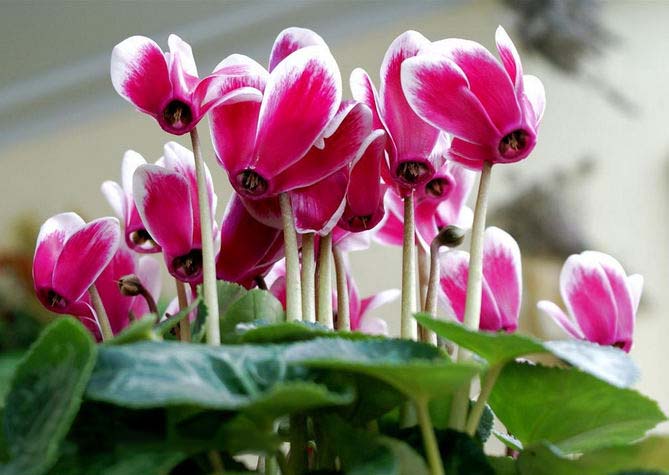
Cyclamen's growth habits
Cyclamen likes warmth and fears heat. It grows best in a cool environment and in fertile sandy loam rich in humus. It is relatively cold-tolerant and can withstand low temperatures of 0°C without freezing. Autumn to the second year's spring is its growing season, summer is semi-dormant, and the suitable growing temperature in winter is between 12-16°C. When promoting flowering, it should not exceed 18-22°C. Above 0°C the plant will enter dormancy, and above 35°C the plant is prone to rotting and death. In winter it can tolerate low temperatures, but below 5°C it grows slowly, the flower color is dull, and it blooms little. Supplementing carbon dioxide gas in winter can promote growth and flowering. During the growing period it requires a humid air environment and sufficient sunlight.
Cyclamen seed collection and treatment
Cyclamen seeds can only be obtained after artificial pollination. The seeds generally mature in May and should be harvested in time. The seeds are relatively large, with a 1000-grain weight of about 10 grams, and the general germination rate is 85-95%. To promote seed germination, the seeds can be soaked before sowing to speed up germination. Soak the seeds in cold water for 24 hours or in warm water at 30°C for 2-3 hours, then wash off the sticky substance on the seed surface, wrap them in a wet cloth to promote germination, and keep them at 25°C for 1-2 days. Once the seeds show slight signs of sprouting, they can be taken out and sown.
Cyclamen sowing method
Cyclamen is generally sown in September-October, and an ordinary flower pot can be used for sowing. The sowing soil is best as sandy loam rich in humus, and it can only be used after being sifted through a fine sieve. When sowing, first put the soil in the pot, spray thoroughly with water using a watering can, and after the water has completely seeped down, immediately sow the seeds in the pot at a spacing of 1-1.5 cm, cover with 0.5 cm of soil after sowing, and cover with glass or plastic film to retain moisture, placing it in a semi-shaded place at 20-22°C. When the pot soil is slightly dry, use the soaking method to soak it thoroughly so that the pot soil remains moist at all times. Under normal conditions, seedlings can emerge in about 20 days.
Seedling management
1. Seedling separation: When the sown seedlings grow 1 true leaf, carry out the first seedling separation, moving them into a shallow pot at a plant spacing of 3.5 cm. The pot soil is a mixture of 5 parts leaf mold, 3 parts loam, and 2 parts river sand. When planting, the top of the small corm should be level with the soil surface. After planting, soak thoroughly with water and provide appropriate shade. When the seedlings resume growth, gradually give them light, strengthen ventilation, do not let the pot soil dry out, keep the temperature at 15°C-18°C, appropriately apply nitrogen fertilizer, and be careful not to let fertilizer water contaminate the leaf surface, so as to avoid causing leaf rot. After fertilizing, sprinkle clean water once to keep the leaves clean.
2. Transplanting: When the small seedlings grow to 3-5 leaves, transplant them into a 10 cm pot. At this time, the pot soil ratio can be changed to 3 parts leaf mold, 2 parts loam, and 1 part river sand, and apply decomposed cake fertilizer and bone meal as base fertilizer. After March-April, the temperature gradually rises, the plant produces more leaves, growth gradually becomes vigorous, and the demand for fertilizer and water also increases. Fertilizer and water management should be strengthened, the pot soil should be kept moist, and ventilation should be strengthened. Shade out the strong midday sunlight, try to keep the temperature relatively low, and prevent rain and excessive moisture in the pot soil, so as to avoid corm rot. It should be cultivated in a shaded shed outdoors equipped with rain protection.
3. Final planting: In September, plant it in a 20 cm pot, and the corm can be planted with about 1/3 exposed above the soil surface. The pot soil is 3 parts leaf mold, 2 parts loam, and 1 part river sand, but additional base fertilizer is needed. Topdressing should apply more phosphorus and potassium fertilizer to promote flower bud differentiation. After flower buds appear in November, stop topdressing, give sufficient light, and flowering begins in December. By the following February it can reach full bloom, that is, from sowing to flowering takes about 13-15 months.
Cyclamen daily care and management
1. Seedling stage: When the first leaf has fully grown and the true leaf first appears, it must be transplanted. When the seedlings have 3-4 leaves, they can be planted in flower pots with a diameter of 10 cm. Later, as the plant grows larger, change to larger flower pots. The time for repotting must not be later than June. If the seedlings are small, they can be left in small flower pots to spend the summer. Seedlings need shading. In hot weather, loosen the soil, weed, water, and fertilize frequently.
2. Summer seedling maintenance stage: Summer temperatures are high, which is extremely unfavorable for cyclamen growth. Cooling equipment should be used to lower the ambient temperature so that it can pass the summer safely. To avoid high temperatures, use two layers of shade netting for shading, control watering, and stop fertilizing.
3. First-year flowering stage: After autumn begins, growth resumes, and the amount of watering can be gradually increased, with light fertilizer applied. In mid-October, place it in a sunny spot. The greenhouse air should be humid. Fertilize 2-3 times a month. From mid-December to early February, fertilizing is generally not needed, but in a warmer environment, fertilizing may continue. Flowering generally begins in November.
4. Summer corm dormancy stage: After May, the leaves gradually turn yellow, and watering should gradually stop to let it become dormant. After the leaves have completely withered, place it in a low-temperature, ventilated environment so the corm can pass the summer safely. Generally, the pot is placed in a cool, rain-sheltered place.
5. Second-year flowering stage: After the hot summer, water lightly to revive the corm and make it sprout. After sprouting, repot with new culture soil and remove the rotten root system. Maintain it in a greenhouse, and it can bloom around December. After flowering, it again enters the summer corm dormancy period. Newly propagated seedlings generally begin to bloom in November. If during the bud stage the temperature is kept at 15°C-20°C, spraying 100 mg/L gibberellin on the flower buds and pedicels can promote pedicel elongation and accelerate flowering.
Cyclamen corm rot is generally caused by diseases such as soft rot. The following situations easily cause disease:
① Uneven fertilizer and water. Sudden changes in fertilizer and water will promote leaf growth and cause the corm to expand rapidly, making the corm prone to longitudinal splitting. These cracks easily allow pathogens to invade and cause disease.
② Excessive watering. Cyclamen likes a moist but breathable soil environment. Excessive watering will lead to rot of the root system and corm.
③ Long-term water accumulation on the top of the corm. Burying the corm too deep when potting, or watering onto the corm, causing long-term water accumulation on the top of the corm, can easily lead to the occurrence of soft rot.
④ Being wet by rain during summer dormancy. During summer dormancy, cyclamen should be placed indoors in a ventilated, cool place where sunlight and rain cannot reach, so it can pass the summer safely. If exposed to rain, it will cause corm rot.
⑤ The root system is damaged when repotting, causing pathogens to infect through the wounds.
⑥ High temperature. Cyclamen likes cool conditions and avoids high temperatures. When the temperature is above 30°C, it begins to become dormant; when it exceeds 36°C, the plant is prone to rotting.
Therefore, when cultivating and growing it, fertilize and water reasonably to prevent uneven fertilizer and water and overly wet watering; when potting, expose 1/3-2/3 of the corm above the soil surface, and avoid watering onto the corm; during summer dormancy, keep the pot soil dry and prevent rain; after repotting and root trimming, soak the corm for half an hour with chemicals such as chlorothalonil or carbendazim, and pot it after drying. In this way, cyclamen corm rot can basically be prevented.