How to prune Serissa japonica? Blooming time, bonsai lifespan and feng shui taboos
Serissa japonica, as the name suggests, usually blooms in June, and because its flowers are fine and white, from a distance they look as beautiful as snowflakes. Serissa japonica not only has good ornamental value, but also has good pharmacological effects; its roots, stems and leaves can all be used as medicine. Although Serissa japonica is simple and rough to manage, many people generally like to use its well-developed root system to make miniature bonsai, which adds a rather distinctive touch when decorating a courtyard. Let us take a look below at how to prune Serissa japonica, when it blooms, how many years a Serissa japonica bonsai can live, and whether the inauspicious feng shui claims are true.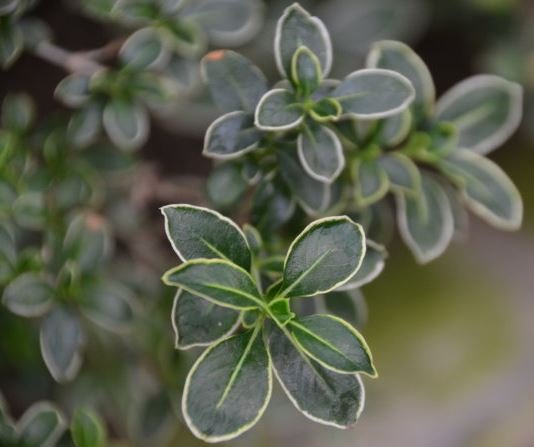
Pruning methods for Serissa japonica
In winter, Serissa japonica should be pruned. You can select and keep 3 to 5 robust branches as the main trunk, and cut off the plant's leggy branches from the base. After the flowers fall in June-July, cut off the branch tips to make them sprout new buds. During the growing season, Serissa japonica should be pinched back frequently so that the branches and leaves meet the shaping requirements. Before flowering, pruning should be avoided, and pinching back should also not be done, but at other times, if the main branches grow too long, the root suckers and overly dense branches should be cut off at any time, and the main shoot can be cut off from the branching point according to the overall shape.
During the growth period, continuously cut off the tillering branches, overly dense branches and old branches that keep sprouting at the root collar, so as to facilitate ventilation and light penetration within the crown and thickening of the main trunk. Old branches should be cut flat at the sprouting point, and stubs must not be left; branches that sprout during the growth period should be peeled off by hand from the sprouting point as early as possible. If they grow among the root mass and cannot be peeled off by hand, the tip of small scissors can be inserted into the root collar to remove them from the base of the root sucker. Do not use scissors to cut off sprouting branches, because this makes it hard to remove the base of the tiller, and new branches will keep sprouting from the cut, and due to repeated pruning, the cut will swell into a tumor-like shape, thereby increasing maintenance workload and affecting appearance.
When making Serissa japonica into bonsai, the commonly used technique is coarse wiring and fine pruning, combining pruning and wiring with pruning as the main method. The main trunk is mainly shaped by wiring, often coiled into an irregular s-shape, and later, according to the basic outline of the main trunk, the shaping of the main and side branches is decided, while the shaping of the stump bonsai's “branch pads” mainly uses pruning techniques.
The pruning principle for Serissa japonica bonsai before it takes shape is: for the main branches, adopt “strong main branches lightly pruned, weak main branches heavily pruned”. This regulates the growth of the main branches and balances branch vigor; for the side branches, adopt the principle of “strong side branches heavily pruned, weak side branches lightly pruned”, so as to regulate branch vigor and promote flowering and ornamental value. After the Serissa japonica bonsai has taken shape, a routine shaping and pruning should be carried out once each in April and November every year, and pinching back should be done frequently in summer, which can make the branches and leaves lush and keep it blooming continuously; every 2 to 3 years, a major pruning should be carried out in spring, so that the tree body whose growth has been inhibited all year round can be stimulated into healthy growth through major pruning.
Before understanding when Serissa japonica blooms, let us first get to know Serissa japonica. It is a small shrub 60-90 cm tall, with a foul odor. The leaves are leathery, ovate to oblanceolate, with the apex shortly acute to long acute, the margin entire, hairless, and the petiole short. The flowers are solitary or several clustered at the top of branchlets or axillary, with hairy bracts whose margins are slightly wavy, the calyx limb lobes are small, conical and hairy, the corolla is pale red or white, the lobes are spreading, the stamens protrude outside the throat of the corolla tube, and the style is long and protrudes, slightly separated.
When does Serissa japonica bloom? In fact, when mentioning Serissa japonica, many people may have already guessed it. Indeed, Serissa japonica blooms in June, and the flowers are small white blooms that look very much like snowflakes from afar. Moreover, its branches and leaves are dense, and when the white flowers are in full bloom, it looks as if snowflakes cover the tree, elegant and lovely. It is an excellent ornamental plant for both foliage and flowers. Its flowering period is generally from May to July.
As for Serissa japonica, there is no inauspicious saying in feng shui. Serissa japonica is one of the main tree species in bonsai in Sichuan, Jiangsu and Anhui. Its leaves are small and its root system is well developed, making it especially suitable for making miniature or raised-root bonsai. When a bonsai is placed on a coffee table, desk or windowsill in the living room, it looks very elegant and is a fine choice for indoor beautification and decoration. When planted in the ground, it is suitable for flowerbed borders, flower hedges and underplanting, or for planting among rockeries and rock crevices.
Having discussed when Serissa japonica blooms, let us now talk about its varieties. There are two common types of Serissa japonica on the market: one is the clustered type, with slightly reddish flowers and trumpet-shaped blooms, which is a coarse variety; the other is the single-trunk small tree form, with pure white double flowers, which is a superior variety.
Serissa japonica has 4 varieties:
1. Yinmu, shorter than the original species, with thick leaves, small branches growing upright upward, leaves relatively small, densely clustered at the ends of small branches, and flowers relatively sparse.
2. Golden-edged Serissa japonica, with relatively large leaves and narrow golden-yellow edges along the leaf margin.
3. Double-petaled Serissa japonica, with pointed flower buds, pale purple, turning white when the flowers open, double-petaled flowers, and relatively thick texture.
4. Double-petaled Yinmu, with double-petaled flowers.
Besides its beautiful appearance, Serissa japonica also has quite good medicinal value, mainly with the following effects.
[Miao medicine] Ruiguomai, Douyegei, Wawu: the whole plant treats head sores, migraine, and infantile convulsions, from "Miao Medicine".
[She medicine] Liujiaoying, Liuyuexue, Ririyou, Mantianxing, Baibipuhua: the whole plant treats consumptive cough with blood, wind-cold-dampness impediment, damp-heat jaundice, scrofula, carbuncle swelling, and vitiligo, from "She Medicine".
[Yao medicine] Liuyuexue: used for hepatitis, dysentery, enteritis, and amenorrhea.
Effects: strengthen the spleen and drain dampness, soothe the liver and invigorate blood. Used for infantile malnutrition, acute and chronic hepatitis, amenorrhea, leukorrhea, and rheumatic lumbago.
Related legend
Before her death, Dou E once said that she was wronged and that heaven in this sixth month would testify for her and would send snow. Sure enough, when she died, heavy snowflakes drifted down in the June sky. Later, people used "snow in June" to describe "Dou E's injustice". But as history moved on, Serissa japonica was mostly used by lovesick men and women or literati to describe a snowflake-like mood, both cold and drifting with romantic catkins.