How to deal with yellowing leaves on a bird's nest fern? Causes and solutions
Ferns were also a major food source for dinosaurs in the environment of that time. We know that the age of dinosaurs died out long ago, yet ferns still thrive and exist. Because the bird's nest fern has lush and broad leaves, it can absorb carbon dioxide and release oxygen through photosynthesis, making indoor air fresh, and is an ideal indoor negative ion “generator”, very suitable for placing at home. Many flower enthusiasts always encounter yellowing leaves on bird's nest ferns, and in this issue the Huacaole editor brings you how to deal with yellowing leaves on bird's nest ferns?
How to deal with yellowing leaves on a bird's nest fern? The bird's nest is not necessarily in Beijing, it might also be in your home!
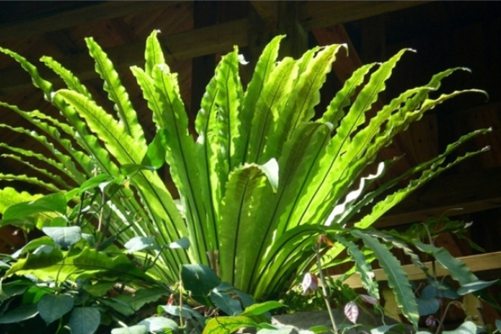
How to deal with yellowing leaves on a bird's nest fern?
1. Light
Insufficient or too strong light can easily cause yellowing leaves on bird's nest ferns. Keeping a bird's nest fern indoors for a long time will cause yellowing leaves, but the light also must not be too strong, as too strong light will also cause its leaves to turn yellow. So when cultivating it, place it in a bright indoor spot, and it cannot be kept in shade for a long time. In summer, shading is needed.
2. Temperature
Improper temperature: when the winter temperature is too low, it will freeze the bird's nest fern plant and cause yellowing leaves. If the temperature is too high for a long time, yellowing leaves will also appear. So during the growing period, a suitable temperature must be maintained, between 15℃——28℃. When the temperature is higher or lower than this range, measures need to be taken.
3. Water
Insufficient water will cause yellowing leaves on bird's nest ferns. When the potting soil lacks water or the air is relatively dry, the leaves of the bird's nest fern tend to curl at the edges and gradually turn yellow. Too much water will also cause waterlogging in the potting soil, leading to yellowing leaves and even root rot in bird's nest ferns.
4. Fertilizing
Improper fertilizing: when the bird's nest fern plant lacks fertilizer or is fertilized too many times, both will cause yellowing leaves on the bird's nest fern. So when potting a bird's nest fern, fertilize reasonably during its growing period, and stop fertilizing during high summer temperatures and low winter temperatures.
5. Potting soil
The potting soil needs to be replaced. If the soil in which the bird's nest fern grows is not replaced for a long time, the soil becomes compacted and not breathable, which easily makes its leaves turn yellow. So the bird's nest fern being grown needs to be repotted once every two years. When repotting, old soil can be removed, and the root system and yellow leaves can be trimmed.
6. Pests and diseases
When a bird's nest fern suffers from nematode damage or anthracnose damage, it will cause the bird's nest fern leaves to turn yellow.
Conclusion:
Keep a few pots of bird's nest ferns at home. Taking a “bird's nest” for yourself is such an awesome thing!