What to do when African jasmine leaves turn yellow? Learn the following tricks and you'll never have to worry again
African jasmine is a plant that many people love, dense and emerald green, giving a feeling of vibrant life, very fresh, and a very good ornamental plant. Nowadays many people grow African jasmine at home, but improper care during the growing process can cause symptoms such as yellowing leaves, so what should you do when African jasmine leaves turn yellow, and how do you prevent African jasmine leaves from turning yellow? Let the Huacaole editor teach you a few tricks.
What to do when African jasmine leaves turn yellow - learn the following tricks and you'll never have to worry about African jasmine leaves turning yellow again
What to do when African jasmine leaves turn yellow:
When you see that the old leaves of your African jasmine have turned yellow, while the newly grown leaves are normal and not yellow, this indicates a lack of potassium fertilizer. Apply a compound fertilizer or potassium nitrate, or monopotassium phosphate, 2 times, with 10 days between each application; its symptoms will ease after half a month.
Potted African jasmine requires relatively ample light, or should be placed near a window; it is not suited to overly shady places, otherwise the leaves will lose their green color, turn yellow or fall off. If African jasmine leaves turn yellow and fall off, it is very likely due to waterlogging and root rot, and the soil must be changed promptly to make it improve.
During its growing period, African jasmine needs ample phosphorus and potassium fertilizer, but most people focus more on nitrogen fertilizer when fertilizing. Because they think nitrogen fertilizer can grow leaves and keep the leaves fresh and green, but they do not realize that nitrogen fertilizer also hinders the differentiation of flower buds. So during the growing season, especially during the bud-forming period, apply less nitrogen fertilizer and more phosphorus and potassium fertilizer; besides using rotted bone meal and poultry manure as a base fertilizer, you can also use a rotted leachate of bones and poultry manure or a quick-acting phosphorus-potassium fertilizer as a top dressing.
Does African jasmine bloom
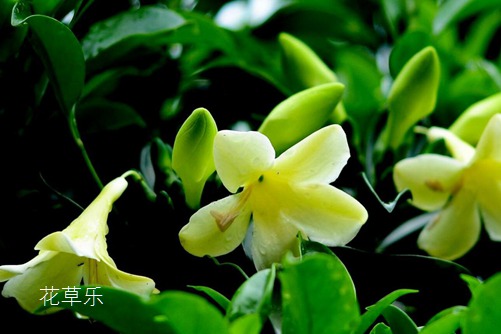
African jasmine must grow very large before it blooms, with the corolla reaching about 1 m or more in diameter. Once it blooms, it blooms every year thereafter, with white flowers in late spring and early summer, and the flowers are very fragrant. The flowering period is from May to June; the flowers are terminal, and the corolla is white or yellowish-white. The inflorescence is upright and terminal, with 1 to 3 flowers, with a very short peduncle; the corolla is white, funnel-shaped, fragrant, with 5 lobes at the upper part, and the whole corolla is shaped like a small trumpet. African jasmine loves sunlight very much; if the balcony at home cannot get full sunlight within a day, it may cause African jasmine to remain in a shaded environment for too long, resulting in sparse leaves and few or even no flowers. For this reason, move the flower pot to a place with ample sunlight for care, or you can also move it outdoors every weekend to receive 3~4 hours of direct sunlight. If your African jasmine has already been grown for 3 or 4 years, increase the light more, and it may bloom in the 5th year.
Conclusion:
The effect of African jasmine is to make people relax; as long as you take good care of it, it can add another touch of green eye-friendly scenery to your life. When you see African jasmine leaves turning yellow, follow the care methods the editor told you, and your African jasmine can not only stay evergreen through the four seasons, but is also very likely to produce beautiful flowers.