Reasons Why Camellias Fail to Bloom Despite Having Buds, and Planting Precautions
The camellia I planted set many flower buds last autumn, but after winter set in the buds gradually dried up and dropped off. After watering once with liquid fertilizer (soybean cake water), the leaves also fell off one after another. What is the cause? How should it be handled? Below, Huacaole shares with you the precautions for growing camellias, when camellias bloom, and what color camellias are.
Reasons Why Camellias Fail to Bloom Despite Having Buds: Precautions for Growing Camellias
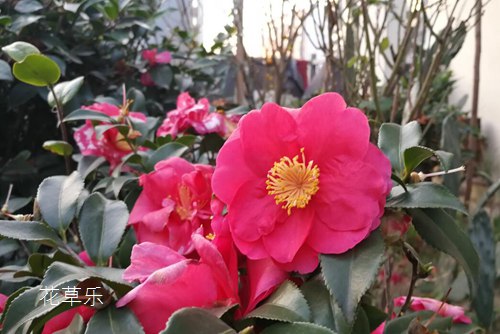
Two technical problems are often encountered when growing camellias: first, camellias failing to bloom despite having buds; second, fertilizing camellias.
I. Growing Camellias: The Problem of Failing to Bloom Despite Having Buds
During the spring growing season, camellias receive too much phosphorus and potassium fertilizer and too little nitrogen fertilizer, which leads to poor vegetative growth. The shoots mature rapidly and carry out flower bud differentiation early to form flower buds, resulting in a tree full of buds. But after winter sets in, water and fertilizer cannot keep up, so not only do they fail to bloom, but on the contrary the buds gradually dry up and drop off. The solutions are: (1) Thin the buds in time: to ensure healthy plant growth and a concentrated supply of nutrients, once the buds are the size of a soybean, keep 1-2 buds on each branch and remove all the rest. (2) Before winter sets in, move the camellia into a relatively warm environment, maintain a temperature of 10-20°C, and following the principle of "sun in wet and cold conditions, shade in dry and hot conditions," ensure an average of 3-4 hours of light per day. (3) Water in moderation: camellia roots are fleshy roots, and if the potting soil becomes waterlogged, they easily rot and turn black, causing bud drop. Keep the potting soil moist, neither dry nor wet; generally watering once every 3-5 days is suitable. Never overwater, but you may sprinkle water on the outer wall of the pot and on the ground between pots to maintain a relative air humidity of around 80%. (4) Fertilize reasonably: during the bud stage, especially for weak-growing plants, "apply thin fertilizer frequently." Apply a fully rotted soybean cake fertilizer solution or "alum fertilizer water" once a month, and additionally spray 0.01% dipotassium phosphate on the foliage every half month. Note that fertilization should focus on phosphorus and potassium, but a certain amount of nitrogen must also be included, so as to both ensure healthy plant growth and allow the buds to swell normally. (5) Strengthen post-bloom management: promptly remove spent flowers after blooming, and repot in time around Qingming. The potting soil formula used is leaf mold : sandy garden soil : compost = 3:4:3, or mature yellow clay : leaf mold = 2:1. Do not water within one week after repotting, and do not fertilize before the leaf buds sprout.
II. Growing Camellias: The Problem of Fertilization
The reasons camellias drop buds and leaves after being watered with soybean cake water are: first, the soybean cake was not fully rotted and was raw fertilizer; second, the soybean cake water solution was too concentrated. Therefore, fertilizing camellias must be done with care: (1) March to April is the period when buds break and branches and leaves grow; you may apply additional fertilizer along with repotting, once every 10 days for a total of 2-3 times, to promote vigorous growth of branches and leaves. (2) May to June is the flower bud differentiation period; apply a phosphorus-based fertilizer once every half month to promote flower bud differentiation and enhance drought resistance. (3) September to October is the bud swelling period; apply a fertilizer mainly of phosphorus and potassium with a slight combination, once every half month. (4) Early November to early December is the bud preservation period; root fertilization should basically stop, but once a month you may spray a low concentration of dipotassium phosphate on the foliage to improve the plant's cold resistance. In addition, fertilization should stop during the hot summer, the severe winter and the blooming period. In the rare event of "fertilizer burn" -- bud and leaf drop caused by applying raw or concentrated fertilizer -- promptly remove the camellia from its pot, rinse the soil ball in water to remove 1/2 to 3/4 of it, then repot with new soil and place it in a shady spot. Do not water or fertilize for 7-10 days, and only spray the foliage with water 2-3 times a day. Finally, return it to normal care and management.
III. When Do Camellias Bloom
Camellias bloom twice a year. They bloom in February in spring and in October in autumn! In a greenhouse in the north, they can bloom for about 20 days. For ordinary varieties, the blooming period is between December and January, and with good control they can be made to bloom by the Spring Festival.
IV. What Color Are Camellias
With graceful trunks, green leaves and elegant foliage, their flower colors are brilliant and varied, their flower forms elegant and diverse, their flower posture graceful and multifaceted, and their fragrance sweet and striking. There are many varieties. The flowers are mostly red or light red, and there are also white ones, mostly double-flowered. Camellia varieties now grown for ornament are mostly double-flowered, with few single-flowered varieties. Colors include pink, bright red, deep red, yellow and white. There is also one called "Da Manao," in which every petal has two colors, red and white, in varying shades. The flower shape resembles that of the cotton rose.