Detailed Guide to Orchid Pest and Disease Control and Management Methods
In traditional Chinese famous flowers, orchids refer only to several species of terrestrial orchids distributed among the Cymbidium plants of China, such as Chunlan, Huilan, Jianlan, Molan and Hanlan, which are commonly known as "Chinese orchids." They have a simple, quiet, elegant and noble temperament, which fits well with Oriental aesthetic standards. In China, they have a cultivation history of more than one thousand years. Below, Huacaole shares with flower lovers the pest and disease control and management of orchids.
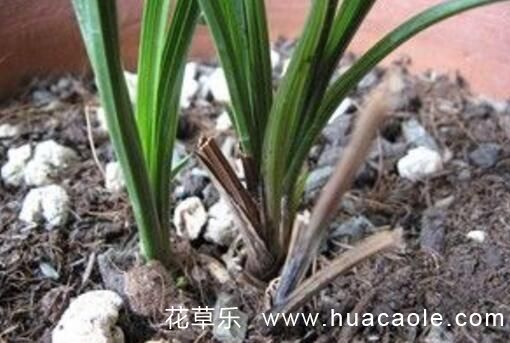
I. Anthracnose
This disease is the most common disease of orchids. It mainly harms the leaves, and later produces small black spots on the lesions, eventually causing the diseased leaves to wither and turn yellow. This disease occurs mostly in May—June, during the plum rain season, or in years with more autumn rain in September—October or more typhoons.
Control methods: ① Promptly cut off diseased leaves and burn the diseased residues. ② Improve the watering method, that is, slowly pour water in from the edge of the flower pot. ③ After new leaves sprout in winter, spray Bordeaux mixture (1:1:140) 1—2 times. In the early stage of the disease, spray 50% carbendazim 500—600 times dilution. At the same time, strengthen ventilation and light transmission, and avoid spraying water on the leaf surface.
II. Leaf blight
It mainly attacks orchid leaves. In the early stage, there are small reddish-brown spots, which then rapidly expand into oval or round dark brown lesions. There are many lesions on the leaves, and the leaf tissue between the lesions loses green color and turns yellow and dies.
Control methods: ① Remove diseased leaves and diseased residues and burn them in a centralized manner. ② Pay attention to ventilation and light transmission, prevent excessive watering, and avoid directly spraying or watering the plants. ③ Spray with 50% thiophanate-methyl 600—800 times dilution. Spray once about every 10 days, and 3—4 consecutive sprays are enough.
III. Southern blight
One of the main diseases of Cymbidium, caused by fungi. It is prone to occur in hot and rainy seasons, often appearing in May and June, with July and August being the peak period of the disease.
Control methods: ① Promptly remove diseased leaves, diseased plants and diseased planting holes, and sprinkle mixed lime for disinfection; before planting, drench the pot soil with 30% Tumiaoxiao water agent 1000 times dilution. ② In the early stage of the disease, spray 1:500 chlorothalonil on the leaf surface and use it to irrigate the roots.
IV. Scale insects
Armored scales and mealybugs are the most common. The occurrence period is from April—October, and they occasionally occur in winter as well. Their reproductive capacity is extremely strong, and they can occur in multiple generations in one year with overlapping generations, being most serious from May—October.
Control methods: ① When only a small number occur, they can be brushed off with a soft brush and then rinsed clean with water. ② When there are many, spray 40% methidathion emulsifiable concentrate 1000 times dilution during the peak hatching period. When spraying, both the front and back of the leaves should be sprayed. Spray continuously 3—4 times, with an interval of 5—7 days each time, and they will basically be eliminated.
V. Red spider mites
They have strong reproductive capacity and cause very serious damage. They are prone to occur during the high-temperature period from June—August.
Control methods: ① If the number is small, they can be brushed off with a bristle brush or a small brush. ② If there are many, use 40% dicofol 1000 times dilution to kill them. ③ A folk method is to light one mosquito coil, place it in the pot of the diseased plant, and cover the pot together with a plastic bag. After fumigating for 1 hour, both eggs and adults are killed, and the plant is not affected.