The symbolism of a flowering Clivia and how to handle one that will not bloom
Clivia, also known as sword-leaf lycoris and large-leaf lycoris, is an ornamental flowering plant in the genus Clivia of the amaryllis family. The Clivia plant is elegant and graceful, with the bearing of a gentleman, and its flowers resemble orchids, which is how it got its name. Clivia has high ornamental value and is usually grown as a potted plant for viewing. Clivia is the city flower of Changchun. Clivia has a spirituality that senses people's thoughts. What does it mean when a Clivia blooms? How you care for a Clivia can cause it not to bloom. Below, Huacao Le shares with you the symbolism of a Clivia blooming, why a Clivia does not bloom, and how to handle it when it does not bloom.
What a Clivia blooming symbolizes, and how to handle a Clivia that does not bloom
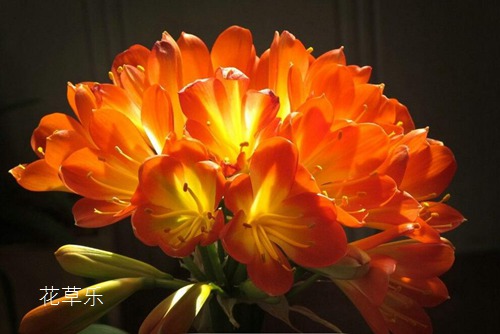
When does Clivia bloom
The flowering period of Clivia is generally mainly in spring and summer, between January and March. Depending on changes in ambient temperature, some bloom year-round, some bloom in winter, and some bloom in summer between June and July.
How long does the Clivia flowering period last
When the temperature during the Clivia flowering period is around 15-20°C, a single flower generally stays open for 15-20 days, and the flowering period lasts more than 45 days. The length of the flowering period varies with the care environment.
The feng shui symbolism of a Clivia blooming
Clivia is a plant with spirituality that can sense people's thoughts. If a family is unhappy, the Clivia will not bloom; if the family is harmonious and there is good news at home, the Clivia will even bloom early.
Clivia belongs to the wood element in the five elements, so those whose five elements belong to wood are very well suited to growing Clivia, which can help you create and adjust a good feng shui environment.
The cultural symbolism of a Clivia blooming
The Clivia plant is elegant and graceful, with the bearing of a gentleman, and its flowers resemble orchids, which is how it got its name. In addition to the flower meanings of “nobility” and “preciousness,” Clivia also carries the meaning of “abundance and the demeanor of a gentleman.”
How to handle a Clivia that does not bloom, and analysis of the reasons it does not bloom
1. Excessive light. Clivia likes light but cannot tolerate strong direct sunlight; especially in summer it will scorch the leaves and inhibit plant growth. This leads to failure to bloom.
2. Temperature too high or too low. The suitable growing temperature for Clivia is 15-25°C; temperatures that are too high or too low will both affect the normal growth of Clivia.
3. The soil in the pot is the direct source of nutrients for plant growth. When soil nutrients are lost over time, the soil in the pot becomes hard and drains very poorly, the plant cannot grow with enough oxygen, leaf growth is affected, and the normal blooming of Clivia is affected.
4. Clivia is a flowering plant that likes fertilizer, and fertilizer is crucial to the growth of Clivia. It is best to use organic fertilizer for Clivia. Failure to fertilize in time will affect the growth trend; with insufficient nutrients, there is also no drive to bloom.
5. The flower pot should be the right size. If the flower pot is too small, the roots cannot spread out and provide less nutrition, and the Clivia will not bloom; if the flower pot is too large, the Clivia will keep growing roots and also will not bloom.
6. In terms of light, every 5-9 months, Clivia should be placed under a shed, or in a semi-shaded place without direct sunlight.
7. The suitable growing temperature for Clivia is 15-25°C, with ventilation and a certain level of air humidity maintained. Spray water around the Clivia.
8. Clivia is suited to soil with good air permeability, good water permeability, fertile texture, and rich in humus, and slightly acidic (pH6.5). The general soil mix for Clivia is 6 parts leaf mold, 2 parts pine needles, 1 part river sand or furnace ash residue, and 1 part base fertilizer. Change the potting soil once every 2 years. When changing the potting soil, apply base fertilizer; placing some chicken manure or rotted cake fertilizer is fine.
9. Watering Clivia: Clivia has fleshy roots and fears waterlogging. Therefore, it should not be watered too much; just water it together with fertilizing and keep the potting soil moist. Never flood-irrigate it heavily, otherwise it will cause root rot and dead seedlings.