Reasons and solutions for Clivia miniata arrow clipping, orchid cultivation fears arrow clipping the most
What should you do when Clivia miniata clips the arrow? This is a problem many Clivia miniata growers encounter. If Clivia miniata arrow clipping is not handled properly, it can cause the Clivia miniata to wither and die! Below, Huacao Le shares with everyone the reasons and solutions for Clivia miniata arrow clipping, so your Clivia miniata no longer fears arrow clipping.
Orchid cultivation fears arrow clipping the most, reasons and solutions for Clivia miniata arrow clipping
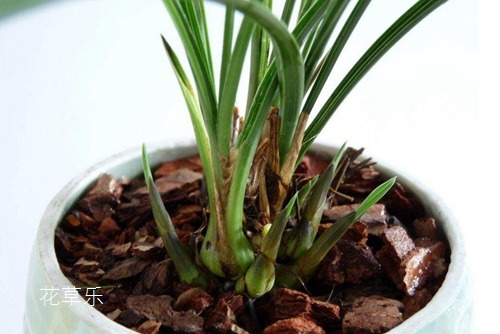
In orchid growing, it is common to see some Chinese orchids whose flower arrows have just emerged to the height of a palm and can no longer continue growing; some flower arrows have already formed their buds and then slowly wither, like an arrow already set on a drawn bow that cannot be shot out smoothly. Getting to the root of it, this is not unrelated to neglect in the daily protection of the flower arrows. “Linghai Lanyan” says: “The flower arrow is injured, insects and ants gnaw on it, there is no proper timing of shade, dryness and moisture are uneven, fertilizer is applied at flowering time, heavy rain pours down.” This is very reasonable.
When the flower arrow is extracted and the buds are forming, if pesticides are sprayed to kill insects and fungi, it is very easy to damage the flower buds about to bloom beyond recognition, and it will also cause the buds to wither. Pest and disease control should focus on prevention. During the peak growing season of orchids, spray fungicides and insecticides about once every half a month. In particular, scale insects and red spider mites should be eliminated in time to ensure the buds are not bitten and eaten, so that they can bloom normally.
In summer and autumn there is more rain, and it is also a time of high temperatures, bacteria are rampant, and in addition air pollution makes rainwater too acidic. If pond mud is used to grow orchids, the pot stays wet and soaked for a relatively long time. At this time, autumn orchids that are blooming are prone to having their flower arrows turn black and rot, causing the arrows to fall over. Therefore, on cloudy and rainy days, rain should be drained quickly, or the potted orchids should be moved indoors to a ventilated place; when planting, a slightly larger granular hard planting medium can be used, such as volcanic stone, coarse river [sand], crushed brick pieces, crushed coal slag, etc., to facilitate drainage and air flow and prevent root rot and flower arrow rot caused by too much water.
When the flower arrow has just emerged from the soil, a thin liquid fertilizer of monopotassium phosphate should be sprayed. Be sure not to make it too concentrated, otherwise it is easy to damage the flower arrow. After the flower arrow grows out of the planting medium, push aside the planting medium at the foot of the flower arrow to give it ventilation and more sunlight. First, this helps sterilization; second, it makes the flowers bloom more brilliantly and fragrantly.
Because orchid arrows are brittle and easy to break, be careful when moving potted orchids to avoid collisions; strong winds, cats and dogs tearing at them can all break the flower arrows. In addition, when flower buds have just grown, transplanting or dividing the pot carelessly can cause damage to the flower buds and form paralyzed buds. Therefore, when there are flower buds, the pot should not be repotted casually. If repotting is needed, it can be done half a month after flowering.