Want a more perfect bonsai shape? Start with bud pinching, tip pinching and leaf pruning
Bonsai is made by selecting plants with graceful posture, short stature, small leaves, long lifespan, tolerance to pruning, strong resistance and ease of shaping; without going against the growth habits of the tree, their growth is suppressed, and combined with the plant's characteristics, forms such as the straight-trunk style, the lying-trunk style and the slanting-trunk style are used for bonsai shaping. To make your bonsai shape more distinctive, you need to learn to pinch buds, pinch tips and prune leaves on the plant right away. Below, Huacaole shares with you some bonsai shaping techniques.
To learn perfect bonsai shaping, start with bud pinching, tip pinching and leaf pruning
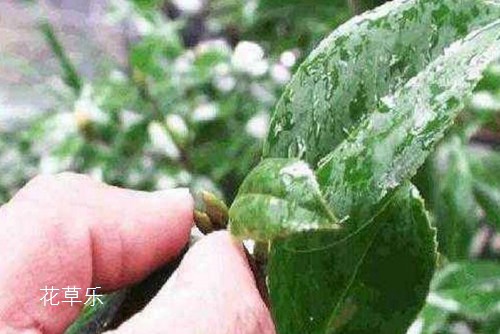
Bud pinching, tip pinching and leaf pruning are all means of controlling tree form. To keep the tree's form beautiful, some unnecessary buds can be removed while the new buds are still tender; otherwise the new buds will grow into branches, which will inevitably become chaotic, ruining the originally beautiful tree form while also needlessly consuming a lot of nutrients.
During the growth of bonsai trees, tip pinching can also be used to control the length of new branches, and at the same time it can stimulate the growth of axillary buds, making the branches and leaves fuller. For example, with the five-needle pine, after it buds in April each year, removing part of the terminal bud before the needles open can stop it from growing longer, making the new branches that emerge short and sturdy and the needles dense. For bonsai that have already taken shape, tip pinching can be used to keep the branch pads flat and the crown full; removing old leaves can also stimulate new buds to sprout from the leaf axils, making the branches and leaves fine and dense. Moreover, the new tender leaves are often dripping with fresh green, extraordinarily beautiful. People often use this method to give tree bonsai a second best viewing period; for instance, with red maple, after the old leaves are removed, the new leaves are incomparably red and bright, extremely pleasing to the eye. Pruning the leaves of Chinese wolfberry can prompt flower buds and leaves to emerge together; when it sets fruit, the deep red berries set off among the emerald new leaves are extremely beautiful. Other broadleaf species such as elm and Japanese bush cherry can also use leaf pruning to bring about a second best viewing effect. Sometimes, for exhibition needs, the leaves can be pruned a period of time in advance according to the temperature conditions, so that new leaves happen to grow out during the exhibition.
In the process of bonsai shaping, wrapping branches with metal wire is the most commonly used method. The commonly used metal wires include copper wire, lead wire and iron wire. According to the thickness, toughness and color of the tree material being wrapped, metal wires of different thicknesses are chosen. What should be noted when wrapping with metal wire......[View details]