How to Grow Gardenia? A Detailed Guide to Gardenia Cultivation Methods
The gardenia surpasses other trees; truly there are few like it in the world. Its color is useful to the body, and its nature is in harmony with the Way. Red comes from its frost-bitten fruit, green from its rain-and-dew branches. Heartlessly transplant it, yet its value lies in reflecting the river waves. This is Du Fu's praise of the gardenia. The gardenia's flowers are pure white and its fragrance is rich. Besides being ornamental, it can also be worn, and its fruit can be used medicinally, with anti-inflammatory and detoxifying effects. In addition, the gardenia's leaves are evergreen and it has the ability to resist smoke, dust and sulfur dioxide, making it an ideal environmental greening flower. The gardenia belongs to the Rubiaceae family and is an evergreen shrub. The gardenia is native to southwestern China. The genus Gardenia contains about 100 species, native to tropical and subtropical regions. There are eight common gardenia varieties, such as the large-leaf gardenia, the water gardenia, and the oval-leaf gardenia. The gardenia is also the city flower of Yueyang and Neijiang. To grow gardenias well, you should first understand and learn about gardenia cultivation methods and precautions and related knowledge. Below, Huacaole shares with you how to grow gardenias.
How to Grow Gardenia? Gardenia Cultivation Methods
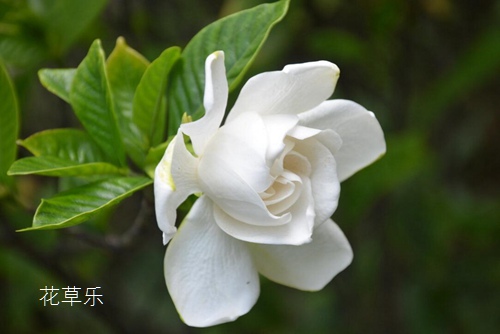
I. When Does the Gardenia Bloom
The gardenia has a long flowering period, blooming continuously from May to June through August, and the fruit ripening period is October, while a single flower's blooming time is 4-5 days. With sufficient fertilizer, there will be more flower buds and the flowering period will be longer.
II. Gardenia Cultivation Methods
1. Soil: It is best to use fertile acidic soil rich in humus for cultivation. Generally, you can choose leaf mold plus 1 part decomposed soybean cake fertilizer, while mixing in a certain amount of ferrous sulfate, or after potting, drench thoroughly 3 to 5 times with 0.2% ferrous sulfate or alum fertilizer water.
2. Watering: The gardenia requires relatively high air humidity. The principle of watering is to water thoroughly once the soil has dried out. In summer, it is best to water with soft water, because hard water contains more calcium and magnesium salts, which is very unfavorable to the growth of the gardenia - in mild cases the gardenia's leaves turn yellow, and in severe cases it soon dies. To overcome the alkalinity of the soil and water quality, water once a week with alum fertilizer water during the growing season, so that the gardenia keeps its branches and leaves a deep green. In winter, watering should be controlled - do not water unless the soil is dry; long-term excessive water content easily causes root rot and death.
3. Fertilizing: The gardenia is not a flower that particularly loves fertilizer, but because it grows vigorously, it needs a reasonable supplement of fertilizer during the growing period. Apply decomposed human manure or cake fertilizer once every 10 days or so. Stop watering 1 day before fertilizing, and on the day of fertilizing also water thoroughly once. Stop fertilizing from mid-September. For mature plants, apply an additional dose of decomposed cake fertilizer once each in mid-June and mid-August.
5. Pest and Disease Control: In summer, when temperatures are high and ventilation is poor, the gardenia is prone to scale insects, red spider mites and sooty mold. You can spray 40% dimethoate emulsifiable concentrate at 1000 times dilution to prevent scale insects, and 40% dicofol emulsifiable concentrate at 1000 to 1500 times dilution to control red spider mites, which can also reduce the occurrence of sooty mold. For safety at home, you can spray with laundry detergent solution, which also has a certain effect.
Pests and diseases often easily cause the gardenia's leaves to turn yellow, known as chlorosis. Chlorosis is caused by many reasons, so different measures must be taken for prevention and control. Chlorosis caused by fertilizer deficiency: this kind of chlorosis starts from the old leaves at the lower part of the plant and gradually spreads to the new leaves. Nitrogen deficiency: simply yellow leaves, with new leaves small and brittle. Potassium deficiency: old leaves change from green to brown. Phosphorus deficiency: old leaves turn purplish-red or dark red. For all the above situations, you can apply decomposed human manure or cake fertilizer.
6. Repotting: Generally, repot once every 1 to 2 years, best done in spring, to effectively prevent the potting soil from becoming alkaline. When repotting, cut off some roots, such as diseased and pest-damaged roots and overly dense roots, then replant.
7. Shaping and Pruning: Generally done in spring, cutting off overly long leggy branches, weak branches and other messy branches that affect the plant's shape, to keep the plant's form beautiful. The gardenia bears flowers at the top, so during the growing season you can appropriately pinch off the growing tips to promote the growth of flowering branches and increase the number of flowers.
Gardenia Cultivation Methods and Precautions
III. Gardenia Flower Language
The gardenia begins to form flower buds from winter and does not bloom until near the summer solstice. The longer the bud stage, the more lasting its fresh fragrance; the gardenia represents a person's persistence and devotion. Therefore, the flower language given to the gardenia is “eternal love and promise”. It is not only an expression of love, but also embodies that beneath a plain, lasting, warm and refined appearance lies the essence of a beautiful, resilient and mellow life.