When Does Winter Jasmine Bloom, and a Guide to Caring for Winter Jasmine Bonsai
Winter jasmine (Jasminum nudiflorum), together with plum blossom, narcissus and camellia, is collectively known as the “Four Friends of the Snow” and is one of the common flowers of China. Winter jasmine is not only dignified and beautiful in flower color with an extraordinary air, but also known for defying the cold, being undemanding about soil and climate, and having strong adaptability, and it has always been loved by people. Below, Huacaole shares with you when winter jasmine blooms, what color its flowers are, and knowledge on caring for winter jasmine bonsai.
When Does Winter Jasmine Bloom, and a Guide to Caring for Winter Jasmine Bonsai
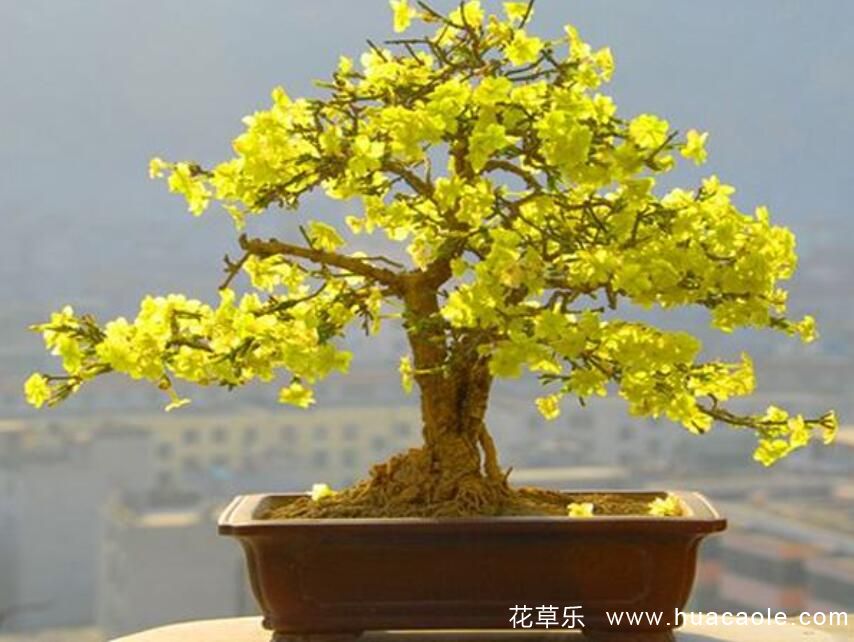
I. When does winter jasmine bloom?
Winter jasmine loves light, tolerates slight shade, is slightly cold-tolerant and fears waterlogging; it can overwinter outdoors in North China and in Yanling, and requires a warm and humid climate. Its roots have strong sprouting ability. The parts of the branches that touch the ground root very easily. The winter jasmine plant is 30-100 cm tall. The small branches are slender, upright or arching and drooping, in a spreading form. The compound leaves have 3 leaflets, alternate and opposite, and the leaves are ovate to oblong. The flowers are borne singly on branches grown in the previous year and open before the leaves. The flowering period of winter jasmine is February to April. It gets its name because it is the earliest of all flowers to bloom, and right after its flowers comes the spring when a hundred flowers bloom together.
II. What color is winter jasmine?
Winter jasmine is the earliest of all flowers to bloom, and right after its flowers comes the spring when a hundred flowers bloom together, which is how it got its name. The color of winter jasmine flowers is golden yellow, tinged with a red blush on the outside, with a delicate fragrance. A touch of yellow in early spring brings us a rich sense of spring; friends who have not planted it can only search for winter jasmine pictures to admire. From the pictures one can also appreciate the beauty of winter jasmine. When planting winter jasmine, it is best to choose flower pots in light blue, purplish red or black, so that the pot and the flower colors are more harmonious and its beauty stands out more.
III. A guide to caring for winter jasmine bonsai
1. Soil
Winter jasmine has strong adaptability and is not strict about soil; it grows best in loose, fertile sandy soil. In loose, fertile, well-drained sandy soil, and in acidic soil, it grows vigorously, while in alkaline soil it grows poorly
2. Watering
During the growing period of winter jasmine, water only when the soil is dry, and water thoroughly when you do, avoiding water accumulation in the pot soil, otherwise it will cause root rot. For potted winter jasmine, reduce watering after September to control excessive branch growth and help it overwinter safely.
3. Fertilizing
After the flowers fade in spring, apply decomposed organic liquid fertilizer 1 to 2 times to replenish the nutrients consumed by flowering and help the plant recover its vigor as quickly as possible. June to August is its flower bud differentiation period, when the use of phosphorus and potassium fertilizer can be increased, and attention should be paid to withholding water to favor the formation of flower buds. Fertilizing in autumn can increase the plant's cold resistance and promote the development of flower buds. Applying some fertilizer before flowering not only makes the flowers plump and beautiful but also extends the flowering period.
4. Temperature
Winter jasmine loves a warm, humid climate. After flowering, the room temperature should be kept below 15°C, which can maintain a longer flowering period.
5. Light
Winter jasmine loves light and tolerates slight shade. Before the flowering period, it should be exposed to more light, which favors bud formation and flowering. However, while it is blooming it does not need direct sunlight, and it should be placed in a semi-shaded spot in the room.
6. Propagation methods
Cuttings are the main method, but layering and division can also be used. Cuttings: can be done in spring, summer and autumn; cut semi-lignified branches 12-15 cm long, insert them into sandy soil, keep moist, and they root in about 15 days. Layering: bury longer branches shallowly in sandy soil without wounding them, and they root after 40-50 days; separate them from the mother plant and transplant in the following spring. Division: can be done in spring when the buds begin to swell. When transplanting in spring, cut off part of the aboveground branches and stems, and keep the original soil around the roots. Dry insertion is also possible, that is, inserting cuttings in a prepared seedbed and then watering thoroughly. Cuttings can be taken from mid-October to mid-November or in spring. After rooting, plant them separately; they can also be propagated by division or layering.
IV. Winter jasmine bonsai shaping
The branches of winter jasmine droop naturally, and its roots are very distinctive, making it suitable for processing into a weeping-branch style or exposed-root style bonsai; usually the two are combined. With coiled roots exposed and the trunk turned into a prostrate or curved trunk, the branches and leaves droop and sway, giving a unique and striking appearance. With proper cultivation, it will have yellow flowers covering the branches in spring, spreading green leaves in summer and autumn, and lush trailing vines in winter, full of spring feeling in all four seasons.