How to Grow Anthurium? A Guide to Anthurium Cultivation Methods
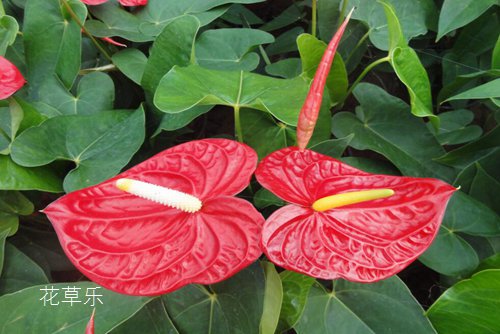
Anthurium originates from the tropical rainforests of South America. Anthurium is known for its unique flowers, which are spathes with bright, gorgeous and rich colors, and it also helps purify indoor air. It prefers warm, humid and semi-shady environments, but it is not shade-tolerant; it likes sunlight but avoids direct sunlight, is not cold-tolerant, and likes fertilizer but avoids saline-alkaline conditions. How to grow Anthurium, and what are the cultivation methods and precautions? What pests and diseases appear during cultivation and how to prevent them? Huacaole analyzes them one by one with you below.
Anthurium Cultivation Methods: A Guide to Growing Anthurium
1. Is soil culture better or water culture?
Soil culture is the most commonly used, but water culture is clean and hygienic and more ornamental, so it is very popular among enthusiasts, and water culture is becoming more and more common. When growing Anthurium hydroponically, inducing new roots takes a relatively long time compared with plants such as Aglaonema commutatum, but its root system is quite vigorous, and once a hydroponic root system forms, it is very easy to care for. Therefore, healthy virus-free Anthurium plants should be selected, disinfected with agricultural streptomycin, and then acclimated with a flower nutrient solution. With proper light, Anthurium grows cyclically according to the pattern of “leaf → flower → leaf → flower”, and the inflorescence forms in the leaf axil of each leaf, which makes flower and leaf production equal.
2. Soil and temperature
Anthurium prefers warm, humid and semi-shady environments, but it is not shade-tolerant; it likes sunlight but avoids direct sunlight, is not cold-tolerant, and likes fertilizer but avoids saline-alkaline conditions. For potted Anthurium, a substrate with good drainage should be chosen; for large-scale production, a composite substrate of peat, perlite and sand is used, with the ratio of 1 cubic meter of peat : 4 to 5 kg of perlite : 0.15 cubic meters of sand. Its pH value should remain between 5.5-6.5. The optimum growth temperature is 20-30°C, the maximum temperature should not exceed 35°C, and the minimum temperature is 14°C; below 10°C there is a risk of cold damage at any time. The optimum relative air humidity is 70%-80%, and it should not be lower than 50%, because maintaining relatively high air humidity in the growing environment is the key to successful Anthurium cultivation. Therefore, foliar water spraying should be done many times throughout the year. Anthurium is not tolerant of strong light, and year-round cultivation should be in an appropriately shaded environment, that is, greenhouse cultivation with protective facilities. In spring, summer and autumn, appropriate shading should be provided, especially in summer, when 70% shading is needed. Direct sunlight will make leaf temperature higher than air temperature; if leaf temperature is too high, phenomena such as scorching, leaf burn, spathe fading and slowed leaf growth will occur.
3. Light and watering
If there is too little light, the plant produces very few assimilates; but if the light is too strong, it may cause leaf discoloration, scorching or burning. Therefore, whether light management succeeds or not directly relates to the quality of the potted flowers and the number of flowers. According to the shade-loving characteristics of Anthurium, it is best placed in a bright indoor spot with some scattered light, and it must never be placed in an environment with strong direct sunlight. Water and fertilizer management should be appropriate. Anthurium is a flower that is relatively sensitive to salt, so the lower the salt content of the water, the better; tap water is best. Fertilization is often carried out together with watering, generally using a 1‰ compound fertilizer with a nitrogen-phosphorus-potassium ratio of 1:1:1. In spring and autumn, fertilized water is generally applied once every 3 days; if the temperature is high, it can be applied once every 2-3 days depending on whether the substrate in the pot is dry or wet; in summer it can be applied once every 2 days, and when the temperature is high, it can be watered one more time; in winter it is generally applied once every 5-7 days. Anthurium-specific fertilizer can also be used directly. The substrate should be loose; a substrate that is both airy and moisture-retentive is a good foundation for root growth, so when repotting or dividing plants, several substrates should be selected and mixed according to local conditions, such as mixing peat soil, coconut coir and perlite in a 3:2:1 ratio.