Three years of practice to master bonsai watering, three minutes to teach you the correct way to water flowers
Water, fertilizer, light, and soil are the four essential elements for the growth of flowers and plants. If the flowers are well grown, it means these four elements have been handled well. Among flower enthusiasts there is a popular saying: those who know how to grow flowers let their flowers die of drought; those who don't know how to grow flowers drown their flowers. Whether a potted flower needs watering should be determined by the dryness or wetness of the potting soil; you cannot mechanically set a fixed watering interval for potted flowers. Below, Huacaole shares with you how to water flowers correctly.
They all say it takes three years of practice to master bonsai watering; three minutes to teach you the correct way to water flowers
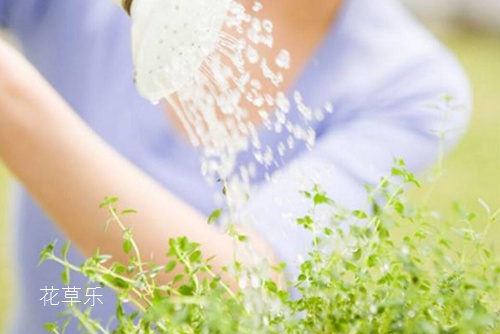
1. What to pay attention to when watering flowers, teaching you the correct way to water flowers
Watering should follow the principle of “ don't water if not dry, water thoroughly when you do ”. If too dry, flowers and plants will wilt or even die of drought; if watered too frequently and the potting soil is too wet, flowers and plants will suffocate, their roots will rot, and they will die.
“Don't water if not dry, water thoroughly when you do” mainly applies to semi-drought-tolerant flowers. The so-called “don't water if not dry” means waiting until the entire surface layer of the potting soil is dry before watering again; the purpose is to have an interval between two waterings so that there is enough oxygen in the soil for the roots to absorb, rather than waiting until the soil is completely dry before watering. For drought-tolerant flowers, watering should follow the principle of “better dry than wet”; for moisture-loving flowers, watering should follow the principle of “better wet than dry”.
“See dry” means that after watering once, wait until the soil surface turns pale, that is, the surface layer of soil is dry, and then water a second time; never wait until the entire potting soil is dry before watering.
“See wet” means that each time you water, you must water thoroughly, that is, water until water seeps out of the drainage hole at the bottom of the pot. You must not give “half-way water” (that is, wet on top and dry below), because for a vigorously growing flower, most of its roots are concentrated near the bottom of the pot, so giving “half-way water” is actually equivalent to not watering at all.
2. How to tell whether the potting soil is dry or wet
There are two traditional old methods for telling whether the potting soil is dry or wet:
The first is to look. If the potting soil turns pale and cracks appear in the soil at the edge of the pot, that is a sign that the potting soil is dry; if the potting soil is dark brown with no cracks, that indicates the soil is wet.
The second is to tap. Use your finger to flick or tap the wall of the pot; if the sound is crisp, the soil is already dry, while if the sound is dull, the soil is still wet. You can also rely on feel: if there is a hollow feeling when you tap, it means the potting soil is already dry; if there is a solid feeling, the potting soil is still wet.
These methods all require accumulated experience in practice in order to judge correctly and water the right amount. It is still better to use multiple methods, such as observing the leaf color and leaf posture of the plant, pressing the potting soil to feel whether it is soft or hard, and lifting the pot to feel its weight.