How to grow camellias for full, abundant blooms? A complete guide to cultivation methods
Camellia is also called camellia (shancha). The flowers are bowl-shaped, single or double, and very bright and beautiful. Whether grown in pots or planted outdoors, camellias can do well. Camellias need acidic soil, humid air, plenty of sunlight, and light but frequent fertilizing. Normal room temperature is not suitable for indoor cultivation. Camellias are not tolerant of low temperatures; in winter, when the temperature drops below 0°C, potted camellias should be moved outdoors to a sunny, warm, sheltered spot. Below, Huacaole shares with you camellia cultivation methods and camellia flower meanings.
Do you want your camellias to have full, abundant blooms? Please see the complete guide to camellia cultivation methods.
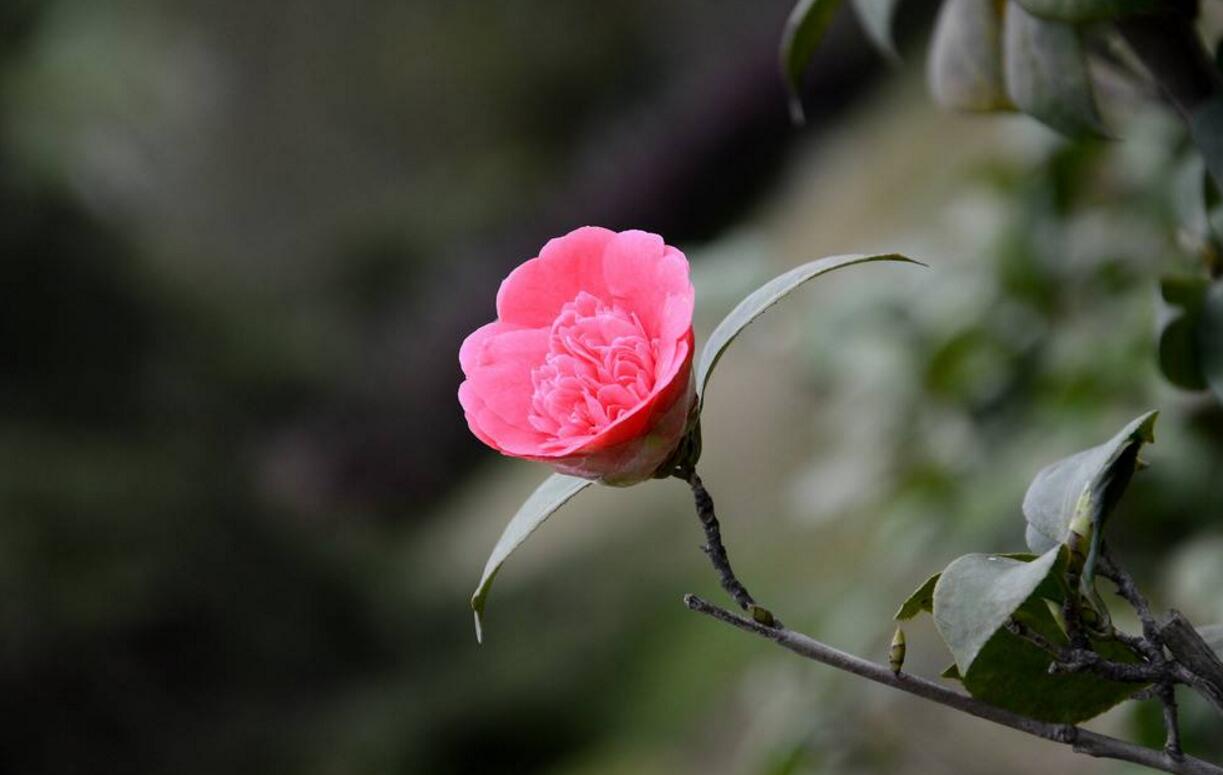
I. Camellia cultivation methods
1. Pots for potting. For potted camellias, clay pots are best, followed by purple clay (zisha) pots. But I think purple clay pots have better breathability and a prettier appearance. Do not choose ceramic pots, plastic pots, or porcelain pots; their breathability is poor, and it is hard to keep anything alive in them. Currently, camellia cultivation bases use thin black plastic pots with very good results. For home cultivation, if you want it to look nice, you can use a cachepot.
2. Soil for potting. The best soil for potted camellias is loose, fertile sandy loam, loess, or humus soil. Before potting, spray a little carbendazim liquid into the flower soil, let it sit for half a day, and then pot it. Never use pure leaf mold for cultivation. The main requirements for the pot and soil are breathability and drainage. The way to verify breathability and drainage is that after watering, water generally flows out from the bottom of the pot in 5-10 minutes, and the amount that drains out is about half of the water added. When repotting, or with the soil level, there should still be 1-2 cm of space below the rim of the pot; this is called the water-holding zone, which helps retain water when watering. Once all this is in place, press the potting soil firm with your hands, and then you can water the first settling-in watering; water in 2-3 rounds, and the first watering must soak through thoroughly.
3. Watering. Camellias like slightly acidic soil, and the most suitable pH is 4-6. Neutral and alkaline soils are both unfavorable for their growth. It is best to use acidified water (water that has been left to sit for one or two days) or rainwater to water the flowers.
4. Fertilizing. Camellias are fertilizer-loving plants, especially during bud development, when they need large amounts of fertilizer. In addition to applying sufficient base fertilizer when repotting, in spring, summer, and autumn, combine fertilizing with watering and, following the principle of light but frequent feeding, continuously apply dilute organic liquid fertilizer as a top dressing. Once the flowering period begins, stop fertilizing. Add some ferrous sulfate appropriately to make your plant's leaves grow very dark green.
5. Pruning, pinching, and bud thinning. Camellias grow slowly and do not tolerate pruning well. Apart from cutting out diseased and weak branches, rely on pinching to regulate plant growth, and never prune heavily. For potted camellias, because space is limited and nutrient supply is insufficient, overly dense flower buds must be removed, keeping one bud per branch and one flower per branch. The general principle of bud thinning is to leave no more than 2 flower buds on a flowering branch: leave 2 on strong branches, and leave none or 1 on weak branches. In terms of leaves, this corresponds to leaving one flower bud for every 7-9 leaves. The method of bud thinning is, when the buds have grown to the size of a soybean, use scissors to cut the unwanted buds in half and let them fall off naturally. Never pull them off, because each flower bud is a future sprouting point, and pulling them off will affect the growth of the whole plant the following year. If you keep many flowers this year, then you should keep fewer next year, flowering once every other year. Only in this way can you enjoy camellias for a long, long time. Camellias take an especially long time to develop flower buds and need sufficient light. Apart from slightly shading them in summer, they need to be grown in a sunny spot during the other three seasons.
6. The main diseases of camellias include ring spot, anthracnose, shoot blight, leaf spot, and sooty mold. The main control agents are: tebuconazole (Tuzinte) at 800 times; carbendazim at 500 times; chlorothalonil at 800 times; and kecunling at 800 times for regular control. The main camellia pests are red spider mites, aphids, scale insects, leaf-rolling moths, and inchworms. The main control agent is cypermethrin 15 mL + isocarbophos 20 mL or monocrotophos 25 mL mixed with 30 jin of water for spraying. Before flowering, pay attention to controlling gray mold and flower blight.
II. Camellia flower meanings
Camellias always bloom so beautifully and contentedly in the depths of winter. When most plants in the courtyard have lost their leaves and look dry and lifeless, even in a yard already covered with snow, they still quietly bloom. When a camellia fades, it is not that the whole flower drops off, but that the petals wither one by one, slowly, until life ends. Because of this careful, reluctant way of fading, the camellia has become a spokesperson for expressing feelings to a woman one admires. The camellia makes people feel cuteness, modesty, ideal love, caution, and remarkable charm. The camellia flower meaning is: ideal love, modesty. White camellia flower meaning: pure and innocent; red camellia flower meaning: naturally beautiful.