What to pay attention to when buying flowers, plants and bonsai at the flower market
More and more friends love growing flowers, to decorate the home, green up the company environment, and give to friends. What common knowledge should you pay attention to when buying flowers, plants and bonsai at the flower market, so that you can buy the flowers and plants you like? Below, Huacaole shares with you how to choose flowers, plants and bonsai.
What to pay attention to when buying flowers, plants and bonsai at the flower market
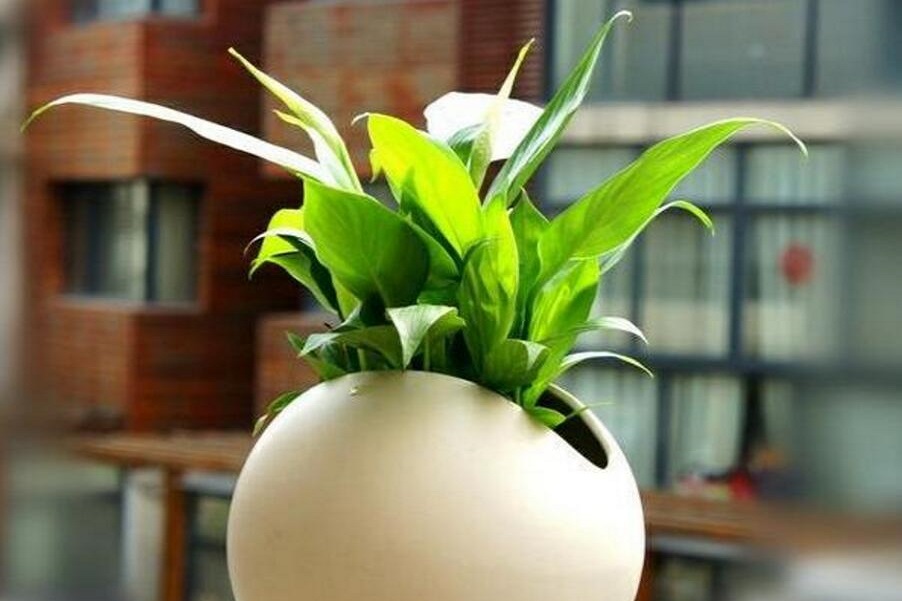
1. Choose suitable flowers and plants. What flowers bloom in what season, and what fruits form when. First you must be clear about your needs, and at the same time take into account the environment where they will be placed after purchase. Sun-loving flowers cannot be placed indoors; bonsai are basically all suited to being placed outdoors, so do not keep them indoors. Generally, the flowers commonly in full bloom in the flower market are the ones in season. For uncommon and precious flowers and trees, you must understand them clearly before buying them. Try not to buy off-season flowers, because home care conditions are far inferior to the care conditions of the flower market, and they are very hard to keep alive after being brought home. If the home care conditions cannot meet the growth and care requirements of the flowers, generally do not buy them.
2. Buy flowers and plants in pots that have already adapted to their pots (grown for a certain period of time). If they are flowering plants, it is best if they have already formed buds and one or two flowers have just begun to open, as this makes them both easier to keep alive and less likely to be mistaken. The characteristics of original-pot flowers are: the potting soil is fairly level and compacted, the surface of the pot has moss or weeds, root hairs can be seen growing out of the drainage holes at the bottom of the pot, and the flower seller dares to grip the plant and lift it suspended in the air. Conversely, if the pot surface has no weeds or moss, the potting soil is fairly loose, no root hairs stick out from the drainage holes at the bottom of the pot, the pot is clean, and the flower seller does not dare to lift the pot, then they were all potted on the spot; if you are not fully confident in your ability to care for them, do not buy them.
3. When buying flowers that have not been potted, the roots must definitely have a soil ball. The bigger the soil ball and the less it has crumbled, the better. Evergreen flowers and trees such as Aglaia odorata (mock lime), Murraya paniculata (orange jasmine), citrus types, and conifer types. If the soil ball is too small, cracked, or is a fake soil ball wrapped with straw and mud, do not buy it. Break off a small part of the soil ball to look: only buy if there are white, fine young roots; if the roots look black, it means the roots have rotted, and you must not buy it. For deciduous bare-root flower seedlings, if the root hairs are sparse, or they have already flowered or sprouted, do not buy them. If it is a flower or tree that was just potted and has not yet sprouted, do not buy it, because most of these are shipped back from elsewhere and put up for sale right after being potted; flowers, plants and bonsai need time to adapt to the environment, and if they were just potted without a period of care and have not yet adapted to the pot, they are very hard to keep alive. You can dig away part of the potting soil to check; if the potting soil can be clearly separated from the original soil ball, then it was just potted.
4. Do not buy small seedlings of flowers and plants, because unpotted small seedlings are very hard to keep alive after being brought home; in addition, some small seedlings have only a few leaves, no flowers, and no buds, making them very hard to identify. Especially when buying relatively expensive flowers and trees, such as camellia plants, it is best not to buy small seedlings, to avoid being cheated. There are also vendors who sell fake seedlings, such as passing off Pittosporum tobira as Daphne odora, ordinary Sabina chinensis as pearl juniper, and Euonymus japonicus and Ligustrum lucidum as osmanthus. They also sell Jasminum nudiflorum and golden-branch forsythia as night-blooming jasmine. There are also those who pass off Pittosporum tobira as Michelia figo, Nageia nagi as Daphne odora, Hippeastrum as Clivia, Buxus sinica as Aglaia odorata, and wild narcissus as tulip, and so on.
5. Be careful with wild tree stumps too, especially when buying wild bonsai stumps such as Sageretia thea (hedge sageretia), elm, Ilex cornuta, rhododendron, crape myrtle, and Cymbidium. These stumps are all dug from the mountains; the tree shapes are attractive and the prices are low. When buying, pay special attention to the condition of the fine roots at the base. If there is only a cut-off main root and no fine roots, it will be very hard to keep alive. Also, there are many cases of passing off Cymbidium as boxwood to make up the numbers. You can use some mobile phone apps to help identify them.
6. Do not buy flowers and plants in pots with pests or diseases. Do not buy those with yellowing leaves, curled leaves, or withered leaves (not including a small number of yellow leaves at the lower part). But in practice this is not very easy to do.
7. Do not buy flowers and plants that are too fragrant. Flowers and plants with an overly strong fragrance can make people feel uncomfortable, and may even cause adverse symptoms. Common flowers and plants of this kind are tulip, night-blooming jasmine, and Lantana camara.
8. Do not buy poisonous flowers and plants. Some ornamental flowers and plants are themselves toxic and are not suitable for placement indoors, such as poinsettia, yellow azalea, dragon boat flower, mimosa, and oleander.
9. Do not buy flowers and plants that easily cause allergies Some people's skin is prone to allergies to pollen, and some flowers and plants very easily cause skin allergies with red rashes and unbearable itching. Flowers and plants of this kind include Chinese rose, Lantana camara, redbud, geranium, and hydrangea.
There are particular rules for placing flowers and plants in pots Placing some flowers, plants and bonsai indoors can achieve the effect of greening or of boosting wealth and career, but in terms of feng shui, if some plants are placed improperly, they can also have a negative effect in feng shui.