Key Points of Tulbaghia violacea Cultivation: Learn How to Grow the Purple Elf of Your Garden
Tulbaghia violacea is a herbaceous plant in the Amaryllidaceae family. It looks similar to Chinese chives, only the flower color is different. Chinese chives generally bloom white, while Tulbaghia violacea blooms pinkish-purple. Tulbaghia violacea has bright colors and a faint hyacinth fragrance. Tulbaghia violacea blooms in summer and autumn, can beautify the environment, and can also be used as medicine. How to grow Tulbaghia violacea? Growing Tulbaghia violacea well is not an easy task. Below, the Huacaole editor shares with you the cultivation methods and precautions for Tulbaghia violacea.
I. Blooming Period of Tulbaghia violacea
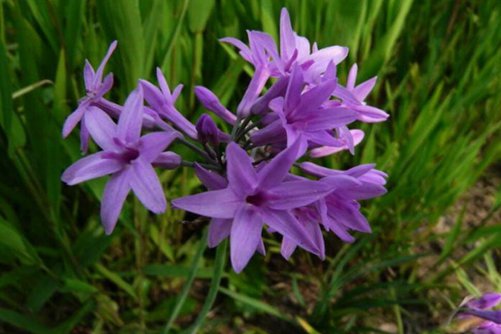
The blooming of Tulbaghia violacea is related to sowing time and sunlight temperature. If sown in spring in the north, it blooms in summer; if sown in autumn in the south, it blooms in early spring. The most vigorous blooming period is in summer and autumn.
II. Cultivation Methods for Tulbaghia violacea
1. It likes light, and full sun or partial sun is fine. It likes high temperatures and is heat-tolerant. The most suitable growth temperature is 24-30 degrees.
2. Soil: plant it in well-drained, fertile sandy soil. Spread a layer of decomposed cake fertilizer or bone meal at the bottom of the flower pot, and the flowers grown will bloom more vigorously.
3. Fertilizing: one month before the blooming period, apply phosphorus and potassium fertilizer 2 times to ensure sufficient nutrients when blooming, and the flowers will bloom more vigorously.
4. Watering: Tulbaghia violacea likes moist potting soil. During the peak growth season or in hot summer, water once every 2 days. Be careful not to let water accumulate in the pot. Otherwise, it will cause bulb or root rot and yellowing leaves.
5. Propagation of Tulbaghia violacea: generally sowing or bulb propagation is used.
III. Medicinal Value of Tulbaghia violacea
The root of Tulbaghia violacea can be used as medicine. Its traditional Chinese medicine name is Zhanbai, and it has curative effects on chest impediment and heart pain, and dysentery.